
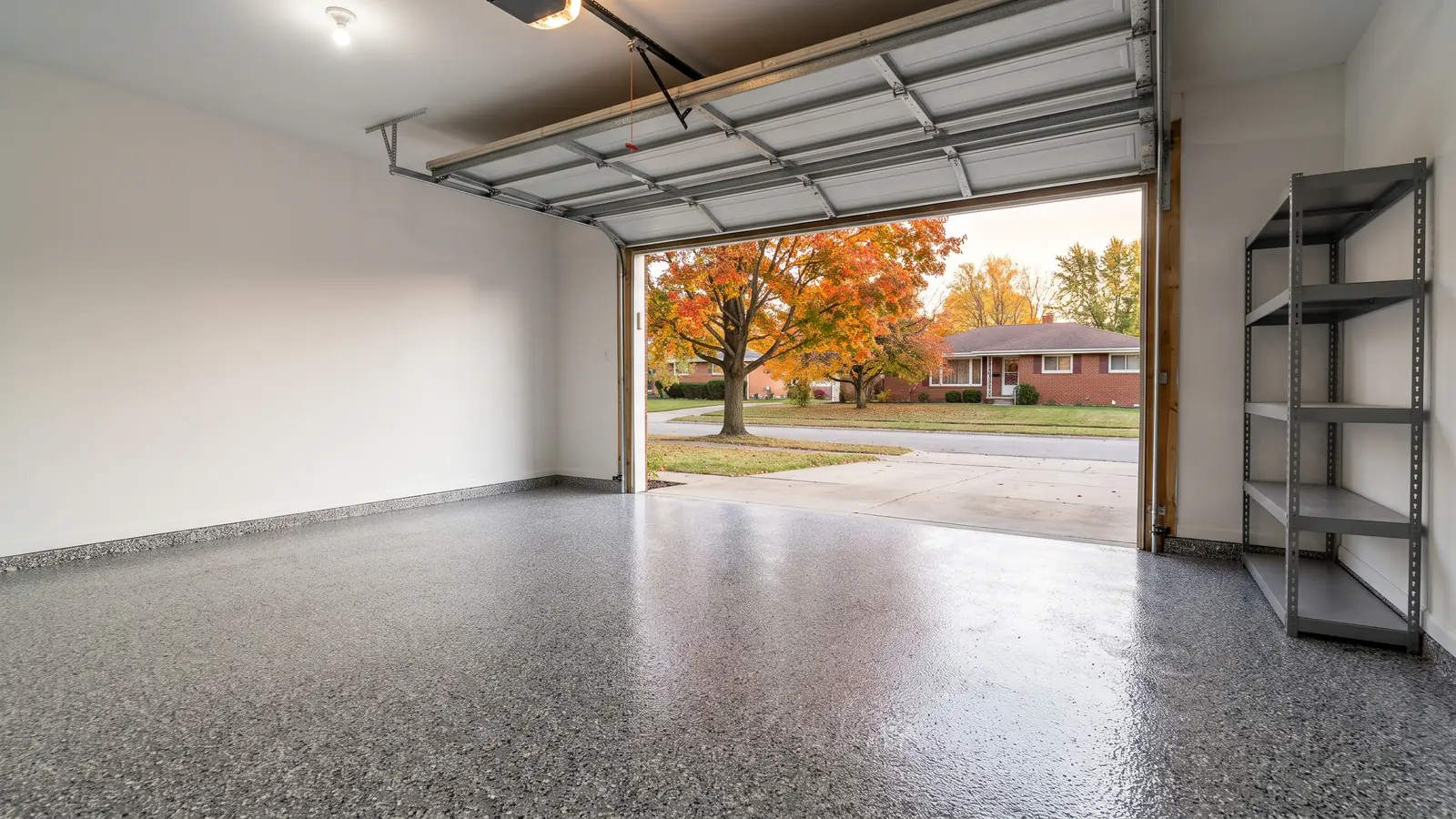
Shop Floor Coatings by Building Type
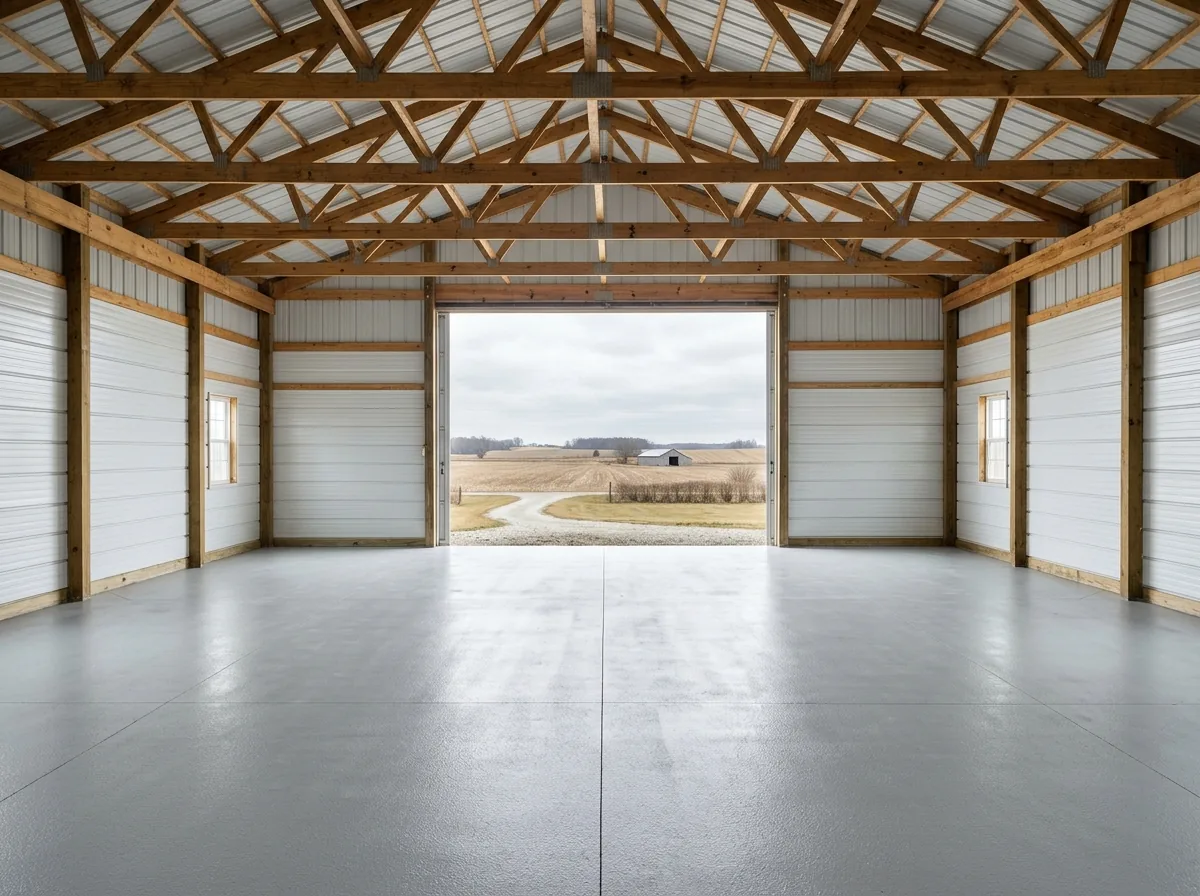
Post-Frame (Pole Barn) Shops
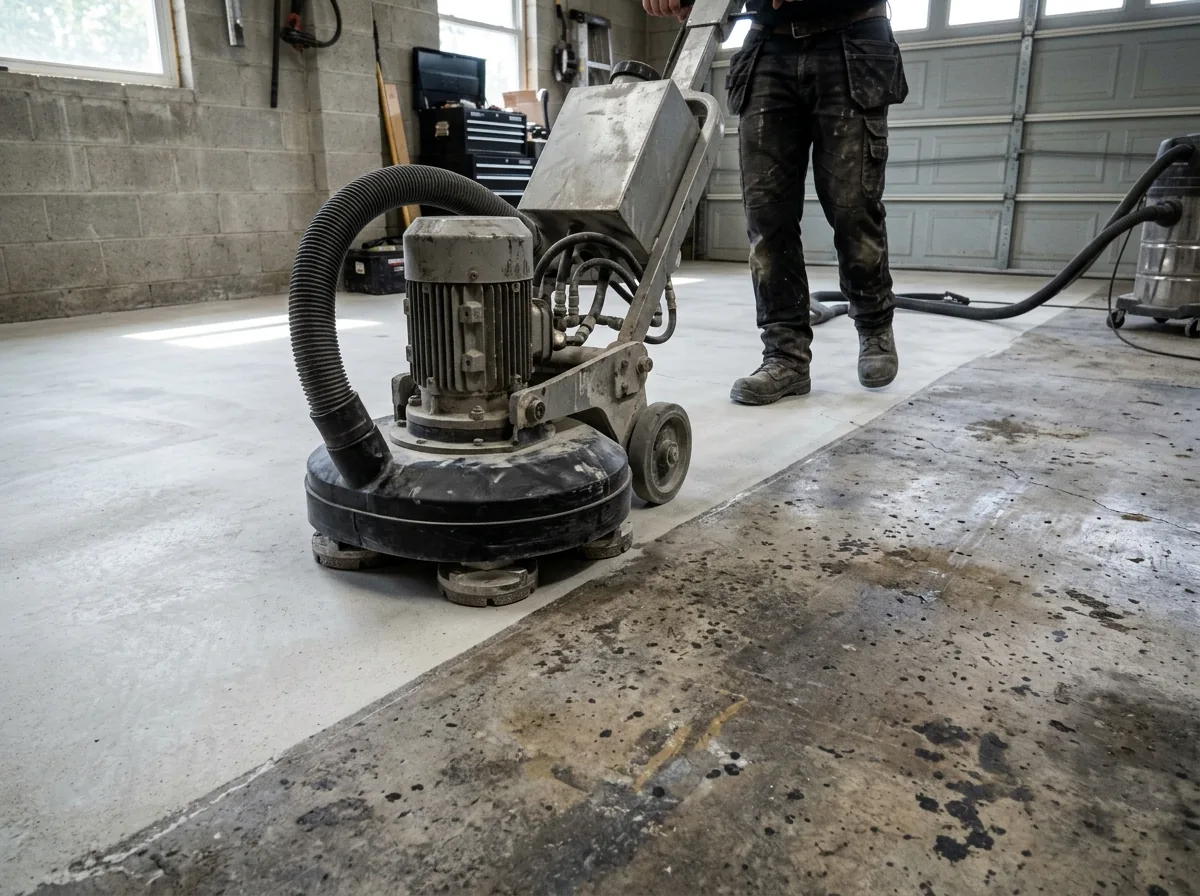
A post-frame shop usually means one big, open slab. Two questions come before color. First, what's under it: one 100% solids epoxy's data sheet says slabs on grade must have a moisture barrier. Find out if yours has one, and ask for a moisture test (how slabs are moisture-tested). Second, how will the crew prep that much floor; on large slabs, shot blasting is an option alongside diamond grinding (concrete grinding and crack repair). Wide sliding or overhead doors also let weather in: Evansville averages about 48 inches of rain and melted snow a year, including roughly 11 inches of snowfall. A wet coated floor by an open door is where people slip, so plan for grit in the topcoat along the door line.
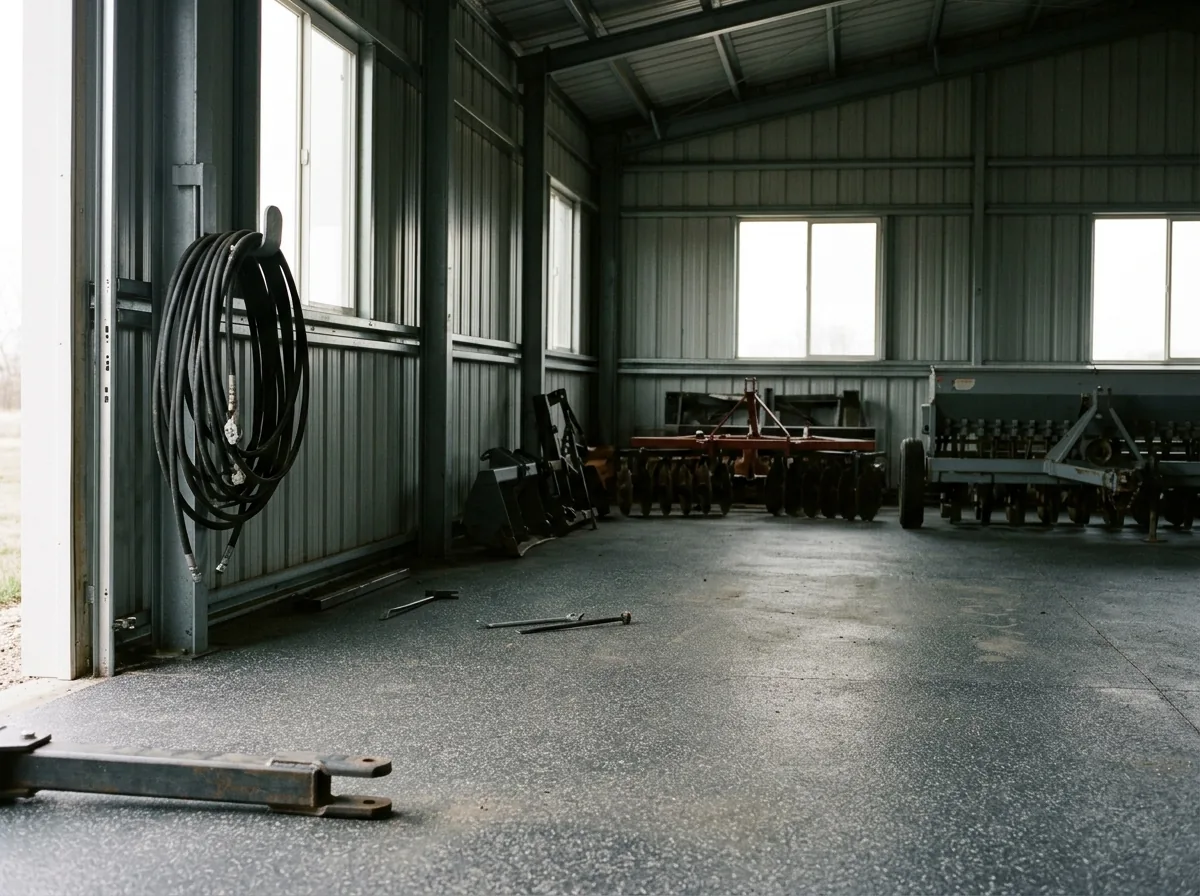
Farm Equipment Bays
Tractors, combines and sprayers bring weight, diesel, hydraulic fluid and whatever the field puts on the tires. The resin, not the decorative layer, is what resists all that. One flake maker tells owners to share their equipment and its weights with the installer, and to list the chemicals and cleaners the floor will see, since resins differ in chemical and heat resistance. Commercial and industrial floors in heavy use generally call for 100% solids coatings. Ask for the product's data sheet and check it against your list.
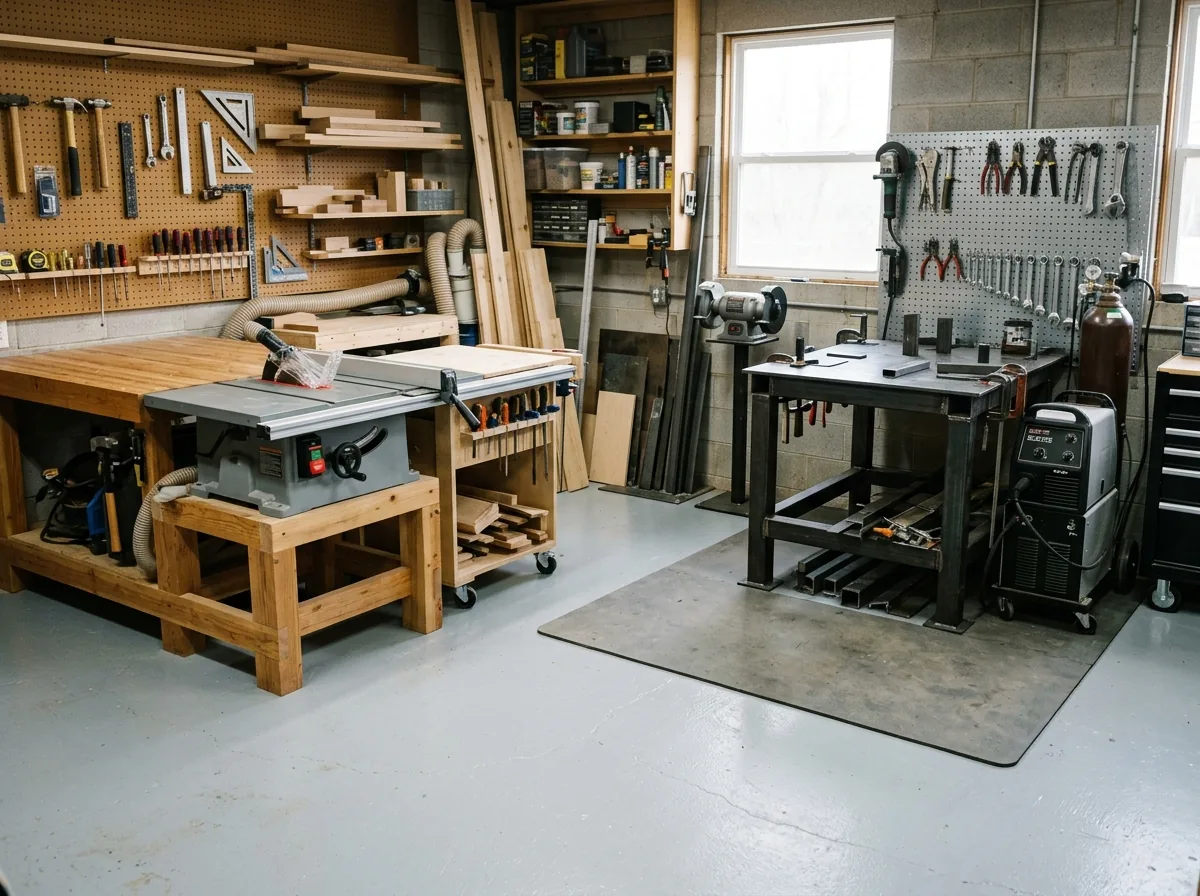
Woodworking and Metal Shops
A coated floor is easy to sweep sawdust and metal shavings off. Welding is the catch. Coating sellers answering one welder's question on a large garage forum agreed that resin floors handle sparks but show burn marks from slag and spatter, and that a penetrating densifier stands up better. If you weld or torch-cut, plan a welding mat or a bare, densified bay for that work (polished concrete). Ask about grit in the topcoat around the bench and the saw.
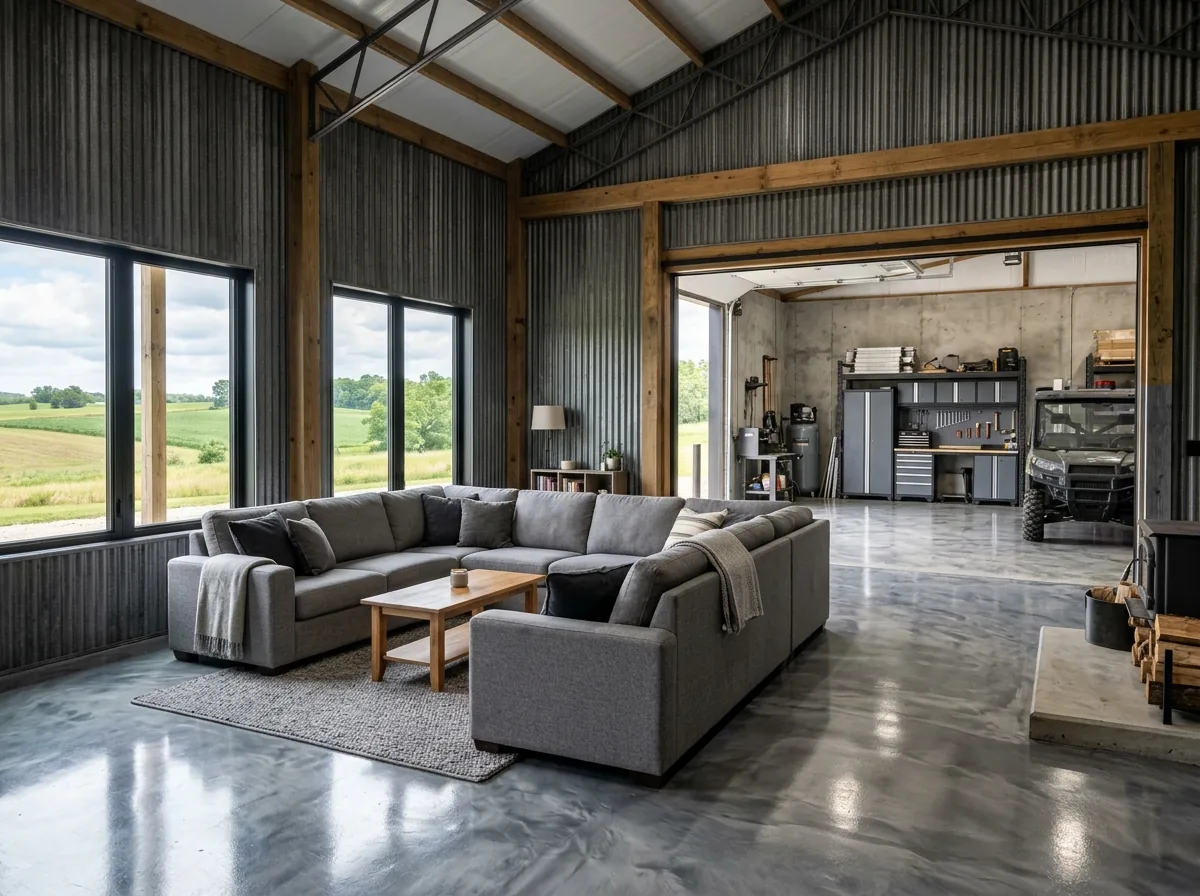
Barndominium Living Areas
In a barndominium, one slab can be a shop at one end and a living room at the other. The living side calls for a different finish: a flake or metallic floor with a satin topcoat, chosen for looks and comfort (metallic epoxy floor, flake epoxy floor). Because people live on it, the moisture test matters more here, not less. If the slab has radiant heating tubes, tell the installer before any grinding starts.
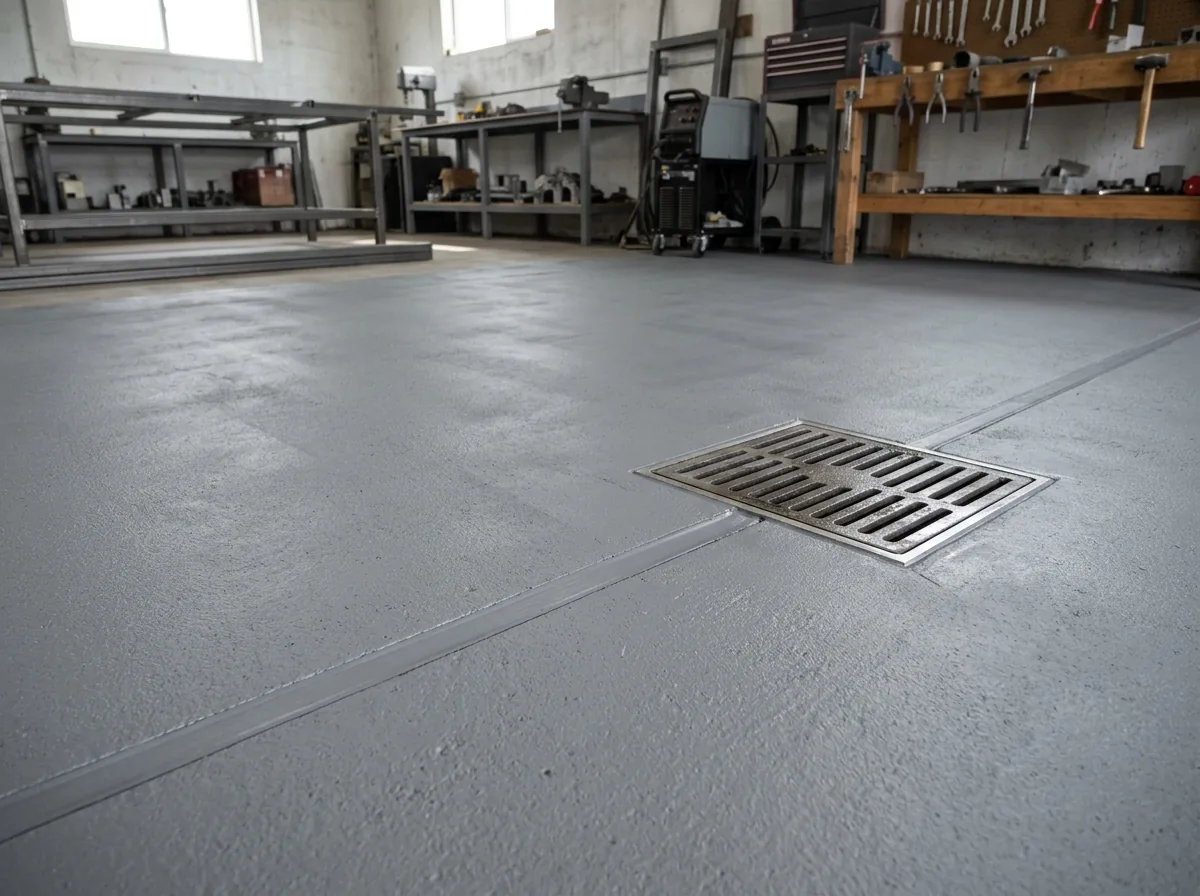
Floor Drains and Saw-Cut Joints
Big slabs have long saw-cut control joints, since concrete guidance spaces them at 24 to 36 times the slab thickness, about every 10 feet on a 4-inch floor. In a shop where carts, jacks and forklift wheels cross them, a semi-rigid filler supports the joint edges so they don't chip. Isolation joints at walls and posts stay flexible. At floor drains, ask how the coating will be finished into the drain body, and whether the slope around it will be checked so water doesn't pond on the new surface.
Why Evansville homeowners and businesses call Evansville Epoxy
- One installer per request, never a list of callers
- Ask for the coating system and cure times in writing
- Ask that the moisture test and grinding appear in the quote
- No charge to you for the referral
Shop Floor Cost and Downtime
A shop floor is priced on its size, its condition and what it has to resist.
Prep
The per-square-foot rate covers grinding or blasting, crack and joint work, and the coats. Ask for joint filling and crack repair as separate lines so you can compare quotes.System
Standard epoxy sits in the $4 to $10 range above. Heavy-duty 100% solids systems for commercial and industrial use are $12 a square foot and up.Time out of service
Standard epoxy needs 2 to 7 days before vehicles. A polyaspartic system can usually take vehicles in 24 to 48 hours (polyaspartic floor coating), which matters if the shop can't sit empty for a week.
For a commercial repair shop or fleet garage, see auto shop floor coating.