
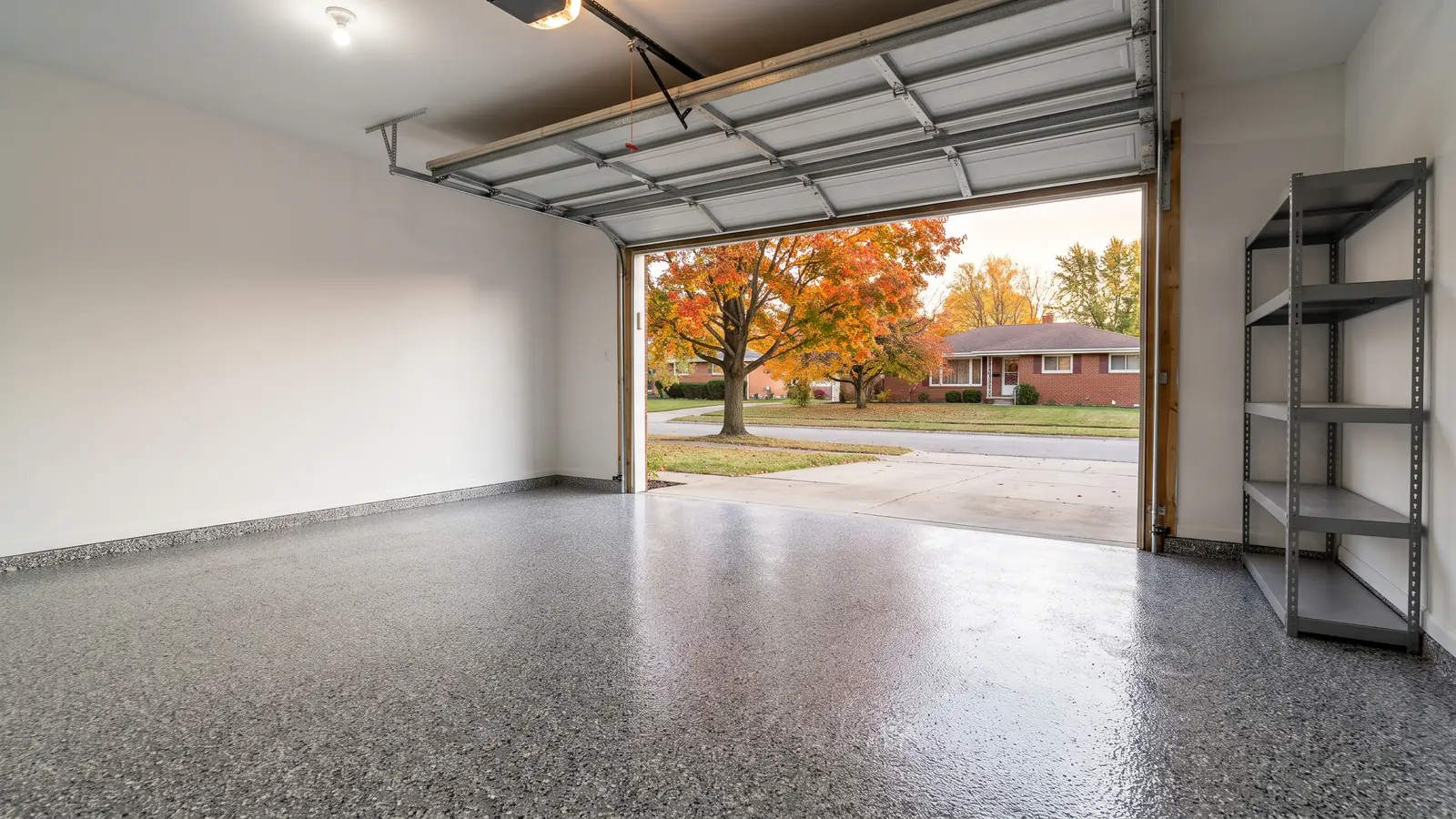
Commercial Epoxy Flooring by Business Type

Retail Stores
A store floor has to look clean under bright lights and survive carts, pallets of stock and fixtures being moved around. A solid color or fine flake in a satin finish suits most shops; a decorative metallic suits a boutique (metallic epoxy floor). If the existing slab is sound and you'd rather not add a coating at all, polishing the concrete is the main alternative. Ask whether the work can be done section by section, so fixtures move once per section and the store stays open. Also ask how a damaged spot will be fixed in five years: a solid color touches up easily, while a metallic pour is one of a kind and can't be matched patch for patch.
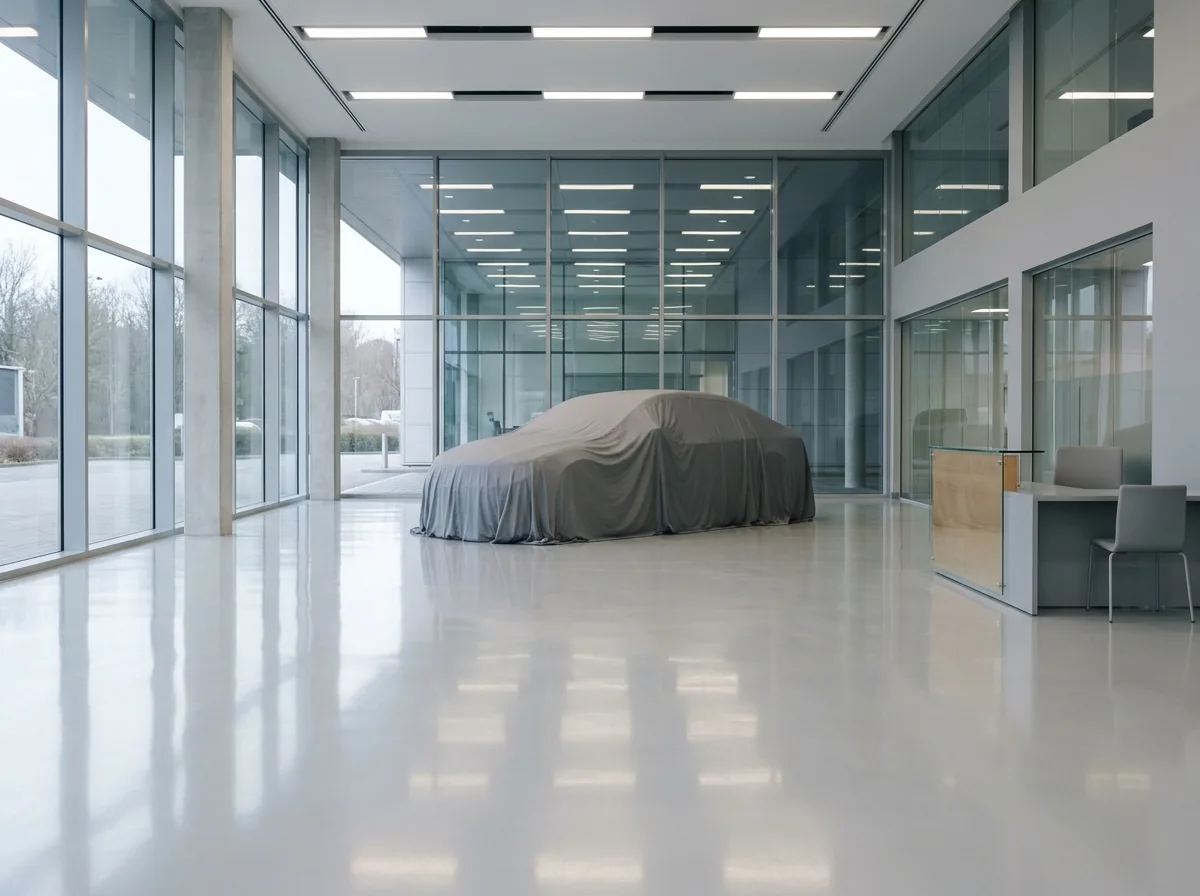
Car Dealership Showrooms
Showrooms combine a high-gloss look with cars driven straight in from the street, tires still warm. That heat is what lifts weak coatings (hot-tire pickup). Ask for a topcoat rated for hot tires and UV, since showroom windows put sun on the same floor. A gloss finish also shows every scratch, so ask how a scuffed lane can be recoated later without redoing the whole room.
- One fast-cure polyaspartic topcoat: heavy traffic after about 24 hours at 72°F
- Topcoat traits to ask for: hot-tire resistance and UV stability
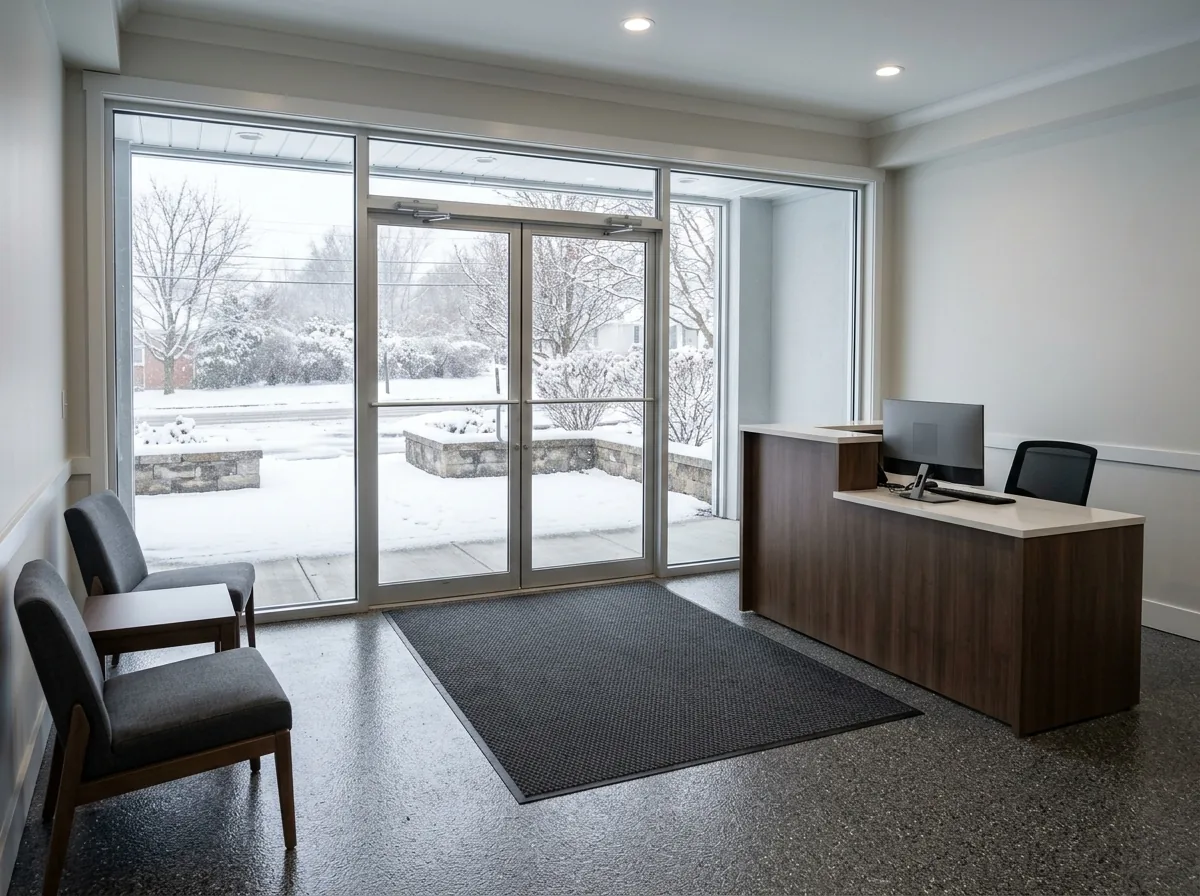
Offices and Lobbies
The entrance is where a lobby floor fails first. Evansville averages 10.8 inches of snow a year, and city crews put brine on the streets ahead of storms, so winter brings salt and slush through the door. A continuous coating keeps that out of the concrete, and a textured finish keeps it from becoming a slip hazard. Ask for walk-off matting inside the door and a finish with grit near the entry. Further in, offices can use a smooth solid color or flake.
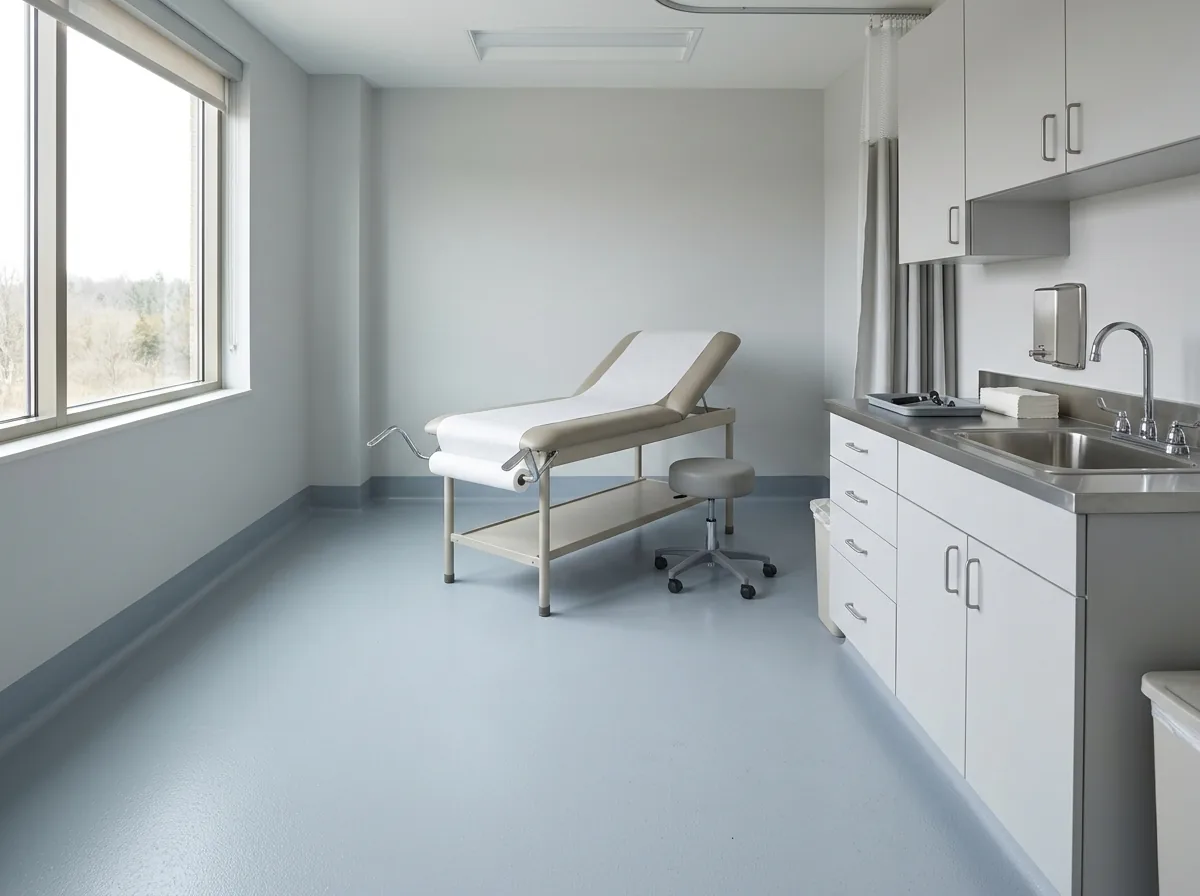
Medical and Dental Clinics
Clinics need floors that can be disinfected every day without seams to trap dirt. One flooring maker's healthcare guide calls for exam and treatment rooms to have a non-absorbent floor, preferably without seams, with a rounded, watertight joint where floor meets wall and no raised thresholds. That rounded joint is a cove base (how cove base is built). Ask for the coating's chemical resistance chart and check it against the disinfectants your staff actually use.
- Floor-to-wall joint: rounded and watertight
- Doorways: no raised thresholds, so carts and wheelchairs roll through
Schools and Churches
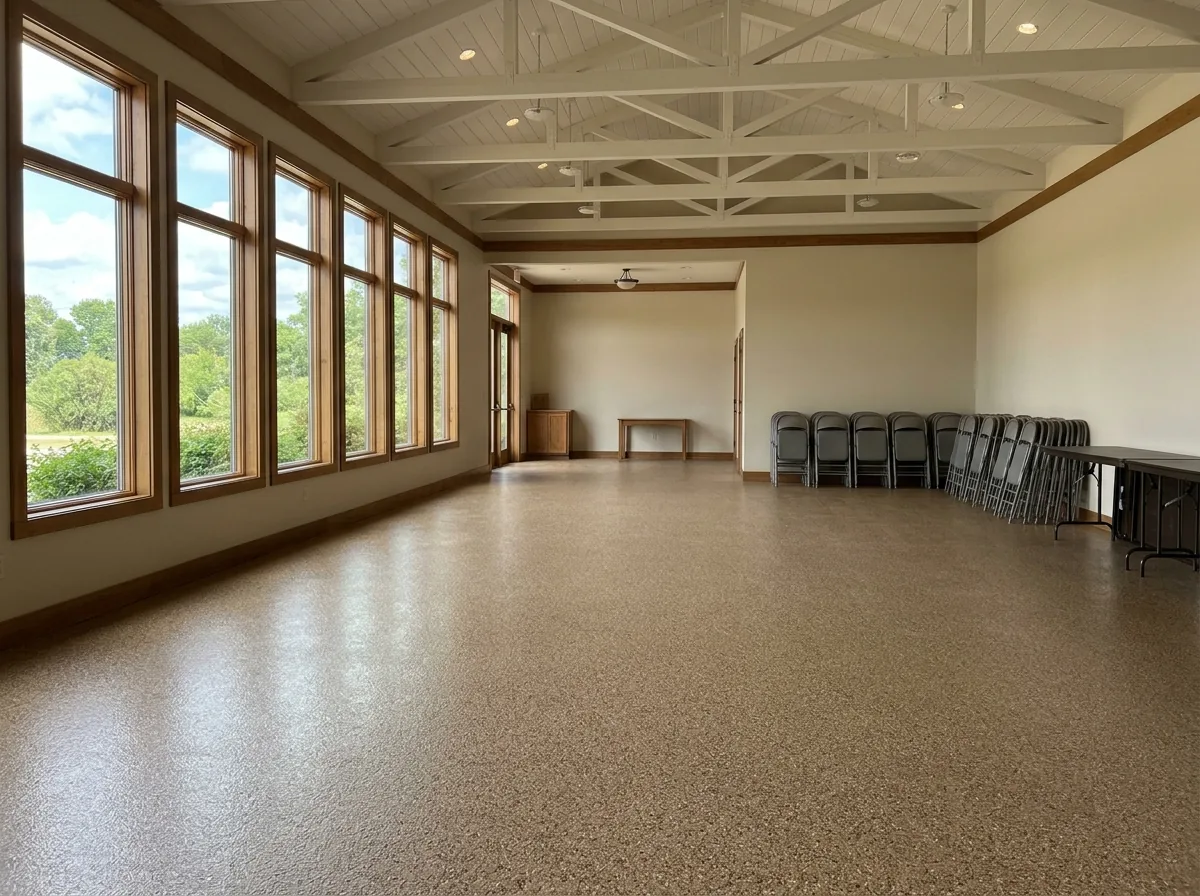
Halls, cafeterias and classrooms are big rooms used on a fixed calendar, so the schedule usually decides the system. A slower, cheaper epoxy can work over a summer break; a weekend between services may need a fast-curing one. Odor matters in buildings where children or congregations come back soon. MMA cures fastest but has a strong smell that often needs mitigation during the install, and EPA advises extra ventilation whenever products that emit VOCs are used indoors. Ask for the VOC figure on each data sheet. Some 100% solids epoxies list 0 grams per liter; one solvent-borne industrial epoxy lists under 340.
Gyms and Fitness Studios
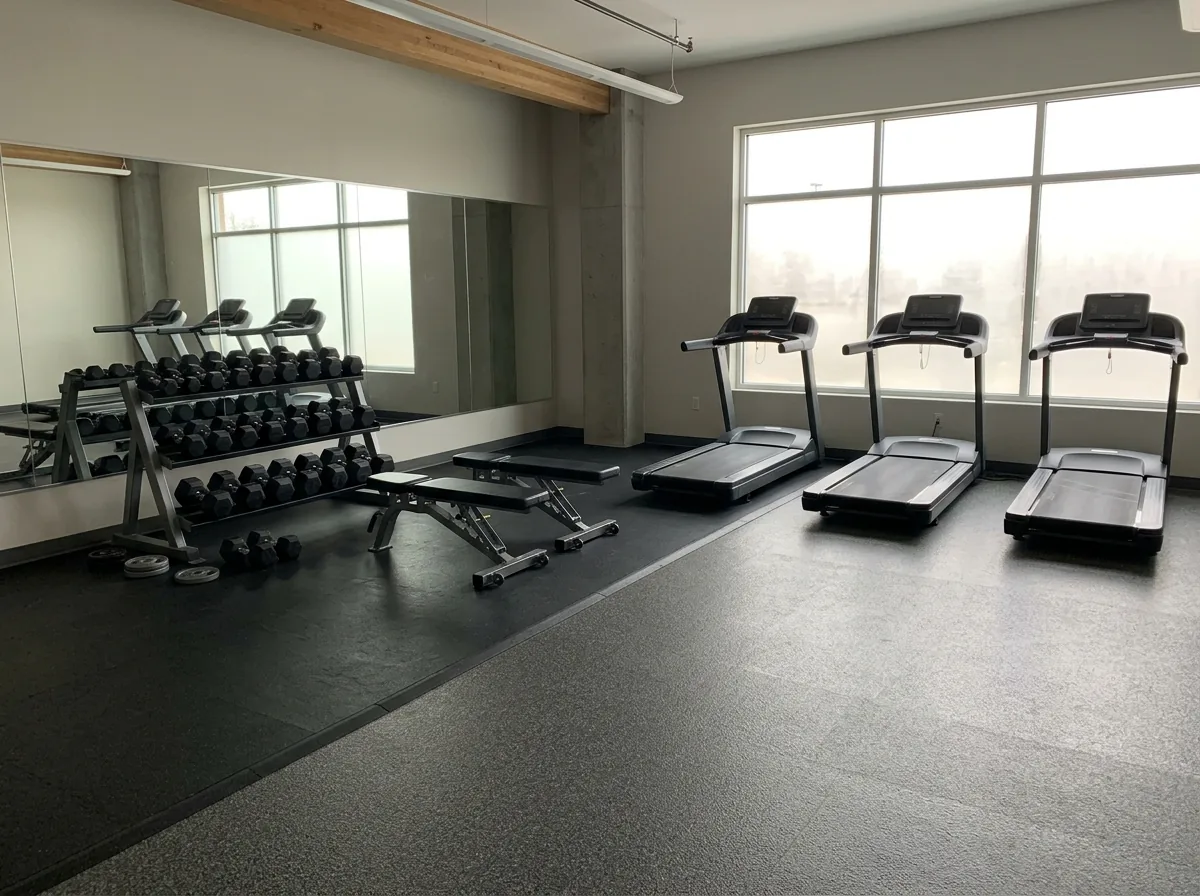
Gyms usually split the floor. Rubber goes where weights drop, and a coating goes in the locker rooms, restrooms, entry and cardio areas, where sweat and spills need to be mopped. Ask how the coating will meet the rubber, so the seam between them stays flat and doesn't catch a toe. Polyaspartic data sheets list locker rooms and restrooms among their recommended uses. For showers and wet areas, ask about a textured quartz system (quartz epoxy flooring).
Why Evansville homeowners and businesses call Evansville Epoxy
- One installer per request, never a list of callers
- Ask for the coating system and cure times in writing
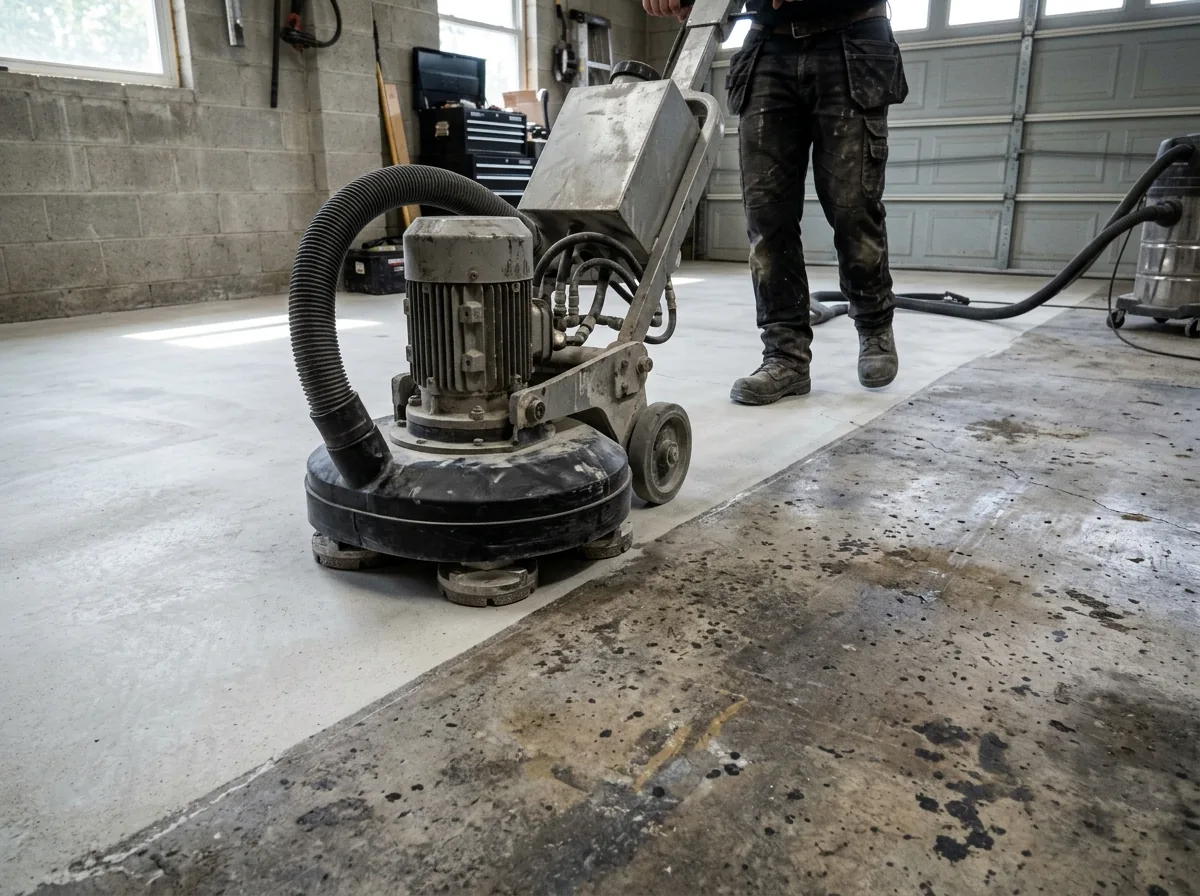
- Ask that the moisture test and grinding appear in the quote
- No charge to you for the referral
Keeping a Business Open During a Floor Install
A resin floor goes down in several steps, and the area has to be cleared while it does. Other work in that space usually stops so nothing contaminates the fresh coating. There are three ways to keep that from closing the business, and most commercial jobs use two of them.
Phase the job. Coat one zone at a time and move fixtures, stock or staff around the work. Ask the installer to draw the phases on a floor plan with a return-to-service time for each.
Work off-hours. Ask whether the crew can work nights or weekends and what that adds to the price.
Pick a faster chemistry. Return-to-service times differ a lot by system:
| System | Foot traffic | Back in full service | Trade-off |
|---|---|---|---|
| Epoxy mortar | n/a | about 24 hours | Lowest initial cost; slowest cure; low abrasion resistance |
| Urethane concrete | 4 to 8 hours | 6 to 12 hours | Handles moisture vapor and new concrete; strong chemical resistance |
| Methyl methacrylate (MMA) | 1 hour | 2 hours | Fastest; costs more; strong odor needs mitigation |
The cheapest system per square foot isn't always the cheapest job. A faster floor that costs more can pay for itself if it gets a business open days sooner, and a longer-lasting one means fewer shutdowns later. Data-sheet times assume a warm building, about 72°F on most sheets, so ask for the return-to-service time at the temperature your space will actually be overnight. Cure and drive-on figures for garage-type coatings are on the polyaspartic floor coating page.
What a Commercial Floor Bid Should Spell Out
The system for each area
Lobby, back room and restrooms may each get a different build.Preparation
Grinding or shot blasting to a stated profile, plus crack and joint repair (concrete crack repair).Moisture readings
Results from the test methods named on the data sheet, especially where no vapor barrier was laid under the slab (how slabs are tested).Phasing and hours
Which zones close when, and the return-to-service time for each.Finish and slip resistance
Gloss level, texture and grit in each zone.Who moves what
Fixtures, shelving and equipment: whether the crew moves them or your staff does, and whether that's in the price.Cleaning instructions
Which cleaners and pads the coating maker allows; data sheets often call for a mild cleaner.Warranty terms in writing,
including who handles a claim.