
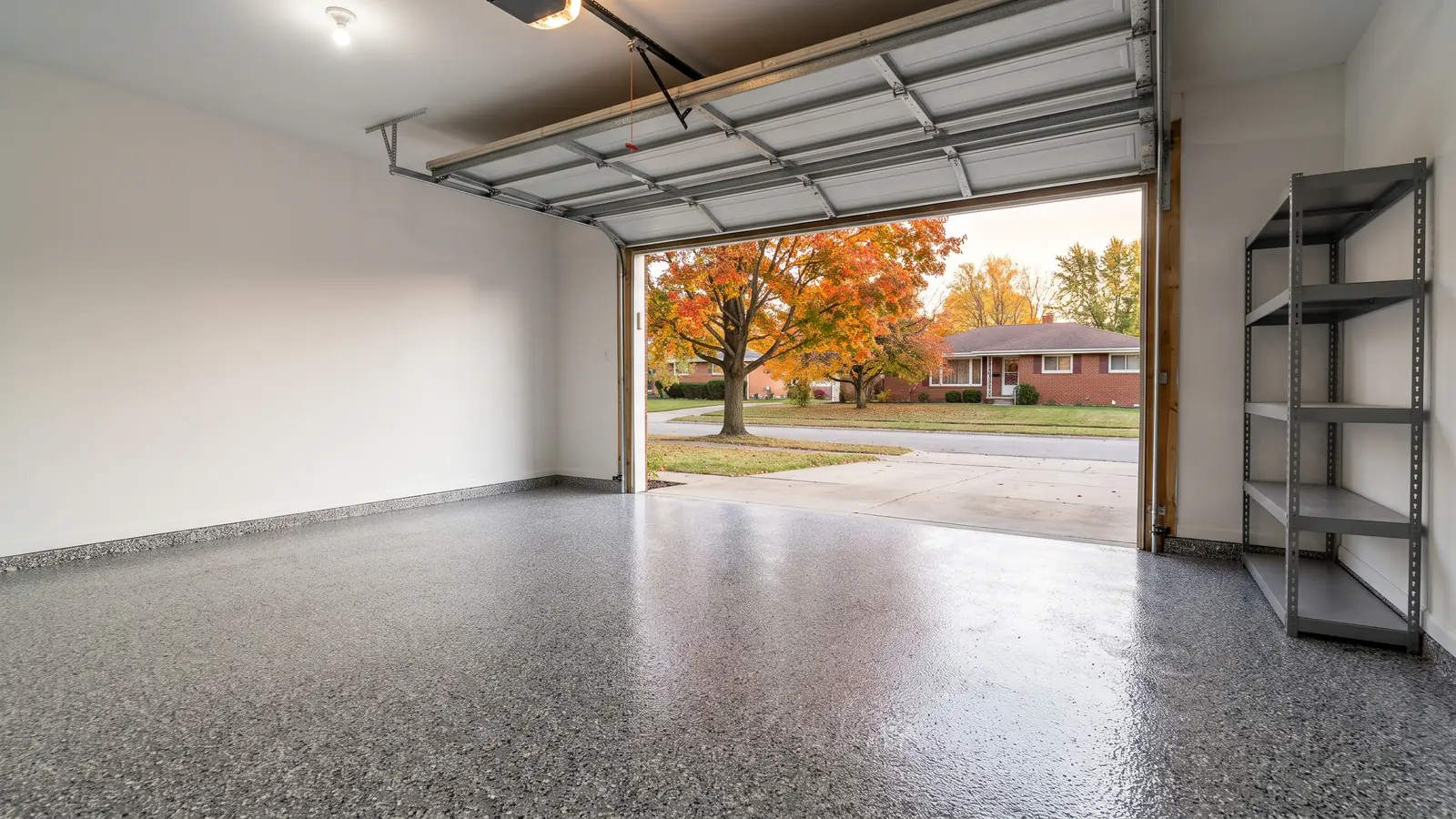
Polyaspartic Floor Coating Systems, from One-Day Flake to Clear Sealer
One-Day Full Polyaspartic Flake Systems
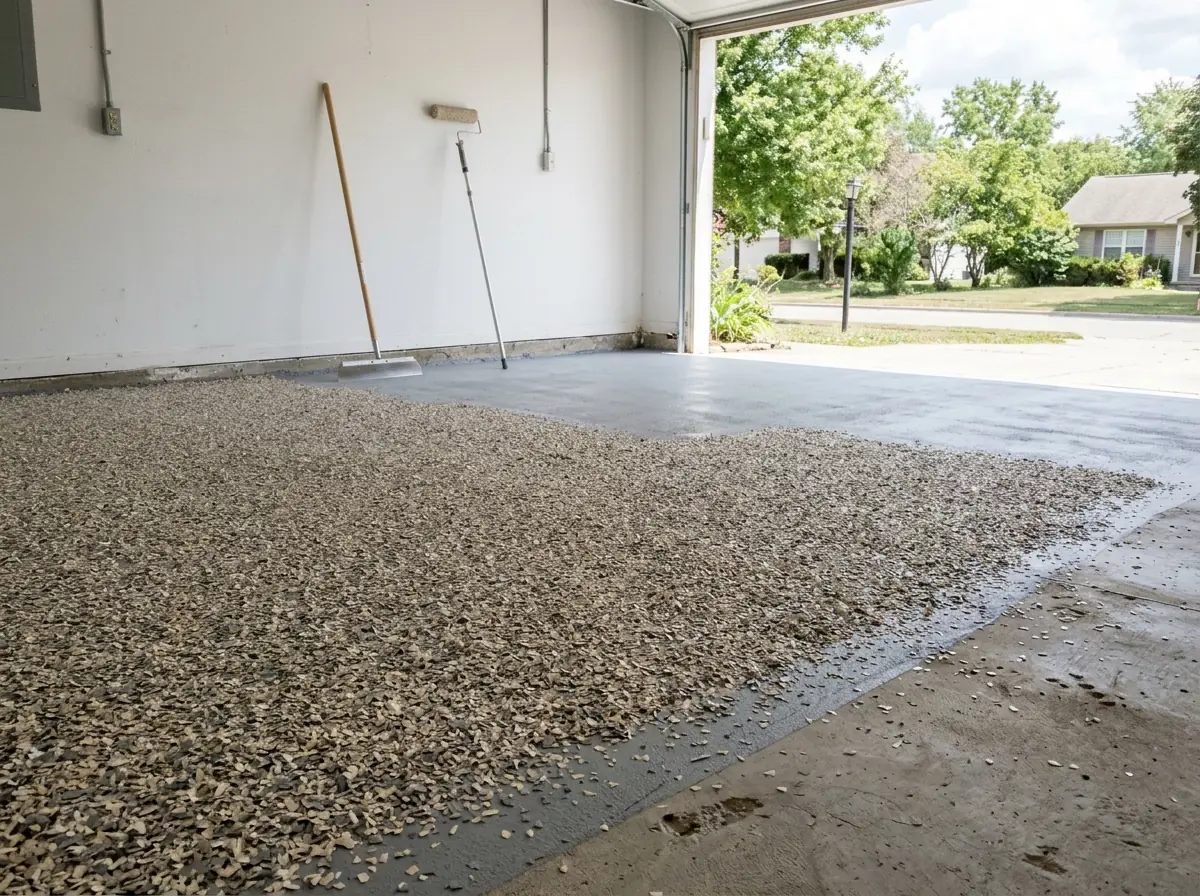
This is the system people mean by "one-day garage floor." Grinding, base coat, chips and a clear polyaspartic top all happen in one visit, because each coat cures in hours rather than overnight. The trade-off is time in the bucket. A fast-cure polyaspartic gives the crew minutes to spread each batch, so ask how many people will be on site and what cure speed they plan to use for the season.
- Working time after mixing: about 14 minutes to 2 hours, by cure speed and humidity
- Topcoat thickness: up to 16 mils per coat on one data sheet
- Foot traffic on a fast-cure topcoat: about 4 to 6 hours at 72°F
Epoxy Base with Polyaspartic Topcoat
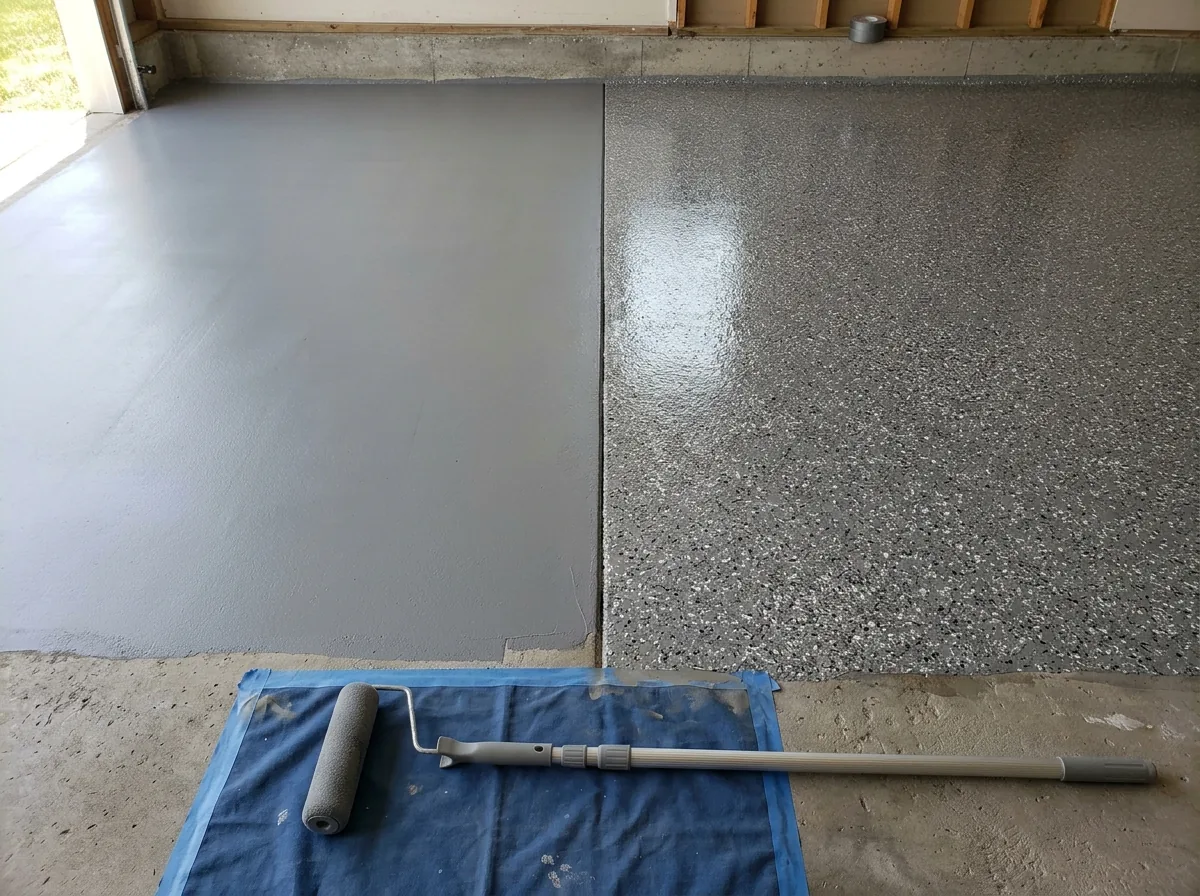
A hybrid floor puts a 100% solids epoxy underneath and a polyaspartic on top. The epoxy gives a long working time and builds thickness; the polyaspartic adds a hard, non-yellowing surface. The catch is time: the epoxy has to firm up before the topcoat goes on, yet still be topcoated inside its recoat window, so this build often runs past one day. Ask for this build when you want metallic or detailed flake work under a UV-stable top. Metallic options are on the metallic epoxy floor page.
- 100% solids epoxy base: next coat within 24 hours; heavy traffic after 2 days
- One polyaspartic topcoat: recoat after 4 hours; heavy traffic after 48 hours at 75°F
Polyurea Basecoat Systems
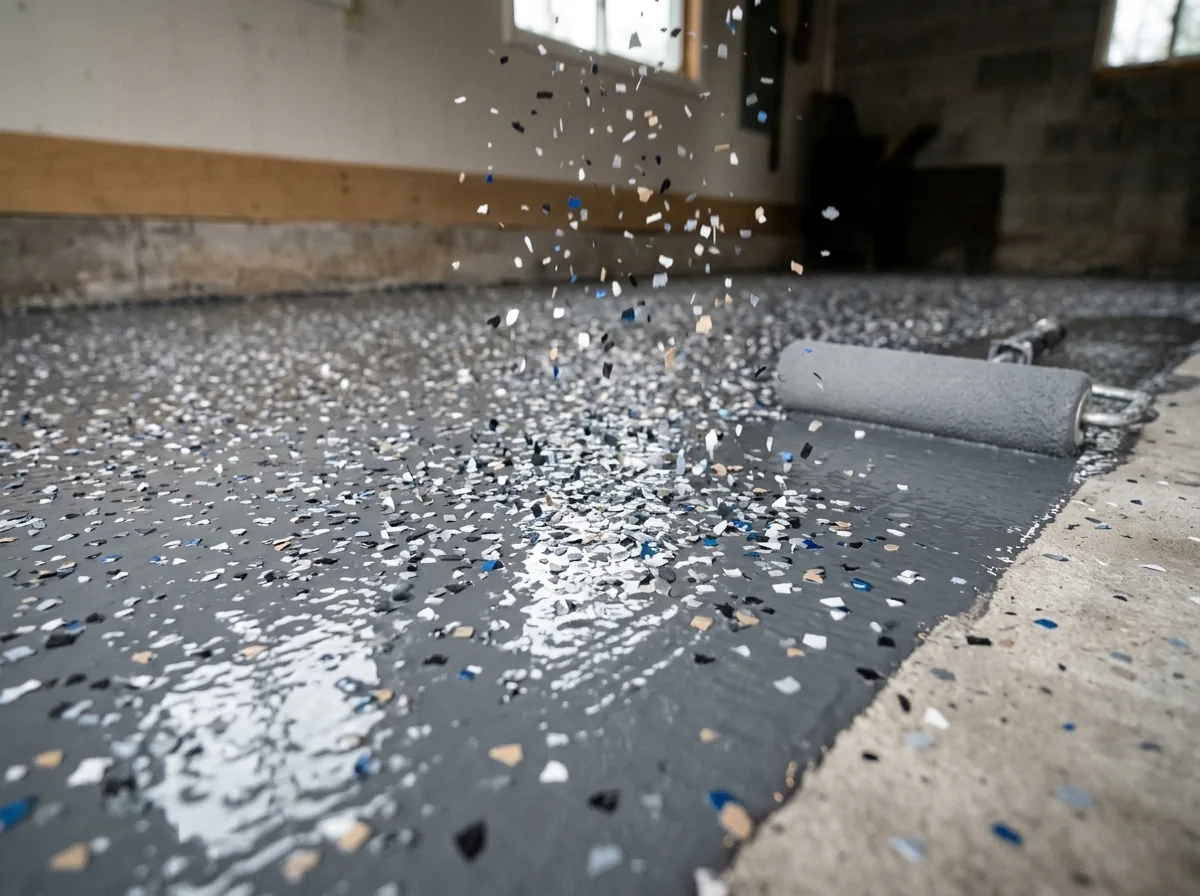
Many one-day systems use polyurea as the base and polyaspartic as the top. The polyurea goes down thin and cures fast enough to walk on within hours, which is what makes a same-day floor possible. It isn't a finish on its own. One maker's sheet says its polyurea base yellows over time, so it must be covered completely ("broadcast to rejection") with chips. So a polyurea-based system is a flake floor, not a solid color.
- Polyurea base: 6 to 8 mils, foot traffic in about 1 to 4.5 hours
- Full one-day system (base, 1/4-inch chips, topcoat): over 50 mils on average
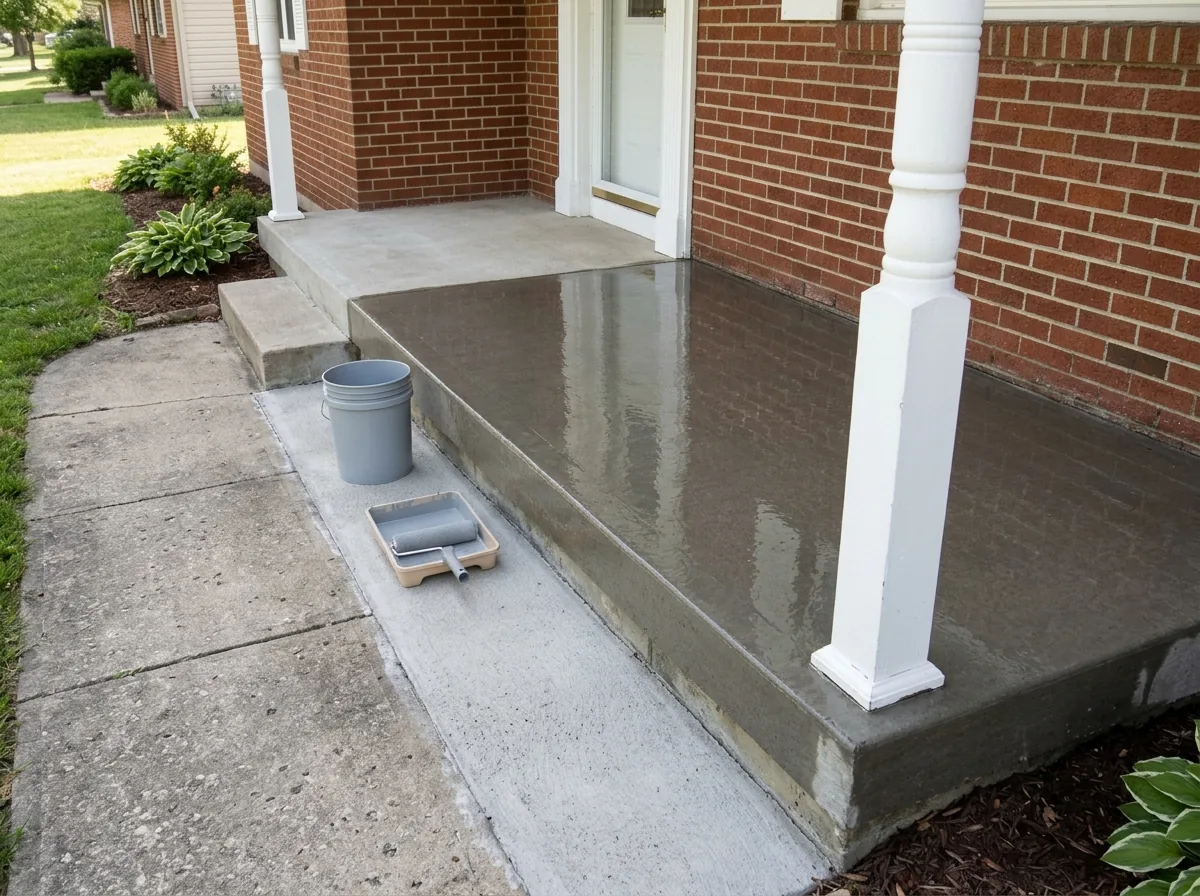
Clear Polyaspartic Sealer over Bare Concrete
A clear polyaspartic can go directly on prepared concrete as a sealer. It keeps the look of the slab, stains and patches included, so it suits concrete that already looks decent: a newer garage, a basement shop, a covered porch. It's thinner than a flake system, and one sheet warns against applying it on damp concrete. Gloss on bare concrete can be slick when wet, so ask about grit in the coat (anti-slip floor coating).
- One clear sealer: 10 to 15 mils, light foot traffic in 3 to 5 hours, full cure in 24 to 48 hours
- Application window on that sheet: 50°F to 90°F, humidity below 85%
Cold-Weather Installs
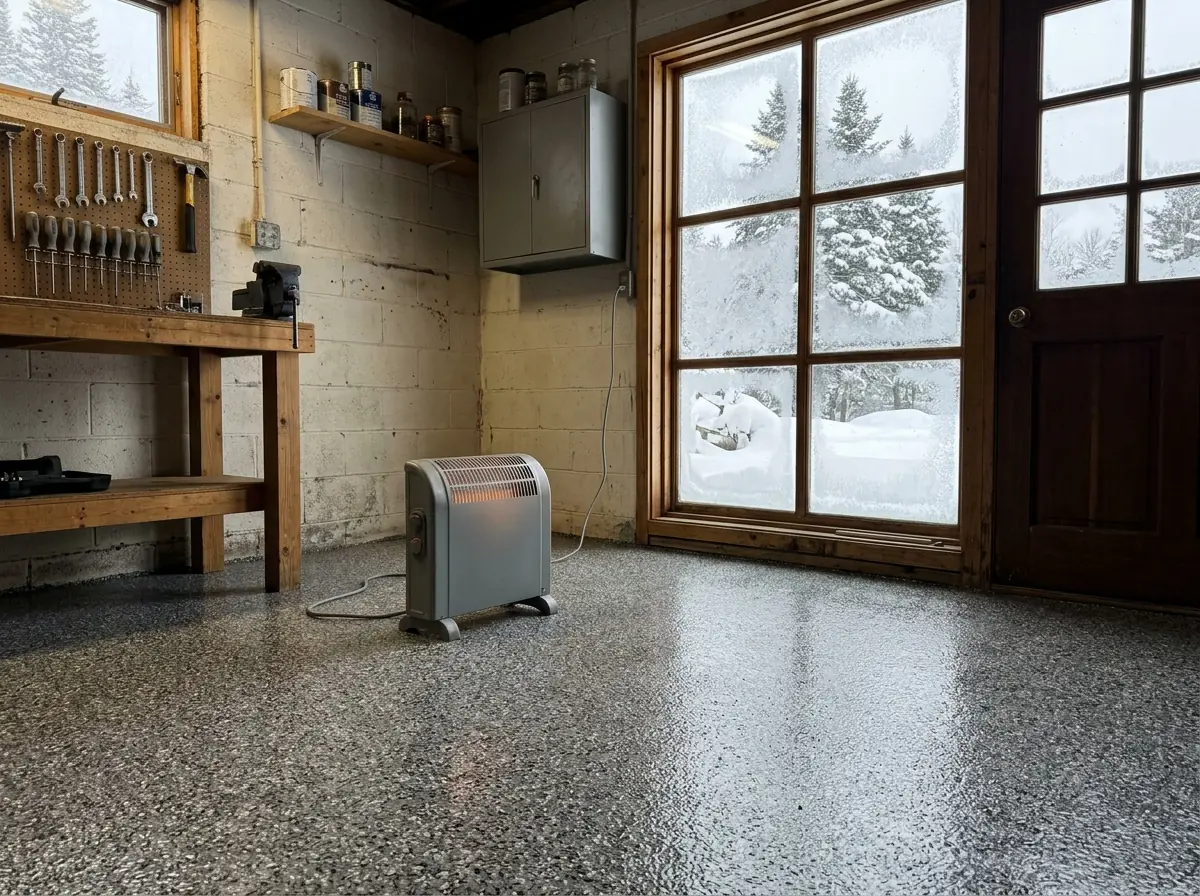
Polyaspartic and polyurea stretch the season, within limits. One polyaspartic sheet allows air and floor temperatures from 35°F, against 50°F for a typical water-based epoxy, but the material itself has to be kept between 60°F and 85°F, and any job below 60°F must use the fast-cure version. One polyurea base calls for its medium or fast speed below 50°F. Evansville January nights average a low of 25.5°F, so a winter job in an unheated garage still needs a warm day, a heater or both. Expect longer traffic times in the cold, since published cure times assume about 72°F.
Exterior and UV-Exposed Slabs
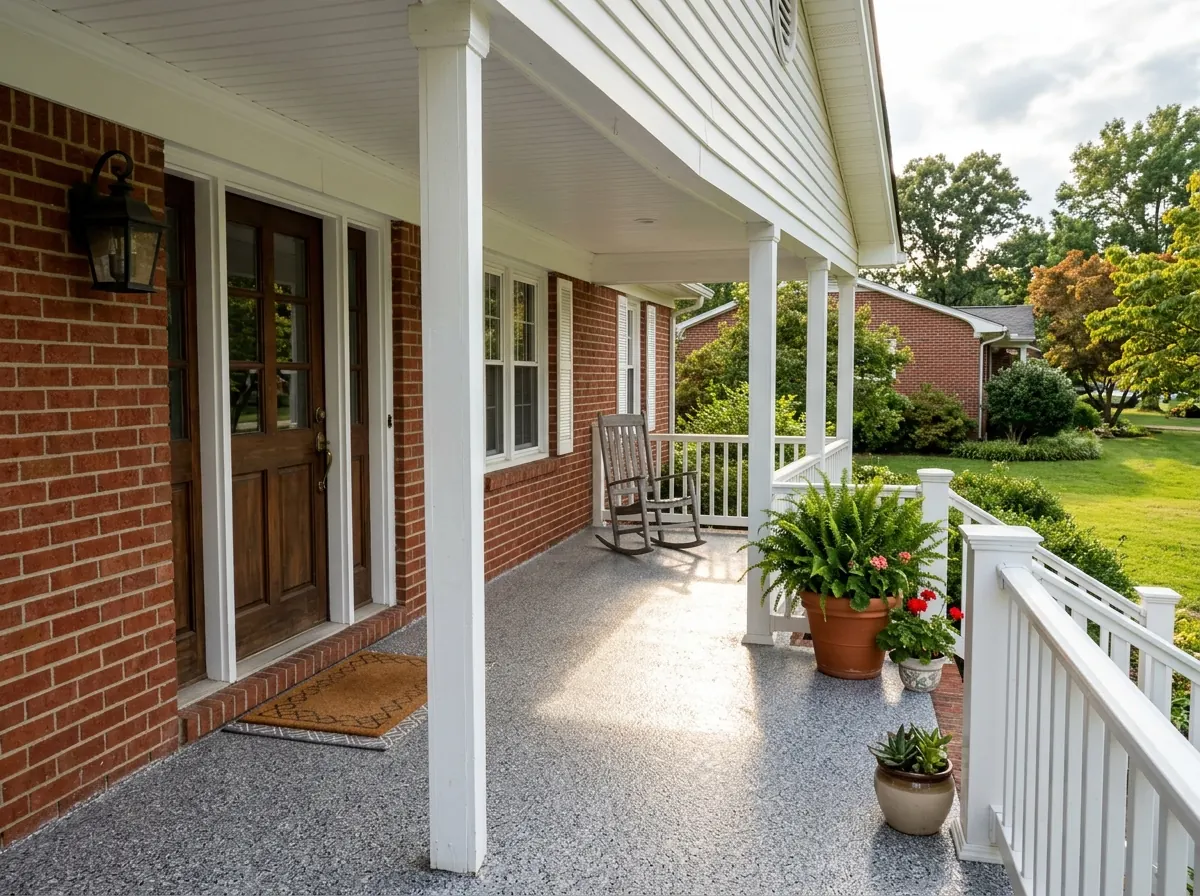
Sunlight is where polyaspartic earns its price. Data sheets describe it as UV stable and suited to exterior use, while cost guides rate epoxy's UV resistance poor to fair. A garage with a west-facing door, a porch or a patio should have a polyaspartic top layer at least. Outdoor slabs also go through freeze-thaw cycles and need texture for wet feet; those details sit on the concrete patio coating page.
Why Evansville homeowners and businesses call Evansville Epoxy
- One installer per request, never a list of callers
- Ask for the coating system and cure times in writing
- Ask that the moisture test and grinding appear in the quote
- No charge to you for the referral
Cure and Return-to-Service Times: Epoxy, Polyaspartic and Polyurea
"Dry" means different things on a floor. Walk-on, drive-on and full cure are separate milestones, and each product sets its own. These are figures from cost guides and manufacturers' data sheets, mostly at about 70°F to 75°F:
| Coating | Walk on it | Drive or heavy traffic | Full cure |
|---|---|---|---|
| Epoxy, general (cost guide) | 16 to 24 hours | 2 to 7 days | 7 days (solid epoxy) |
| 100% solids epoxy (data sheet) | 6 to 16 hours | 2 days | 5 days |
| Water-based epoxy (data sheet) | 6 hours (light), 24 hours (normal) | 72 hours | n/a |
| Polycuramine garage coating (data sheet) | 8 to 10 hours | 24 to 36 hours | n/a |
| Polyaspartic, general (cost guide) | n/a | 24 to 48 hours | n/a |
| Fast-cure polyaspartic (data sheet) | 4 to 6 hours | 24 hours | n/a |
| Polyaspartic topcoat (data sheet) | 4 to 5 hours (light) | 48 hours | n/a |
| Polyurea base under flake (data sheet) | 1 to 4.5 hours | 48 to 60 hours | n/a |
| Clear polyaspartic sealer (data sheet) | 3 to 5 hours | 24 to 48 hours | 24 to 48 hours |
Two things follow from the table. First, a "one-day floor" means one day of work. You can usually walk on it that evening, but parking waits a day or two. Second, the product name matters more than the label on the quote. Ask for the data sheet of each layer and the drive-on time at the temperature your slab will be. Cold and humid weather both change these numbers.
What to Ask About a Polyaspartic Quote
Is it polyaspartic throughout, or only the topcoat?
Both are legitimate, but they cure and price differently.Which cure speed, and why?
Fast in cold weather, slower in a humid July; the answer shows whether the crew plans for the day.How will the slab be prepared?
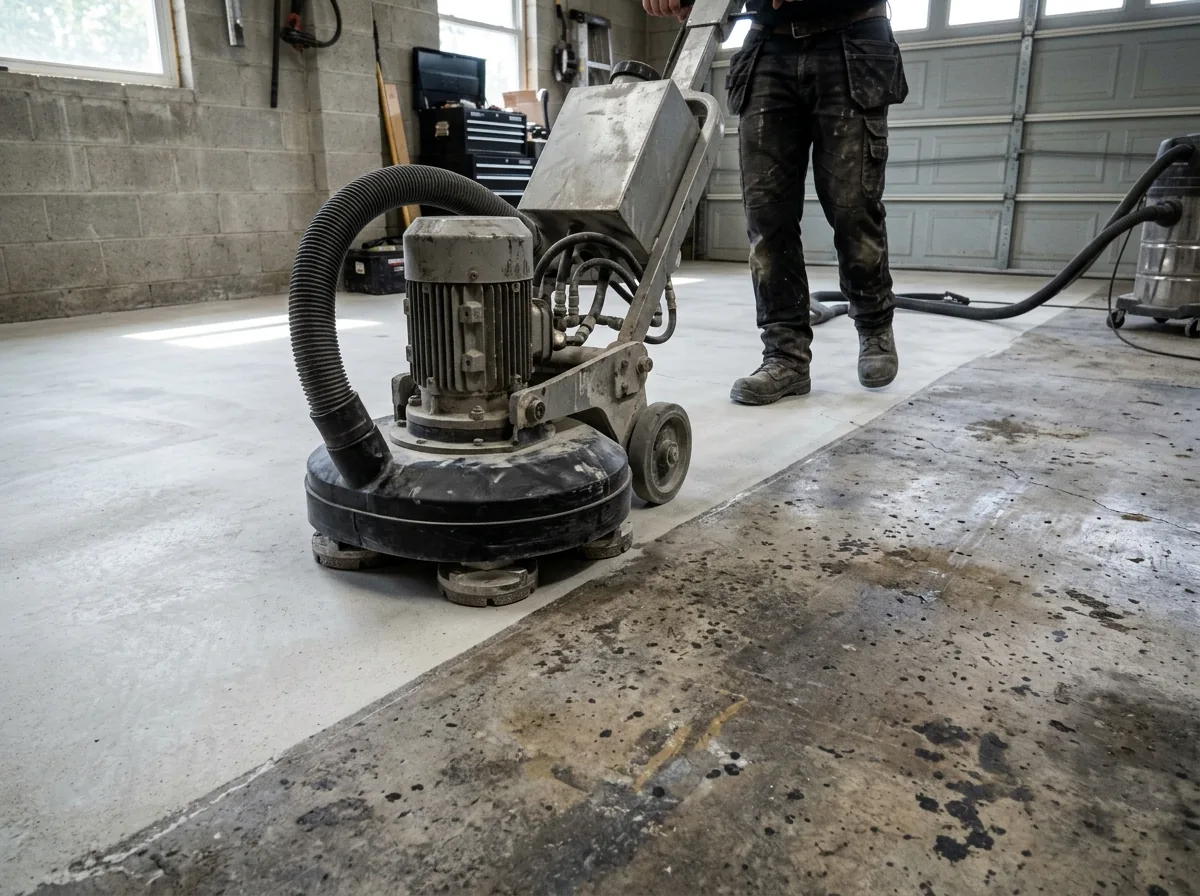
The systems above expect CSP 3 or rougher (concrete grinding and crack repair).How thick is each layer?
Mils on paper make two quotes comparable.What happens at the garage door?
The apron edge takes slush and sun; ask how the coating is finished there.