
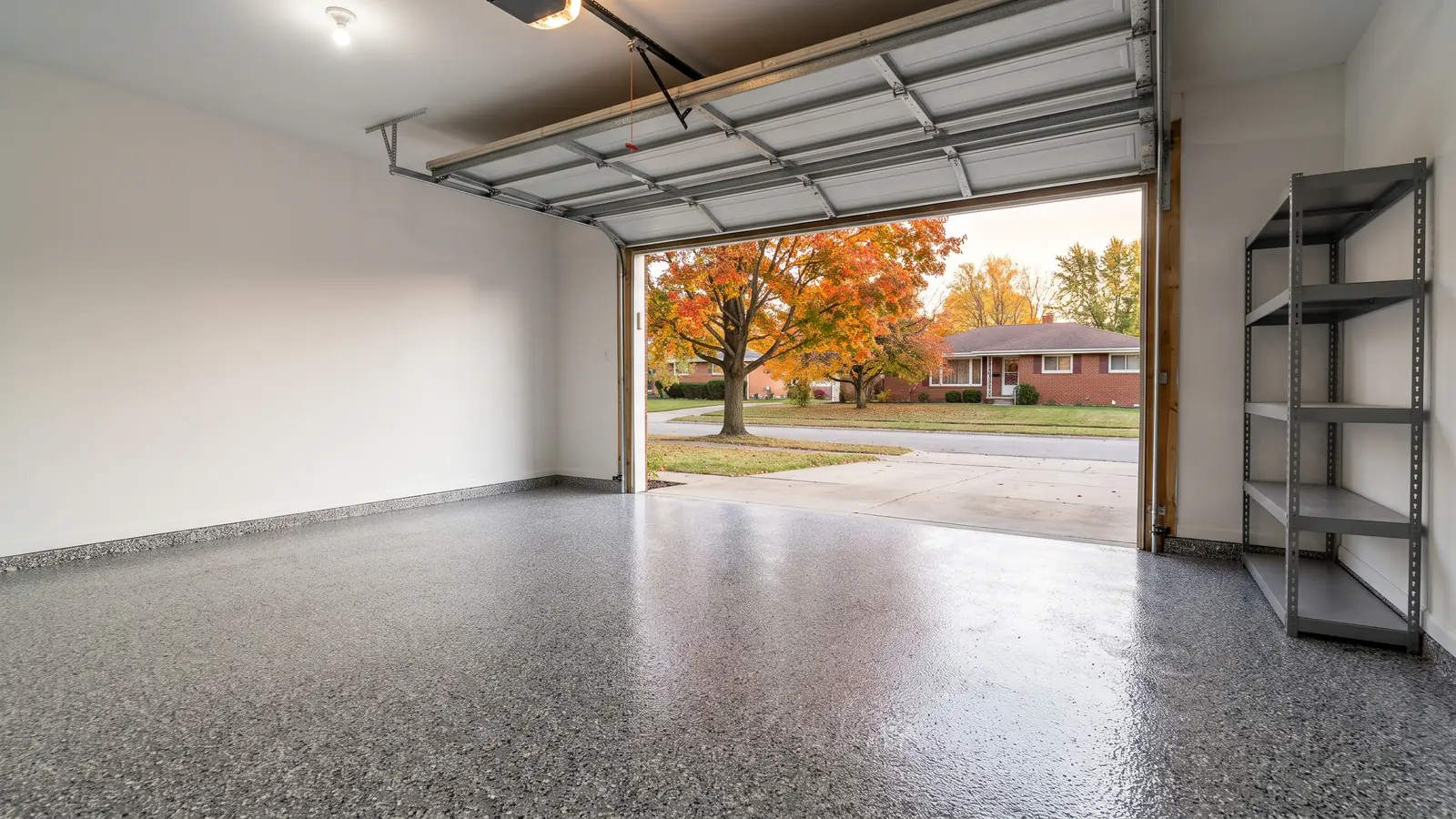
Kennel and Vet Clinic Floor Systems
Kennel floors take claws, urine, disinfectant and a hose every day. The rooms differ in how wet they get and how much texture they can carry, so the system shifts from runs to exam rooms.
Boarding Kennel Runs
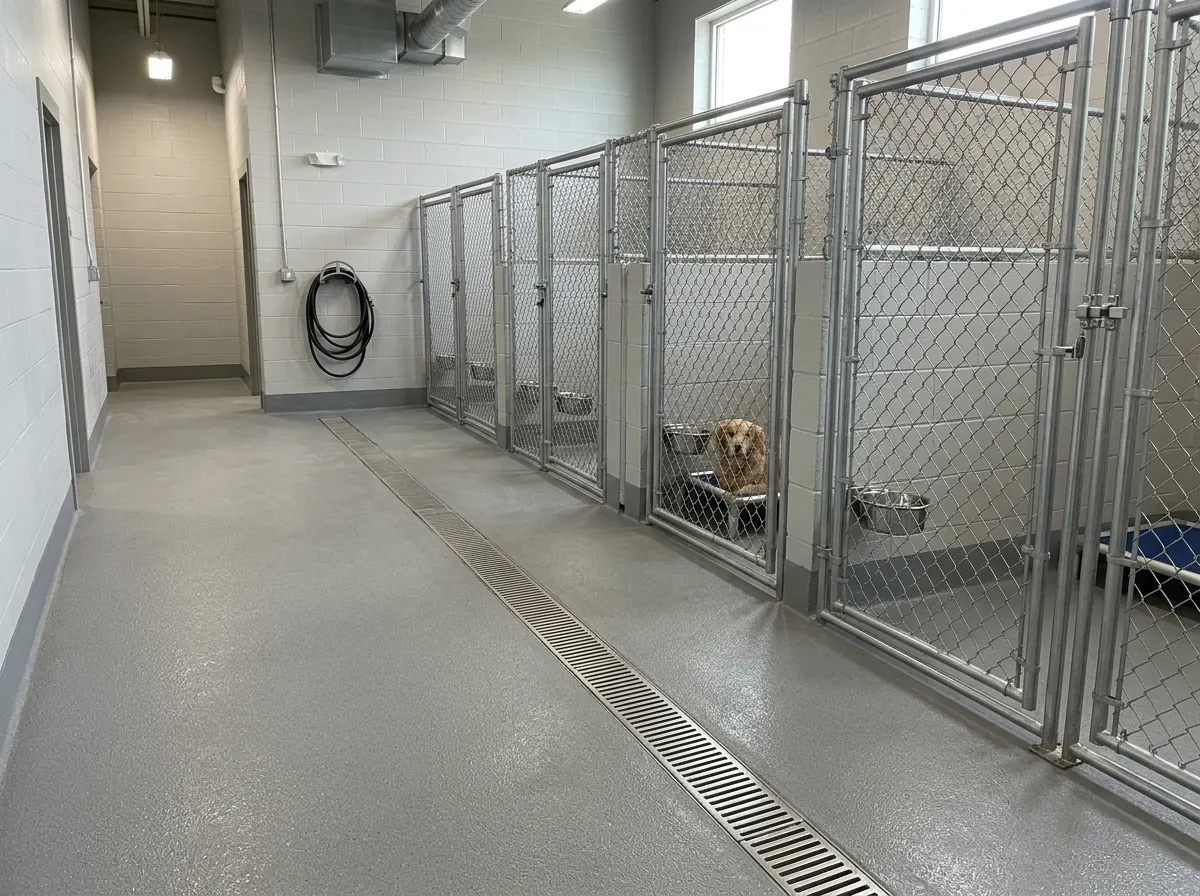
Runs are the wettest rooms in the building. Federal rules for regulated dog facilities ask for surfaces that can be readily cleaned and sanitized, and for drainage that clears waste and water fast so the animals stay dry. Indiana's guidance for commercial dog breeders spells it out: floors of indoor housing must be impervious to moisture. A run floor should have:
- Slope to a trench or floor drain, kept intact by the coating
- A coved base up the block walls and run partitions
- A quartz or flake broadcast for traction
Where runs open outside, a UV-stable polyaspartic or urethane topcoat keeps the sunlit part from yellowing; exterior coatings explains why.
Dog Daycare Play Areas
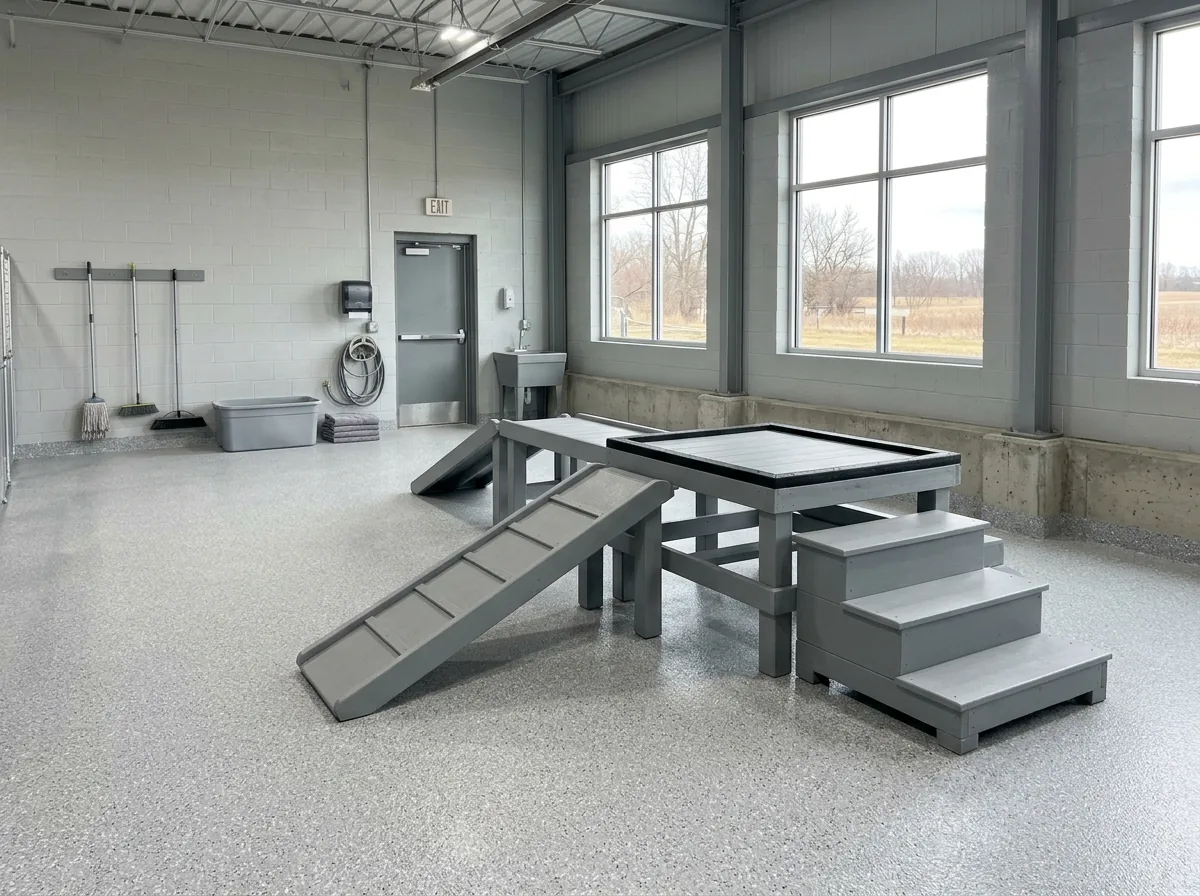
Play rooms are big and open, and dogs run, skid and turn hard. Traction comes first, and a busy flake pattern hides claw scuffs better than a solid color. Accidents happen all day, so the floor still needs to be free of seams and quick to mop. Ask for a texture that grips without being so coarse that mopping turns slow.
Vet Exam Rooms
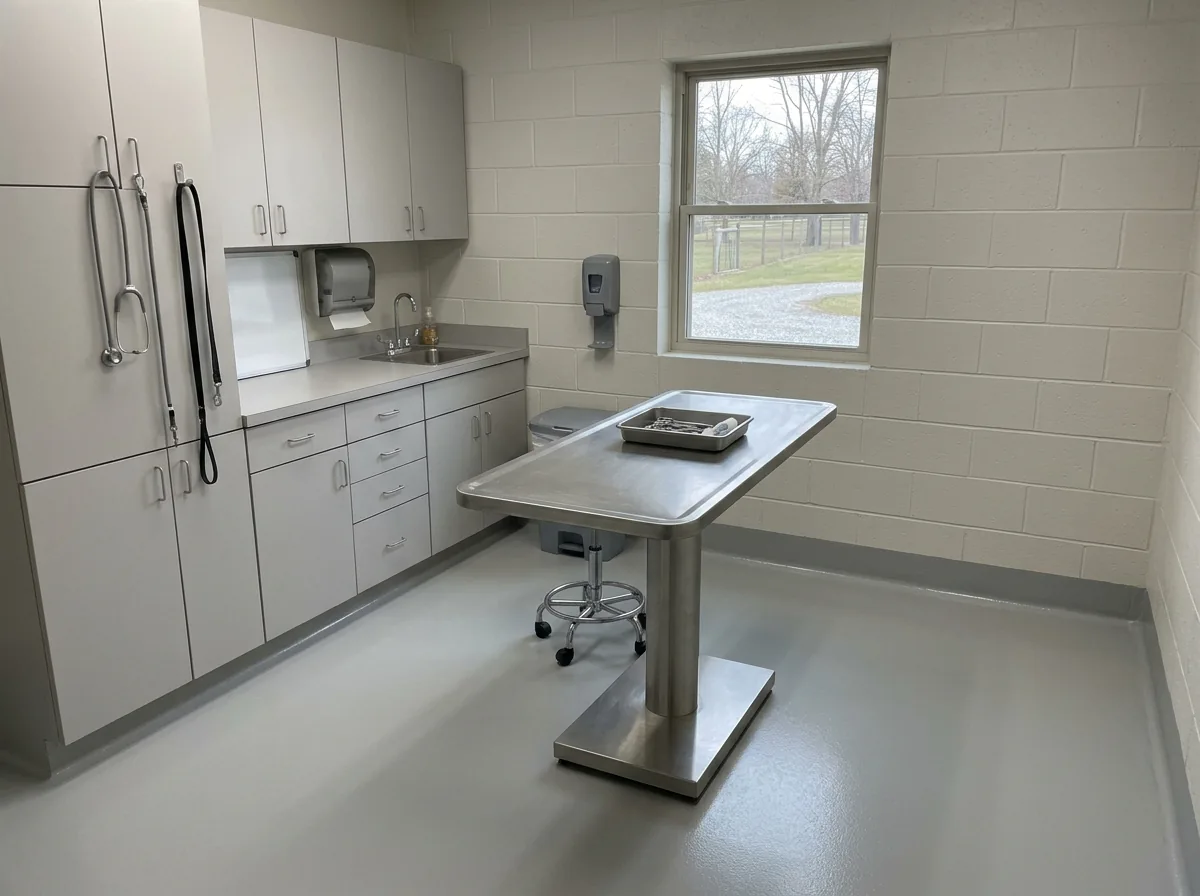
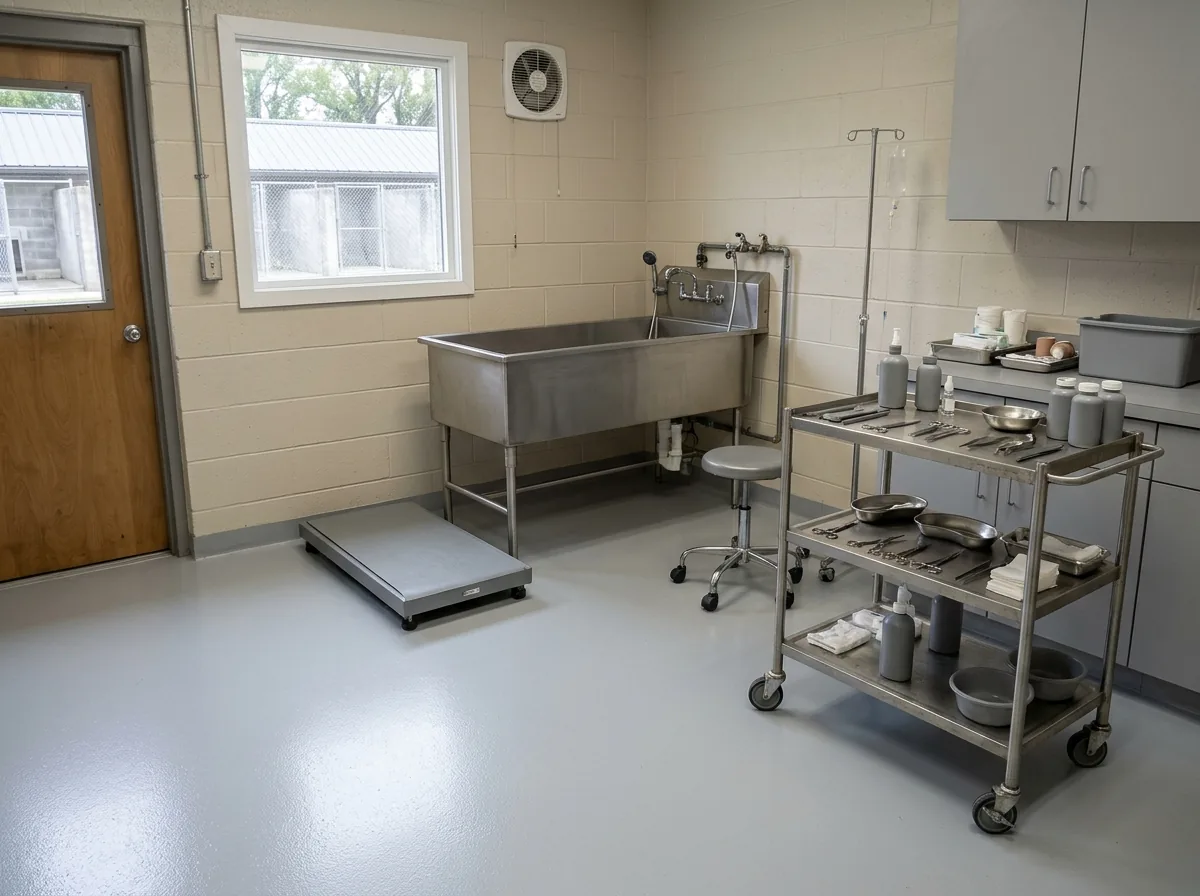
Exam rooms are wiped down with disinfectant after every patient, so chemical resistance matters more than grip. Resin floors for vet clinics are sold as resistant to stains from blood, urine and feces and to harsh disinfectants, but ratings vary by product. In one major manufacturer's chemical chart, 5% bleach is fine for most systems while 30% hydrogen peroxide is not recommended for some epoxies. Tell the installer which disinfectant you use and ask for that row of the chart.
Surgery and Treatment Rooms
Surgery suites and treatment areas need the smoothest, most cleanable floor in the building. Use a light texture or none in the surgical suite, a continuous surface with no grout lines, and a cove base so the floor-wall joint can be cleaned. Treatment rooms with tubs or wet tables can take a little more texture. Put the joints between the two systems at the door, not mid-room.
Grooming and Bathing Areas
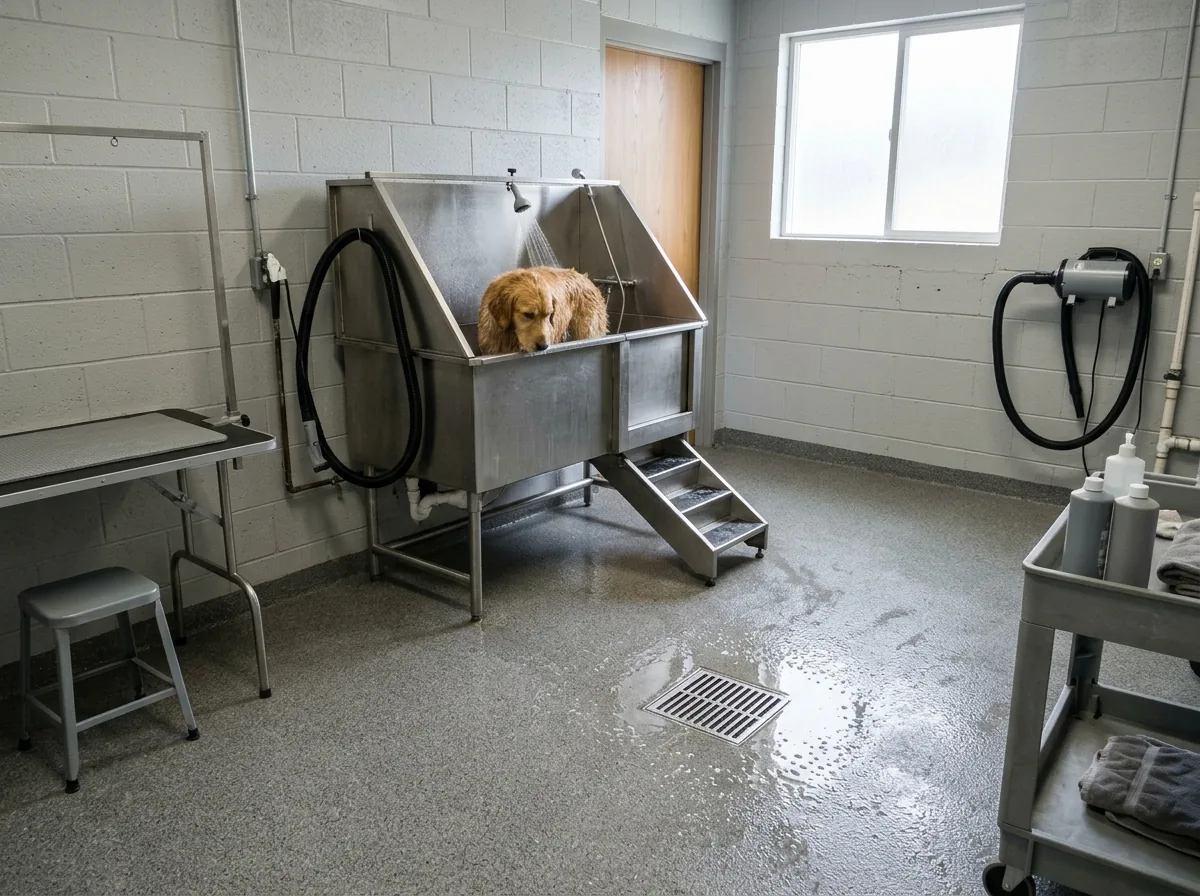
Bathing areas are a wash bay for dogs: water, shampoo and hair all day. Ask for a double-broadcast quartz floor, which carries texture through the build; quartz epoxy flooring shows how it goes down. Keep the slope to the drain, and run the coating up behind the tubs. For rooms that stay wet, anti-slip floor coating explains how grip is rated and what workplace rules say about wet floors.
Why Evansville homeowners and businesses call Evansville Epoxy
- One installer per request, never a list of callers
- Ask for the coating system and cure times in writing
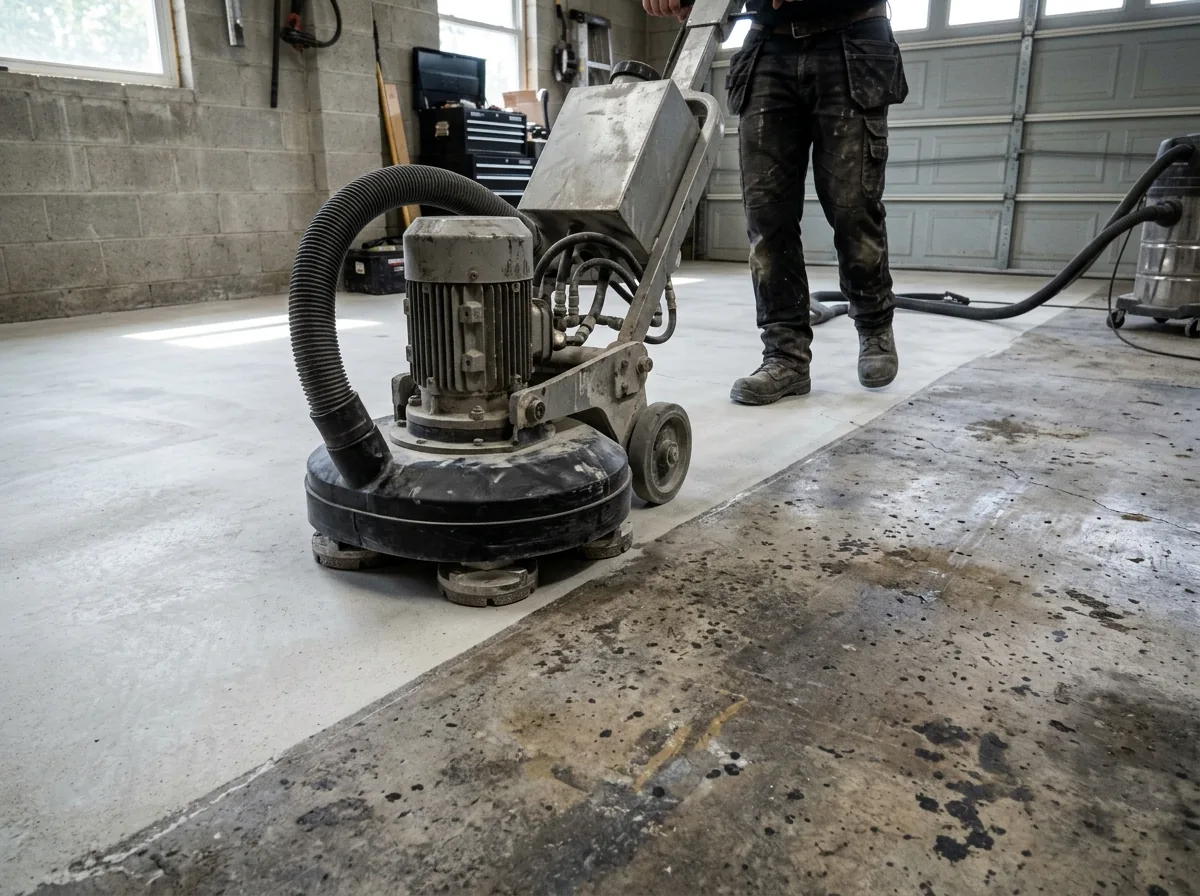
- Ask that the moisture test and grinding appear in the quote
- No charge to you for the referral
Keeping a Kennel Open During the Floor Job
Most kennels and clinics can't close for a week, so the work goes wing by wing. Dogs move to the finished side while the next side is ground, coated and cured. Odor is a fair worry with animals in the building. Some 100% solids epoxies list zero VOC on their data sheets, and EPA advises extra ventilation whenever products that give off VOCs are in use, so ask for the data sheet and plan airflow.
A slab poured without a vapor barrier can stay damp from below and push a coating off. Ask for a moisture test before the quote is final.
Clinic lobbies are a different case. They take street shoes and, in winter, the brine and slush from Evansville's pre-treated roads, so a flake floor with a light texture works better there than the smooth finish used in surgery. Ask whether the quote lists cove footage, drain work and moisture testing as separate lines, so two quotes can be compared fairly.