
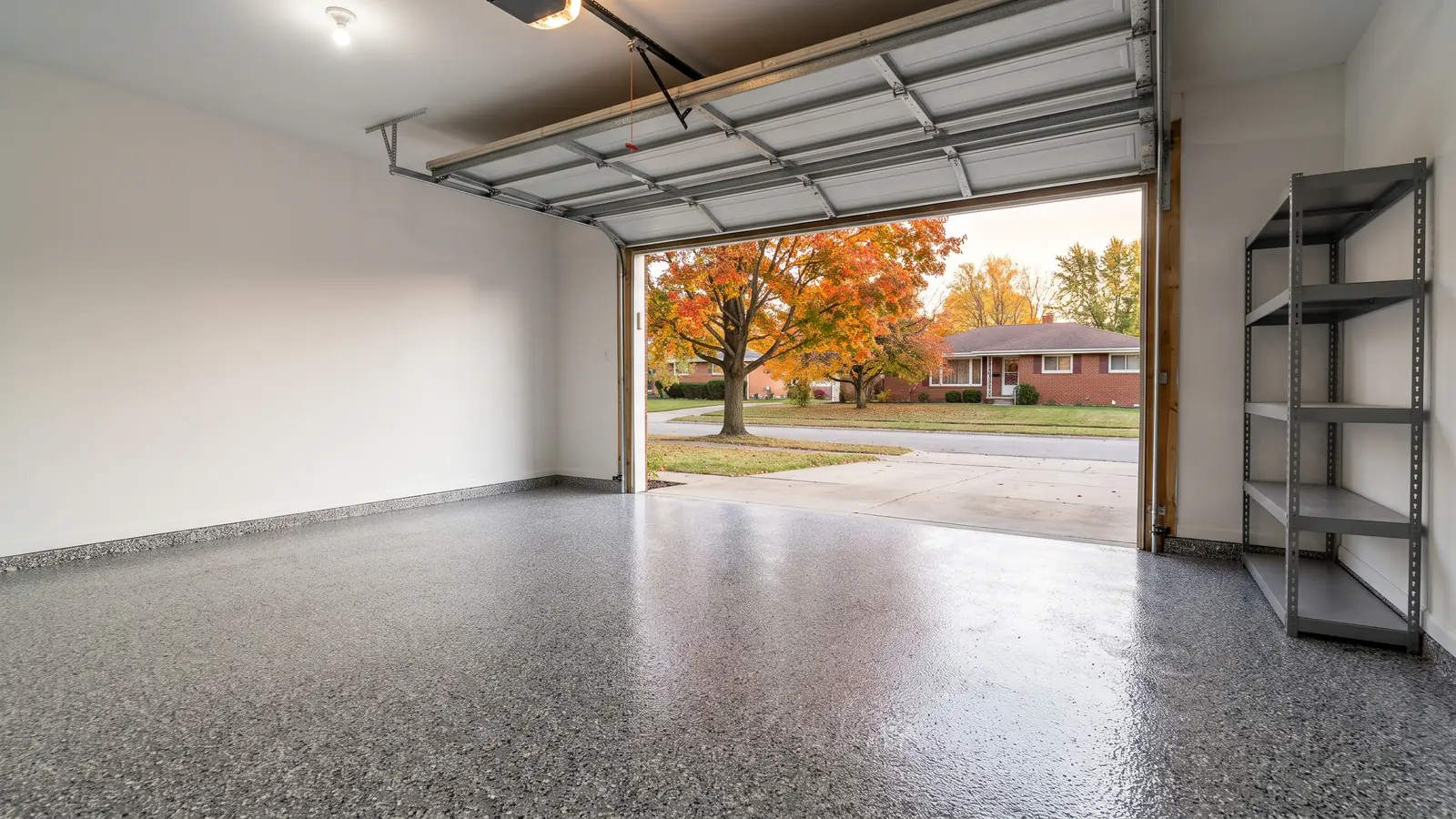
Pool Deck Coating and Resurfacing Types
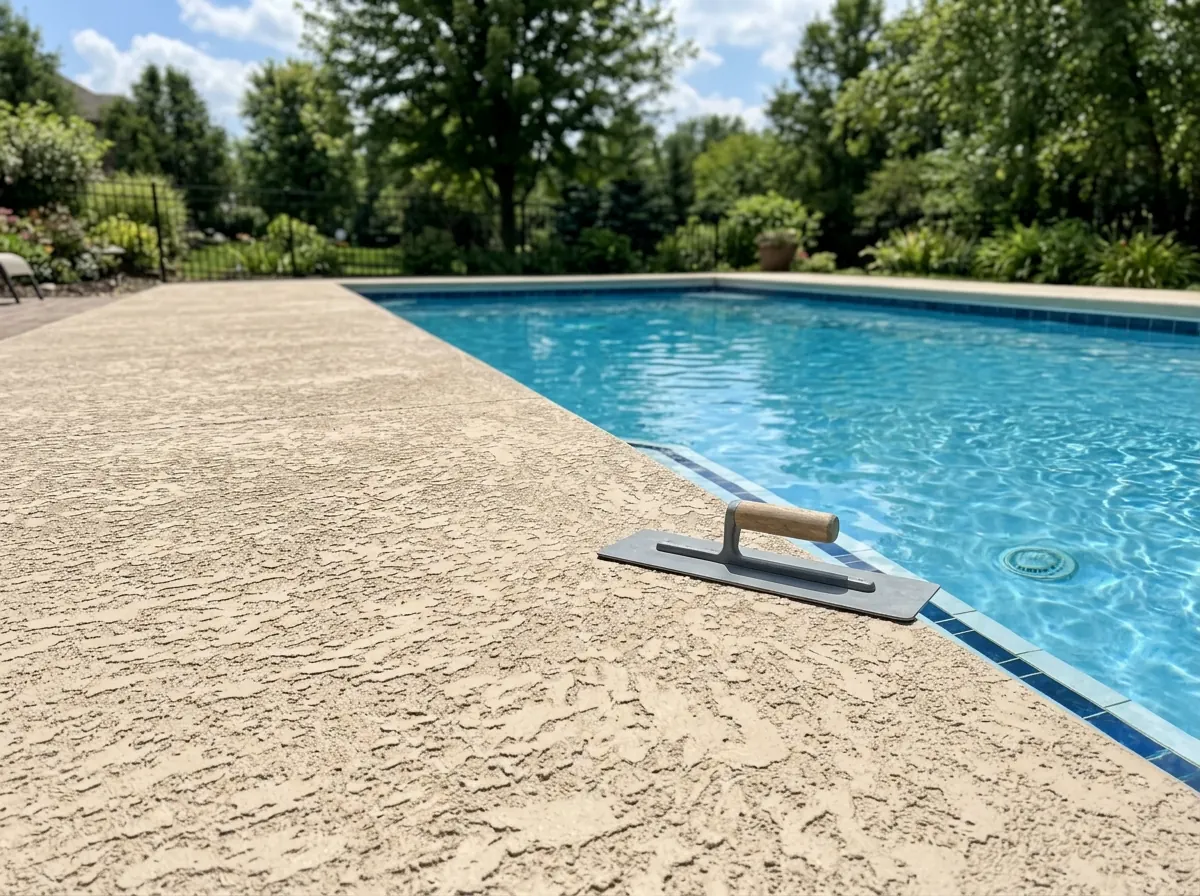
Spray Knockdown Texture
A common pool deck resurfacing is a thin cement-and-polymer overlay sprayed on in a splatter pattern, then flattened with a trowel so the high points are smooth and the low points keep their texture. It's about 1/8 inch thick, comes in integral colors and can be laid out in patterns. A cost guide lists spray texture among the best options for adding traction to a worn deck. Ask for a light color; darker shades hold more heat.
- Basic overlay on a pool deck: about $3 to $6 a square foot
- Decorative designs: about $6 to $12 a square foot
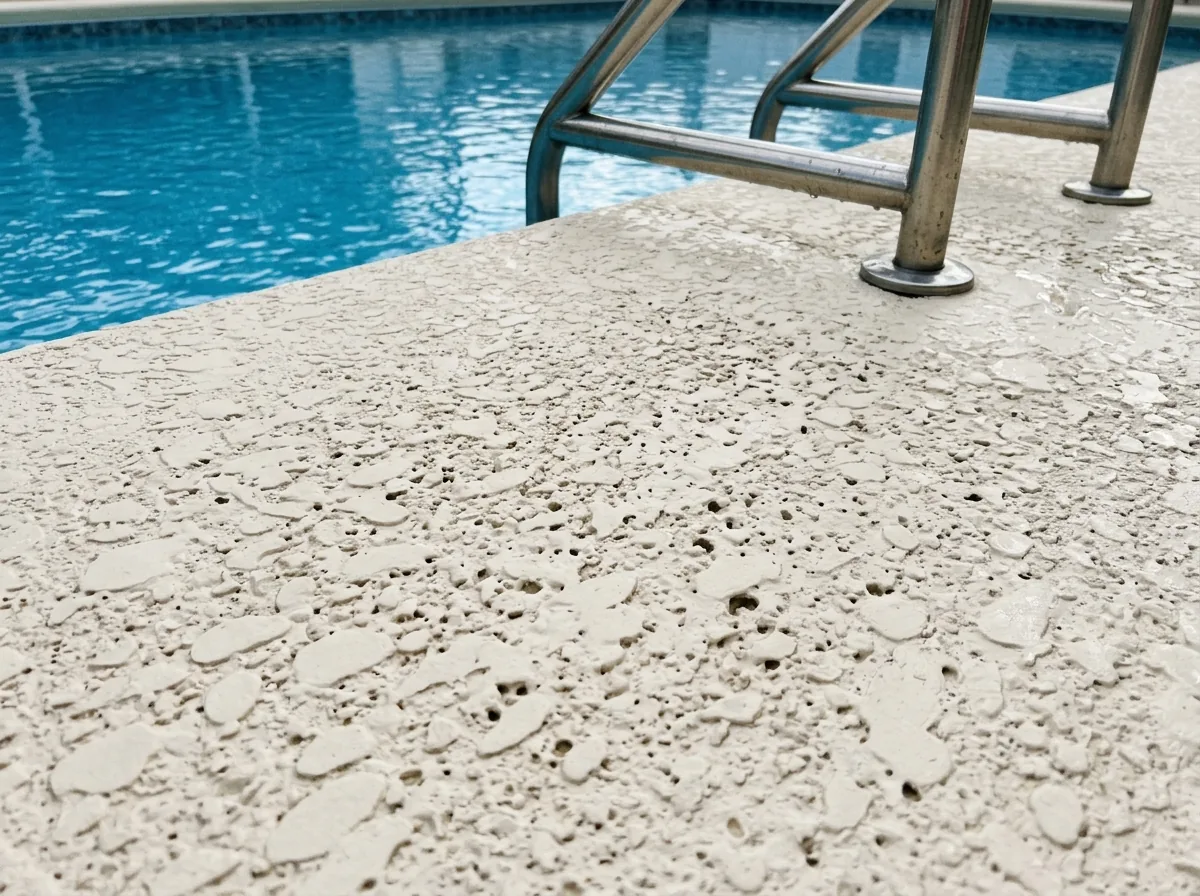
Heat-Reflective Cool-Deck Finish
A cool-deck finish is a cement topping made to stay cooler under bare feet. The maker of the original product says it significantly lowers the surface temperature of concrete and is unaffected by normal pool chemicals. It's troweled to leave about 40% smooth knolls and 60% voids, and should be no more than 1/8 inch thick. It costs about $4 to $6 a square foot as an added coat. That matters in Evansville, where July highs average about 89°F and the airport logs around 41 days a year at 90°F or above. The trade-off is time: the maker asks for about 21 days before regular use and furniture.
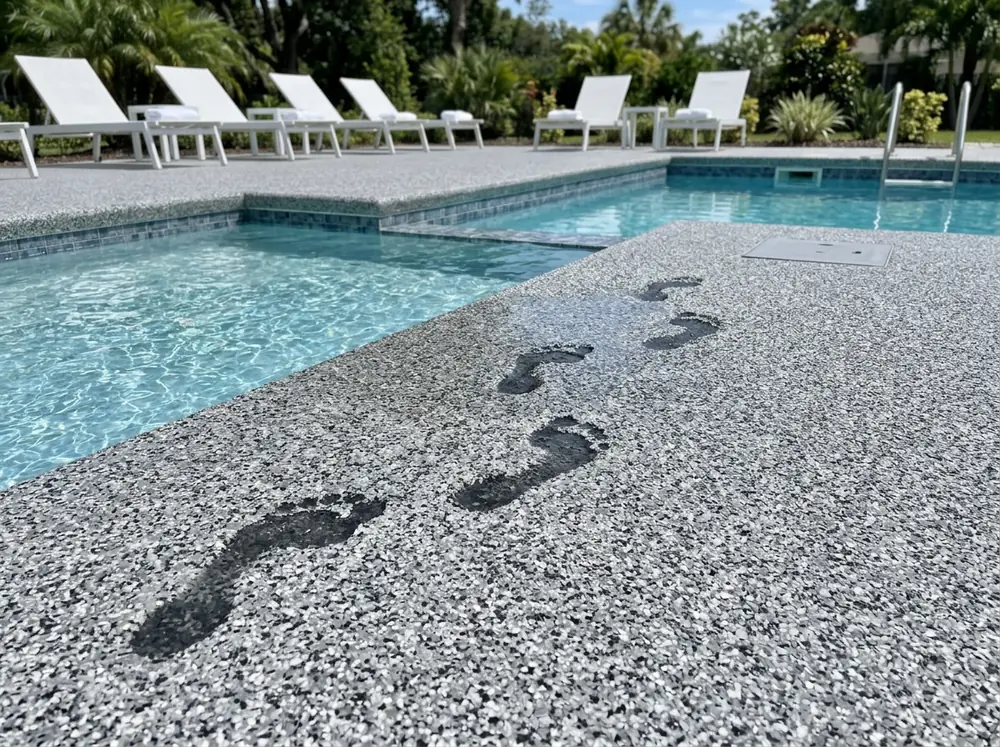
Polyaspartic Flake with Grit
A flake system with a polyaspartic topcoat gives a pool deck a garage-floor look that holds up in the sun, since polyaspartic doesn't yellow the way epoxy does (how sun affects outdoor coatings). One flake maker calls flake a good fit for pool decks but warns that colors can fade slightly in direct sun, so neutral blends age best. Wet bare feet need texture, so a grit additive goes into the topcoat (slip-resistant floor coatings). It's the fastest system here: heavy traffic after about 48 hours.
Resurfacing Cracked Pool Decks
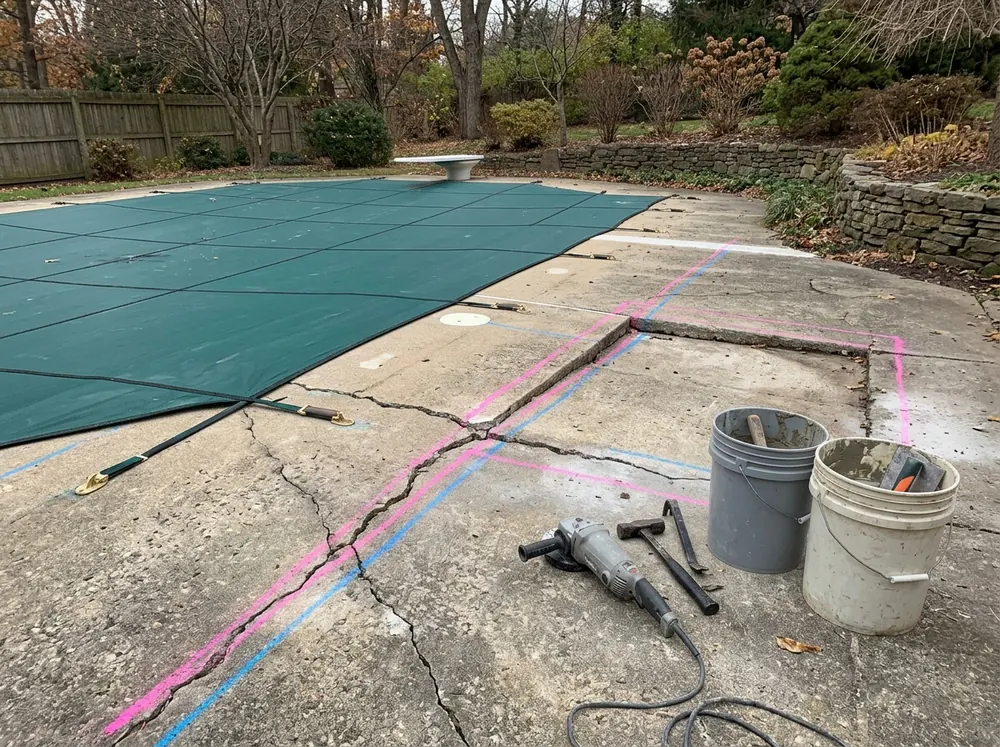
A cracked deck is repaired before it's coated. The usual sequence is pressure washing, removing crumbling or unstable concrete, leveling sunken sections (mudjacking runs about $3 to $6 a square foot), then the new surface. A rigid overlay over a crack that's still moving will crack again in the same place, so ask which cracks the installer thinks are active (concrete crack repair). Water that gets into an open crack freezes and widens it over the winter, another reason to fix cracks first.
Coping and Step Edges
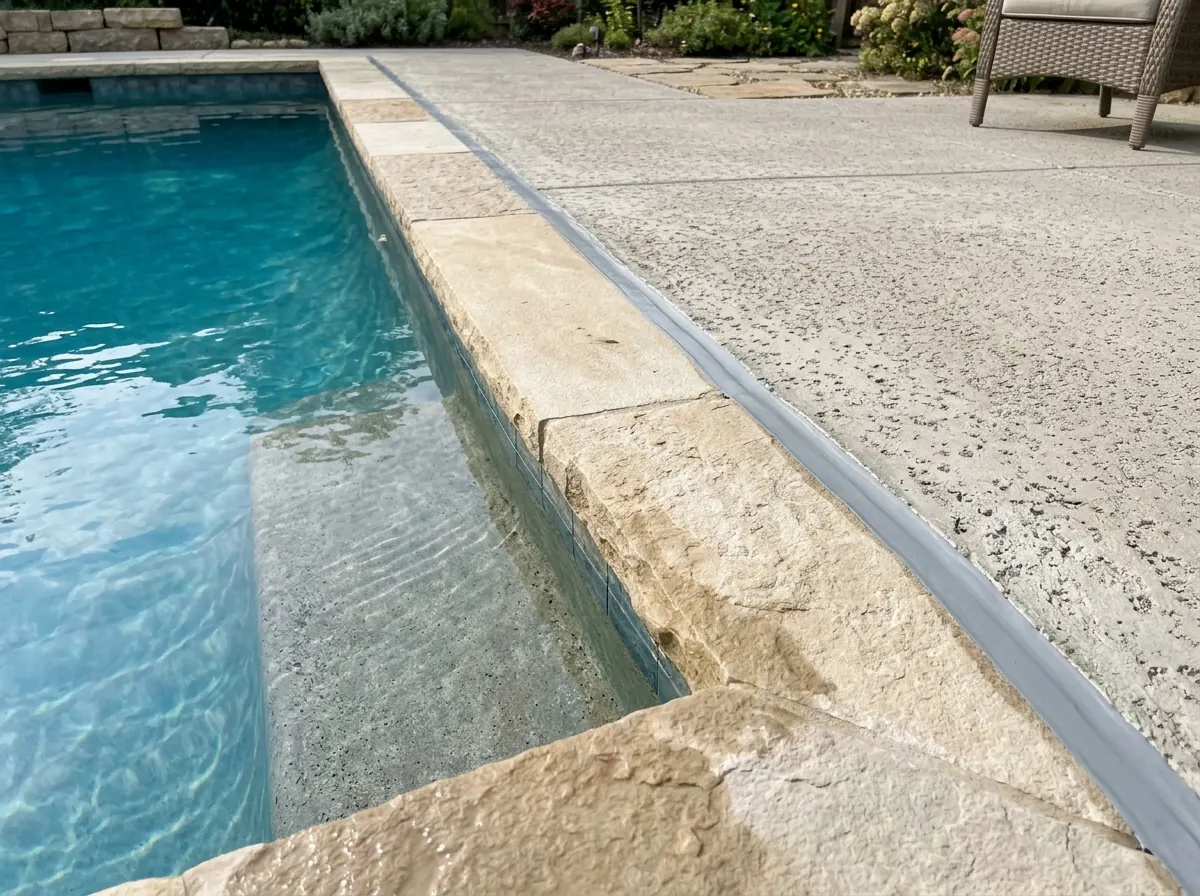
The joint between the coping and the deck is an isolation joint that keeps the deck from pushing on the pool as it expands. Pool owners' guidance is at least 1/2 inch of compressible space, filled with foam backer rod and topped with a flexible sealant. A coating must not bridge it. Ask the installer to stop the new surface at the joint and reseal it with a pool deck joint sealant; one such product handles 25% movement and resists chlorinated splash. Deck steps into the pool and down from the house need grit and a clean, crisp edge.
Why Evansville homeowners and businesses call Evansville Epoxy
- One installer per request, never a list of callers
- Ask for the coating system and cure times in writing
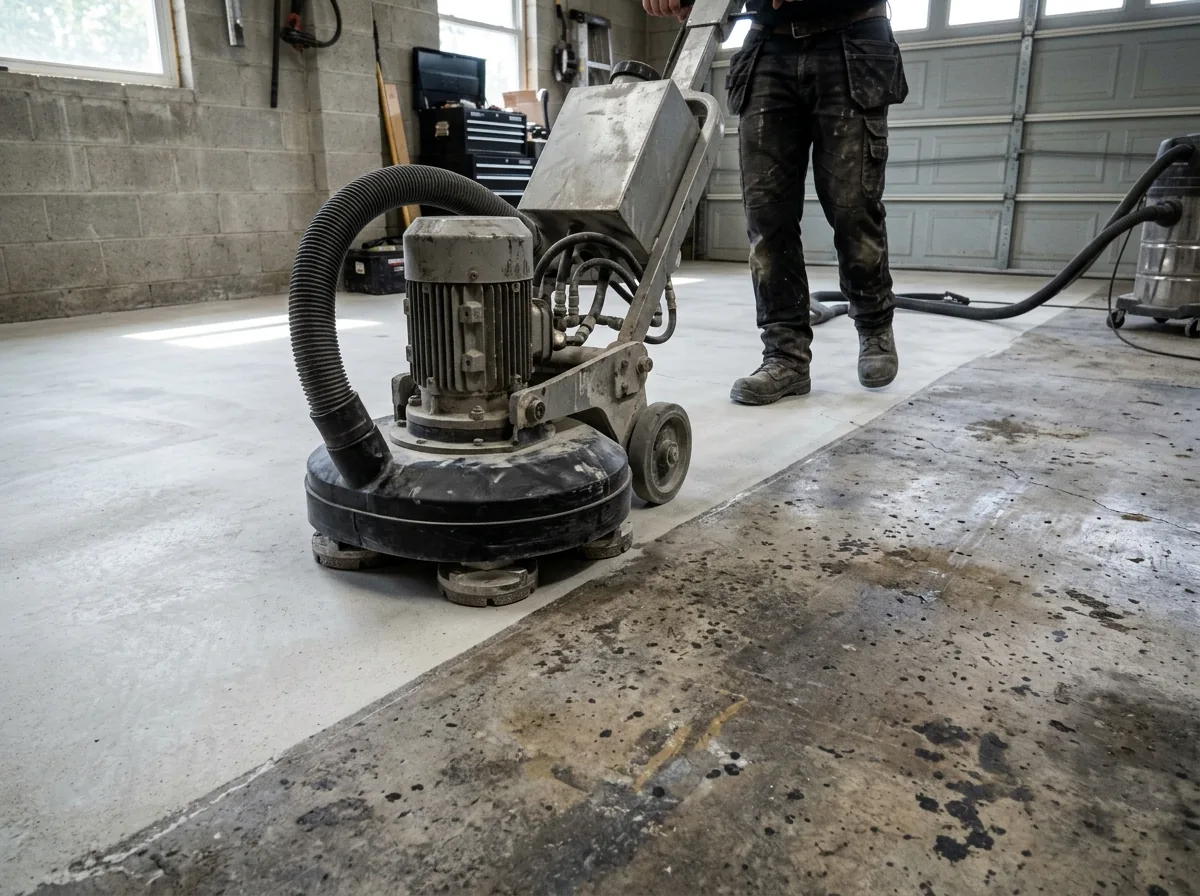
- Ask that the moisture test and grinding appear in the quote
- No charge to you for the referral
Planning a Pool Deck Job in Evansville
Measure the deck and the pool's surroundings
Price is per square foot, so the area drives the quote. Include steps and any walkway to the house.Pick the system for how you use the deck
Cool-deck and knockdown finishes favor bare feet and heat; polyaspartic flake favors fast turnaround and easy cleaning.Book around the swim season and the weather
See the FAQ below for timing.Ask for the joints in writing
The coping joint and any other expansion joints should be listed in the scope as resealed, not coated over.
For porches, patios and walks around the house, see concrete patio coating.