
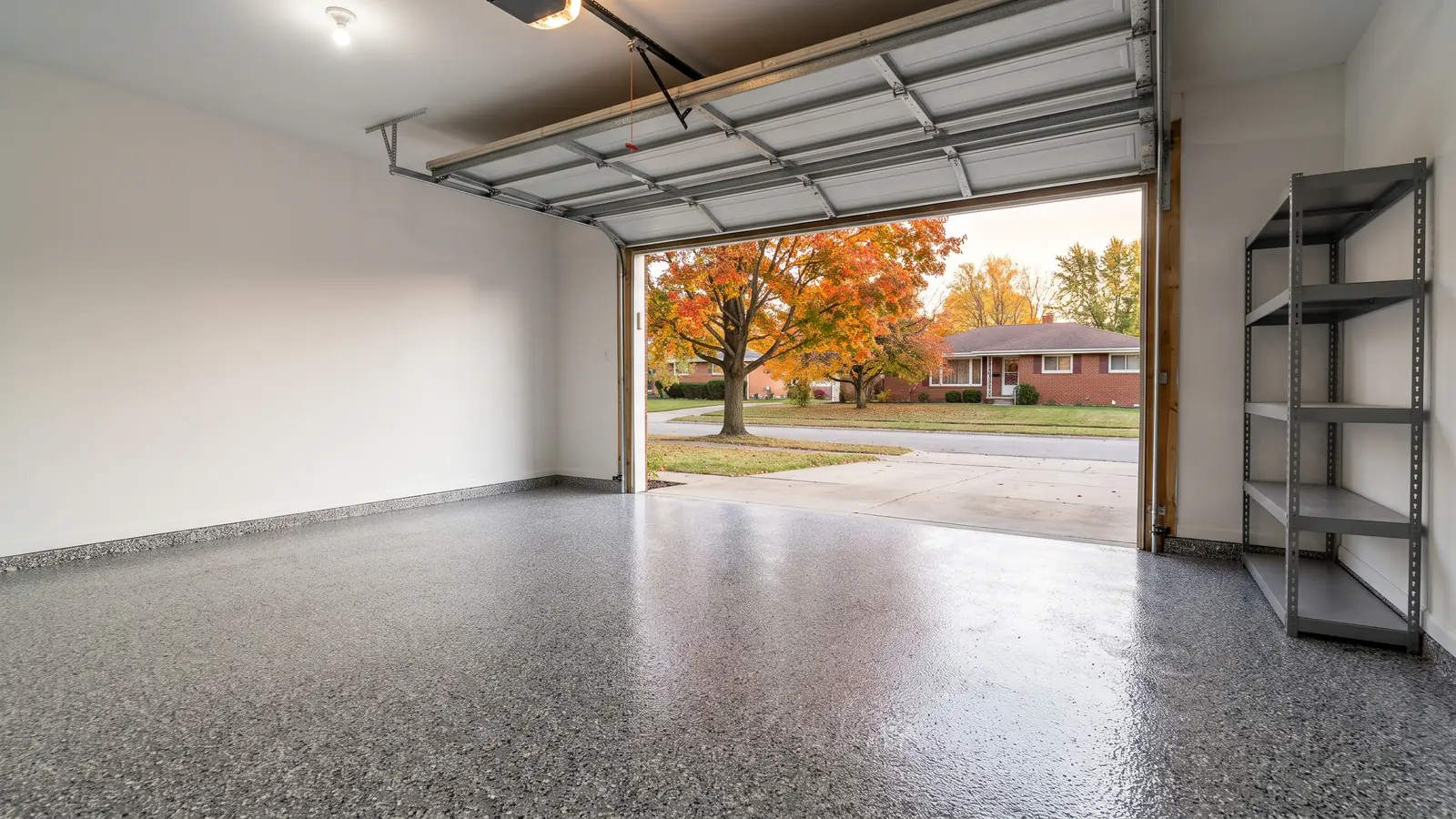
Industrial Floor Systems by Area
A plant floor is rarely one system wall to wall. Aisles, process rooms, docks and freezers each fail in their own way, so a good quote names a system for each area.
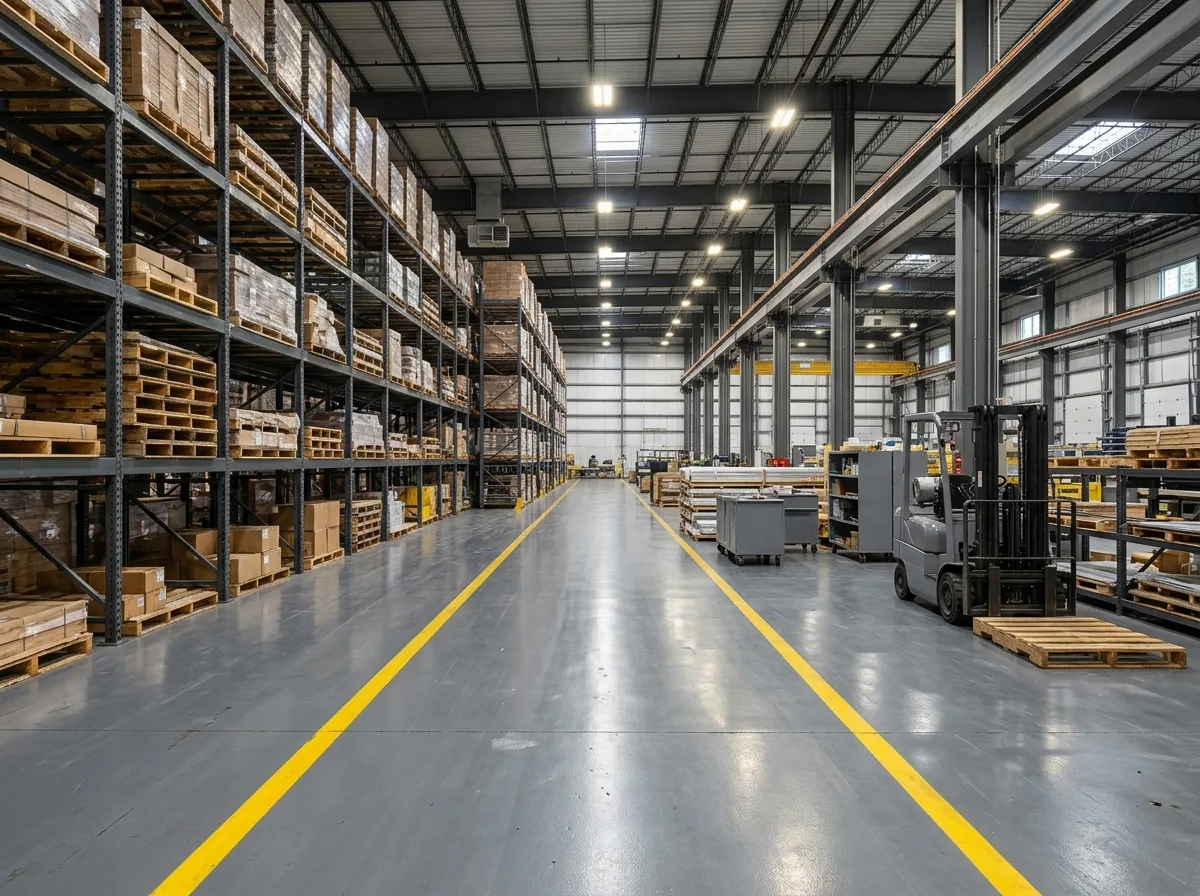
Warehouse Forklift Aisles
Hard forklift wheels grind a floor down, and dropped pallets chip it. A rolled epoxy that is fine in a showroom wears through in a busy aisle. For heavy traffic, ask about a thicker build or a troweled mortar system. The gap between the two is large:
- Rolled 100% solids epoxy: 10 to 30 wet mils per coat
- Troweled urethane mortar: 3/16 to 1/4 inch (187 to 250 mils)
Ask how the saw-cut joints will be filled, too, so wheel edges don't chip them.
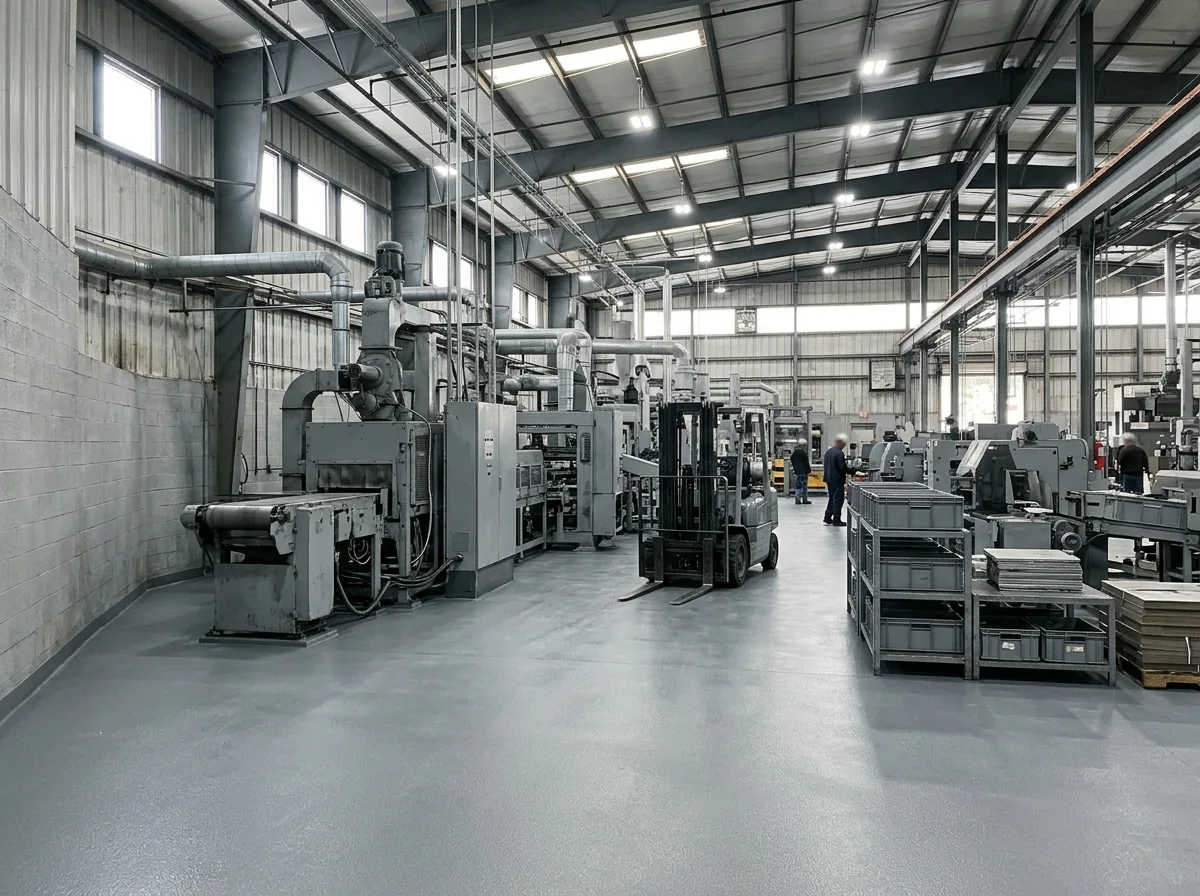
Manufacturing and Chemical Areas
Chemical resistance is product-specific, not a property of "epoxy" in general. In one major manufacturer's floor chemical-resistance chart, brake fluid is marked not recommended for several of its epoxy coatings and acceptable for others in the same family. That chart's "OK" rating covers spills cleaned up within 72 hours, not standing exposure. Give the installer a list of what hits the floor, with concentrations, and ask for the matching chart rows in writing. Battery charging rooms (sulfuric acid) and solvent wipe-down stations are the usual trouble spots.
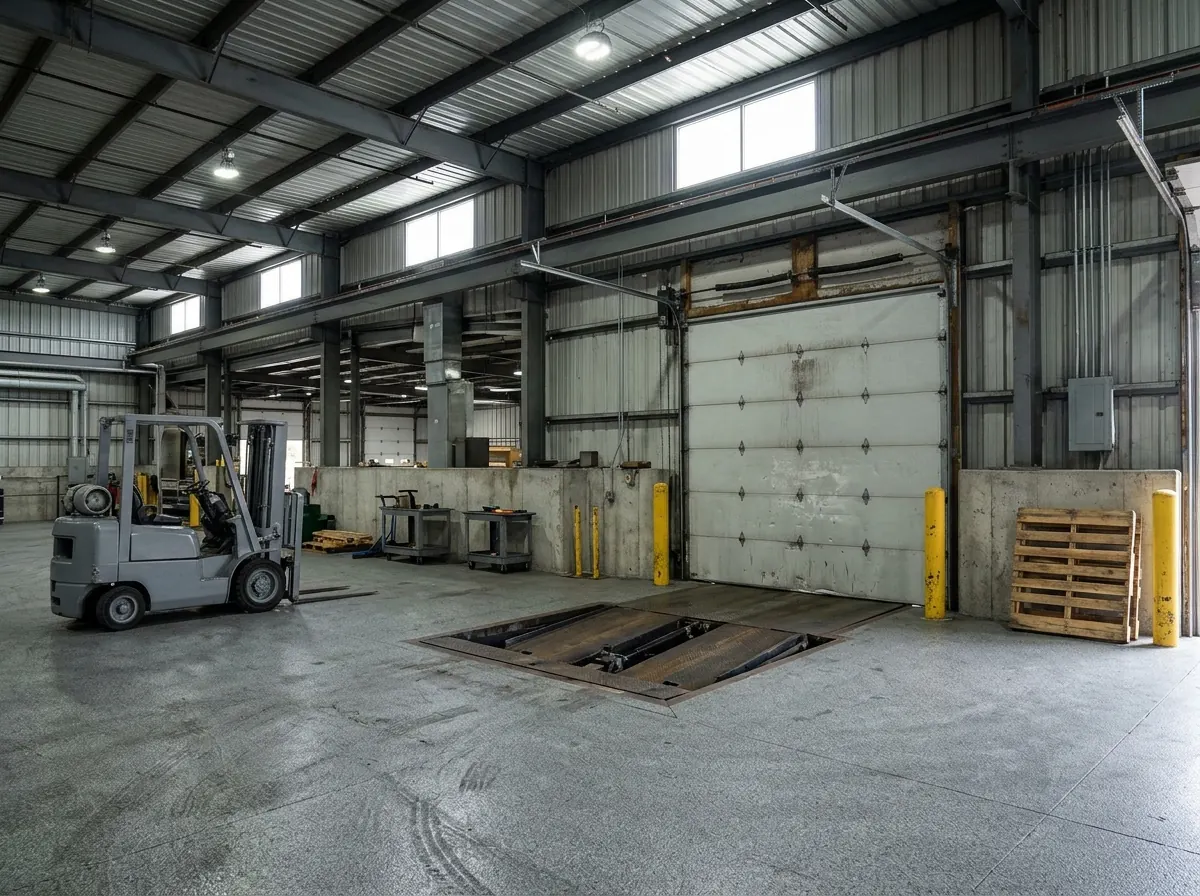
Loading Docks
Docks take truck tires, dock plates slamming down, and whatever the trailers carry in. OSHA requires safe clearance for aisles at loading docks where powered equipment runs. In winter, brine and slush come in with every trailer, and the floor by the door swings between outdoor and indoor temperatures. Ask for a textured finish here (anti-slip floor coating explains the options). Where the coating runs past the door into sun, the topcoat needs to be UV-stable; patio and exterior coatings covers why.
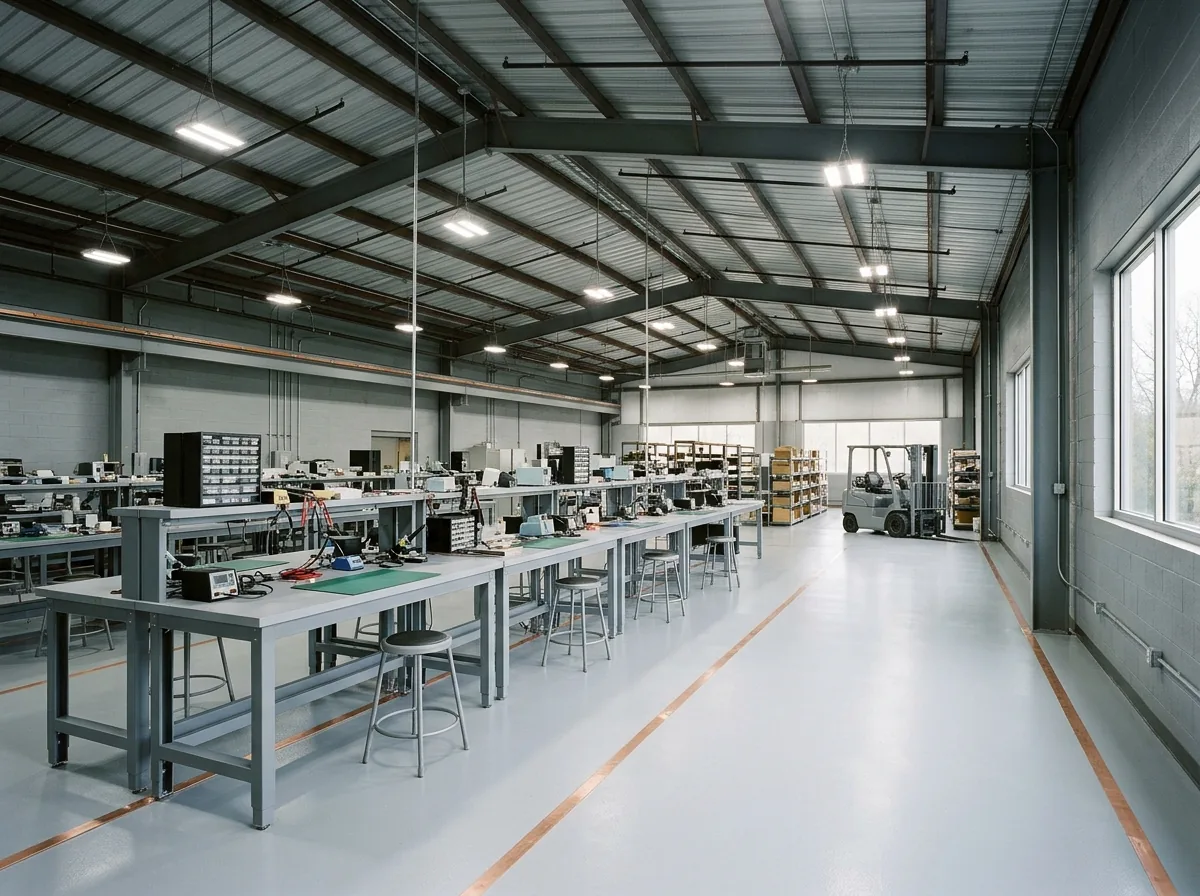
ESD (Static-Control) Floors
Electronic parts can be damaged by a static discharge of under 100 volts, while a person only feels a shock at about 3,000. ESD floors drain that charge to ground. They are sorted by electrical resistance, measured under ANSI/ESD STM7.1:
- Conductive: below 1.0 × 10⁶ ohms
- Static-dissipative: 1.0 × 10⁶ up to 1.0 × 10⁹ ohms
- ANSI/ESD S20.20, the electronics-handling standard, caps floors at 1.0 × 10⁹ ohms
Many ESD epoxies only work when staff wear ESD footwear. Ask for resistance readings on the finished floor, not just the data sheet, and find out where the ground points will be.
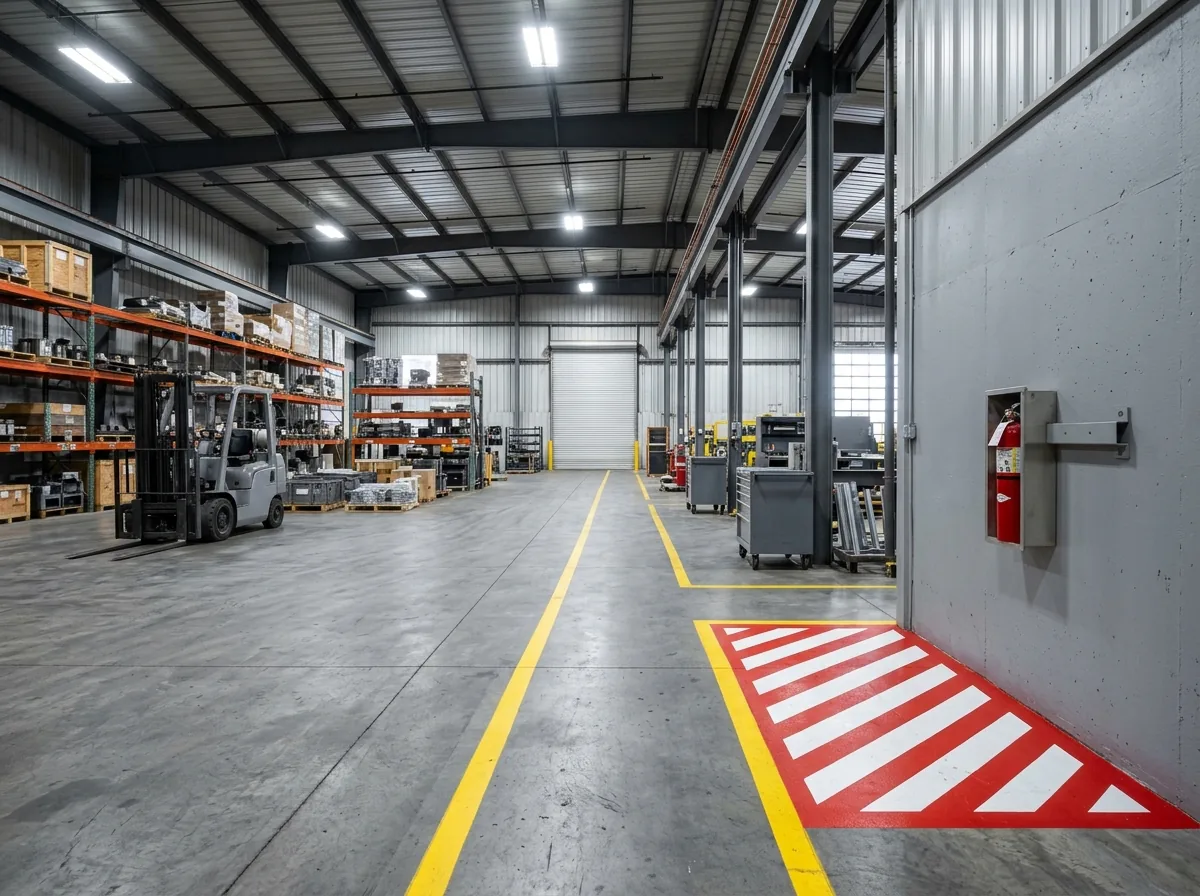
Aisle Striping and Safety Marking Colors
OSHA's materials-handling rule says permanent aisles and passageways must be "appropriately marked." Its safety color code sets the colors most plants use on the floor:
- Yellow: caution and physical hazards such as tripping, falling, striking against and caught-between points
- Red: fire protection equipment, danger and emergency stops
Ask whether the lines go down before the final clear coat or on top of it, and how they get touched up later.
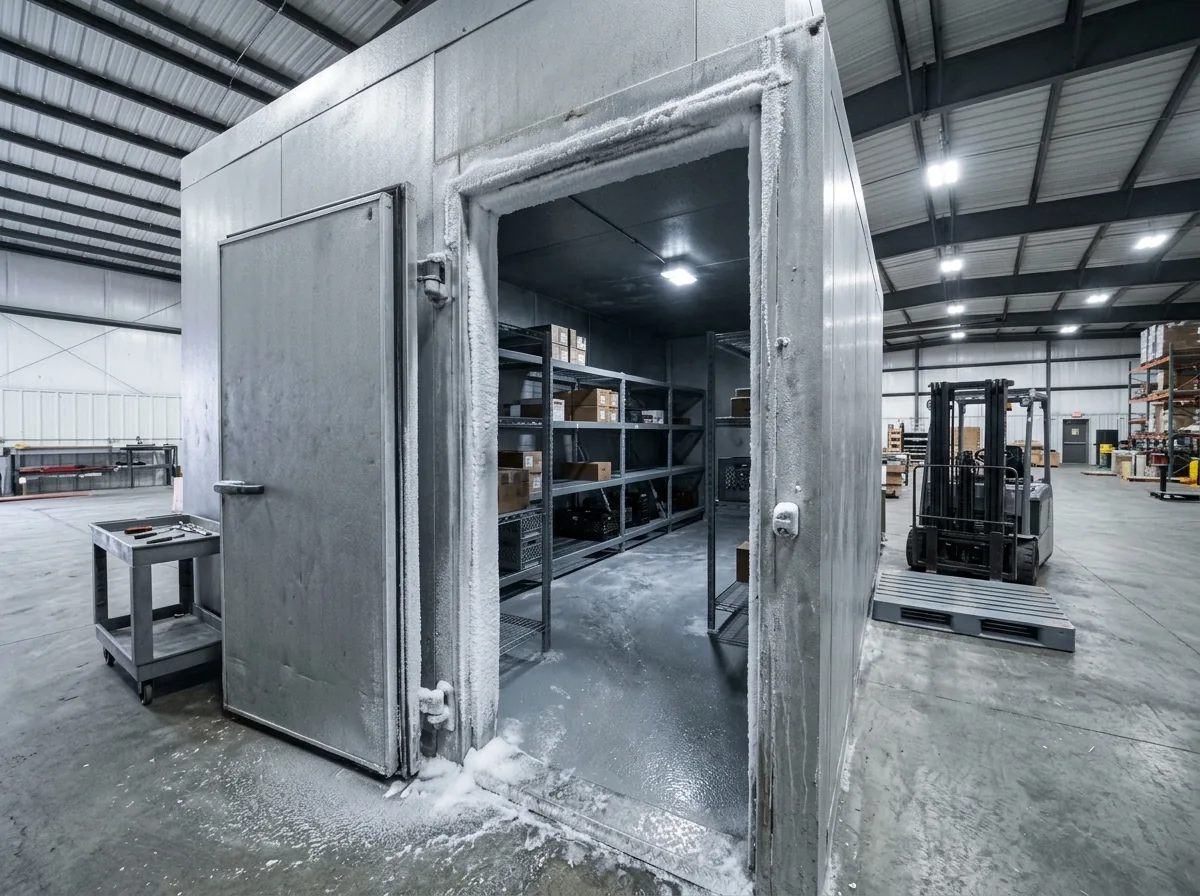
Cold Storage
Freezers are the hardest rooms to coat because resins need warmth to cure. One flooring manufacturer puts the floor for polyurethane installs at 40°F and for epoxy at 60°F. Below 40°F, a methyl methacrylate (MMA) system is the option. Ask whether your cooler has to be shut down and warmed, or whether the installer will use a cold-cure product.
Why Evansville homeowners and businesses call Evansville Epoxy
- One installer per request, never a list of callers
- Ask for the coating system and cure times in writing
- Ask that the moisture test and grinding appear in the quote
- No charge to you for the referral
What Sets the Price and Schedule on a Plant Floor
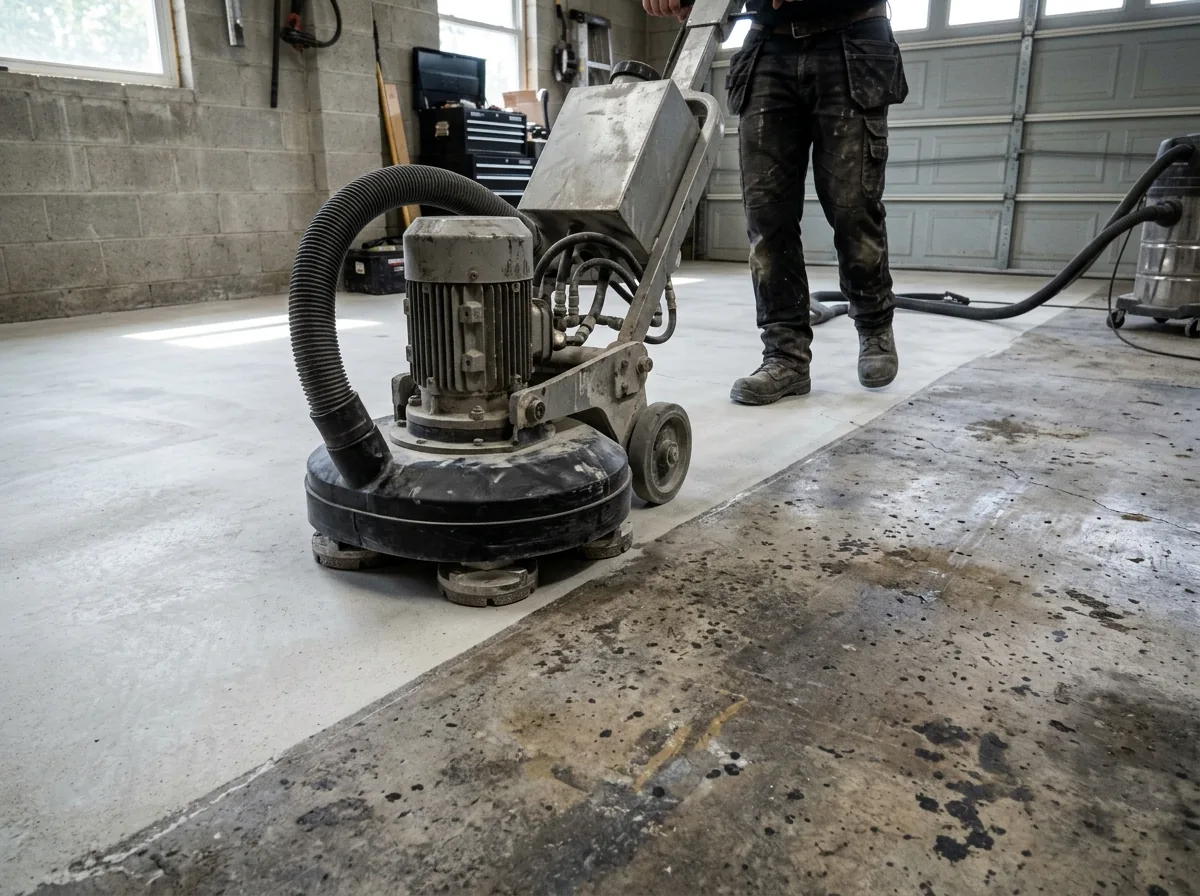
A big, open, sound slab with a thin coat sits at the low end of any quote, because setup and prep spread over more footage. Thick mortar, chemical-grade resin, cove base and a lot of crack repair push it up. Prep is usually shot blasting or diamond grinding to a surface profile the system calls for. Slabs poured without a vapor barrier need a moisture test first.
Few plants can close for a week. Most industrial jobs are phased by bay or done over nights and weekends; commercial epoxy flooring explains how that scheduling works. Get the cure time for each area in writing, and keep loaded forklifts off a new aisle until that time has passed.