
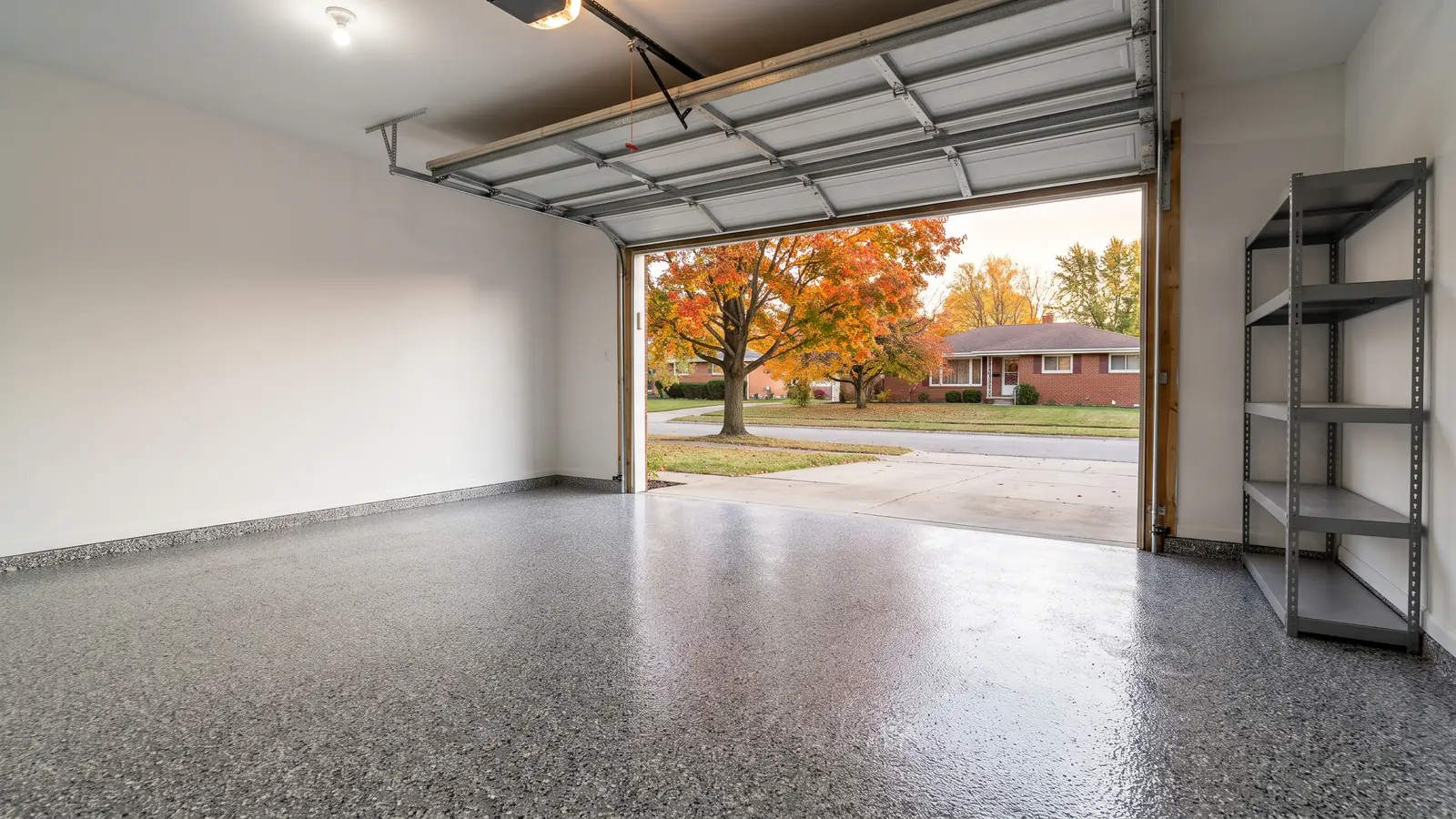
Garage Floor Resurfacing by Problem
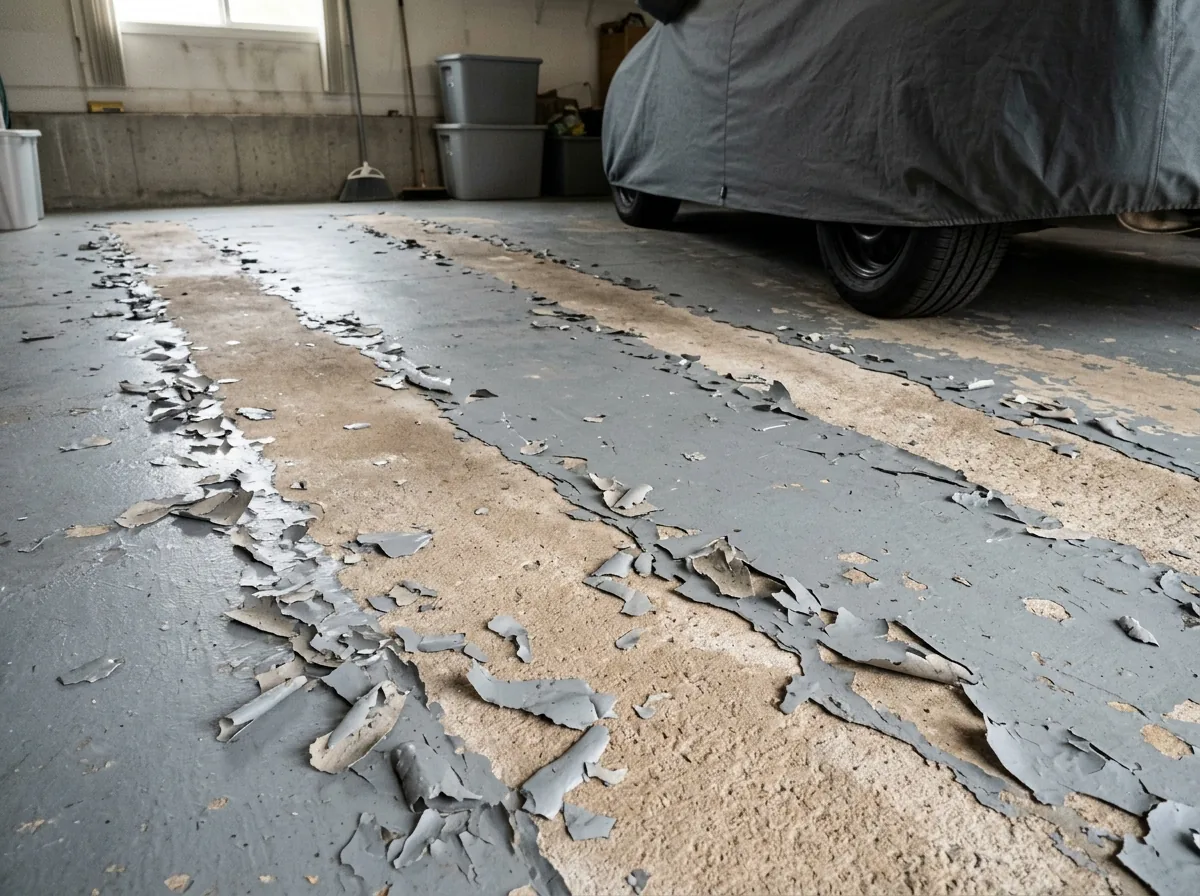
Peeling DIY Epoxy and Paint Removal
Hot-tire pickup is one of the most common reasons a garage coating peels. Driving heats a tire, and the heat drives plasticizers (the oils that keep rubber flexible) to the tire's surface. Park on a thin coating and two things happen: the heat softens it and the plasticizers react with the softened layer. As the tire cools it bonds to the coating, and the next time you back out it pulls a tire-shaped patch off the slab. Store kits and floor paints are the usual victims because they sit on top of the concrete instead of keying into it, and they soften at fairly low temperatures.
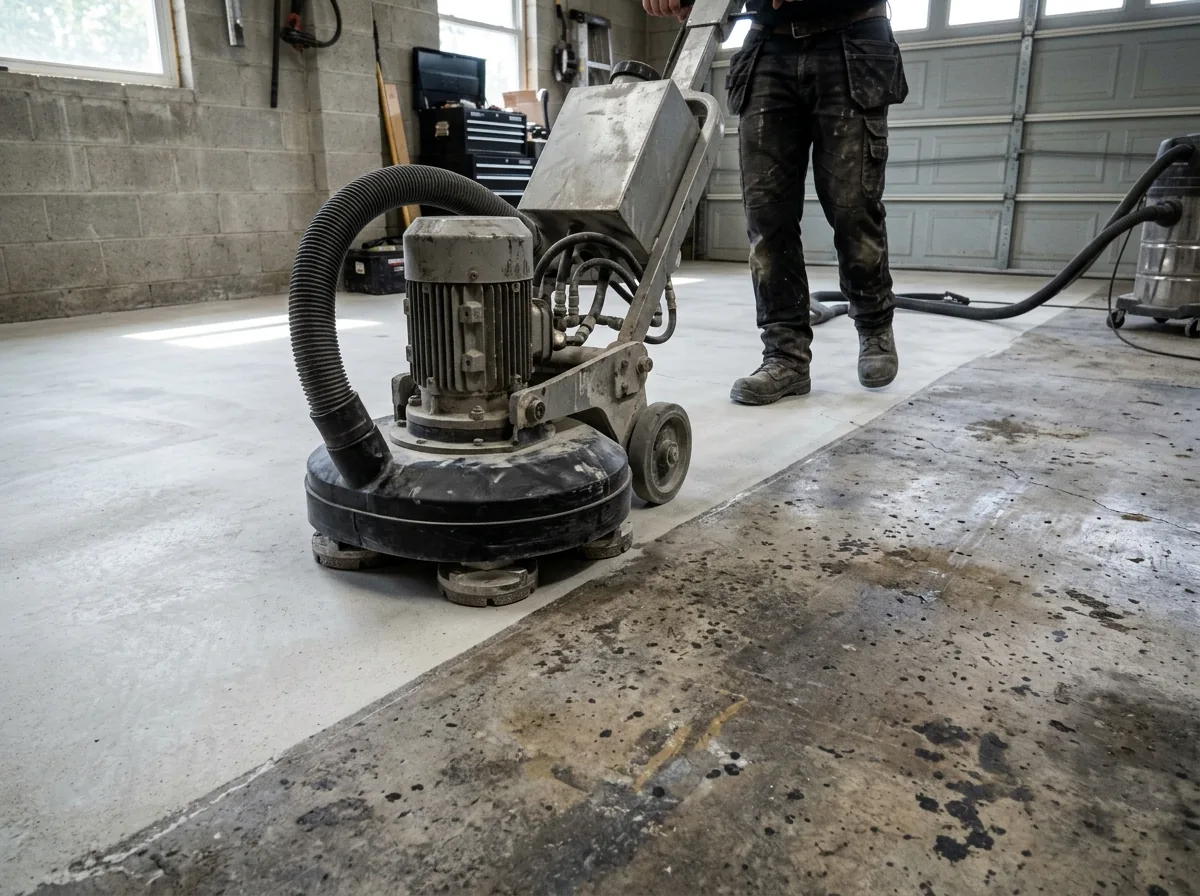
The repair is removal, not another coat on top. A good installer grinds or blasts the old coating off down to clean concrete and leaves a profile the new system can grip. Ask whether the quote is for full removal, and whether the new topcoat is rated against hot-tire pickup.
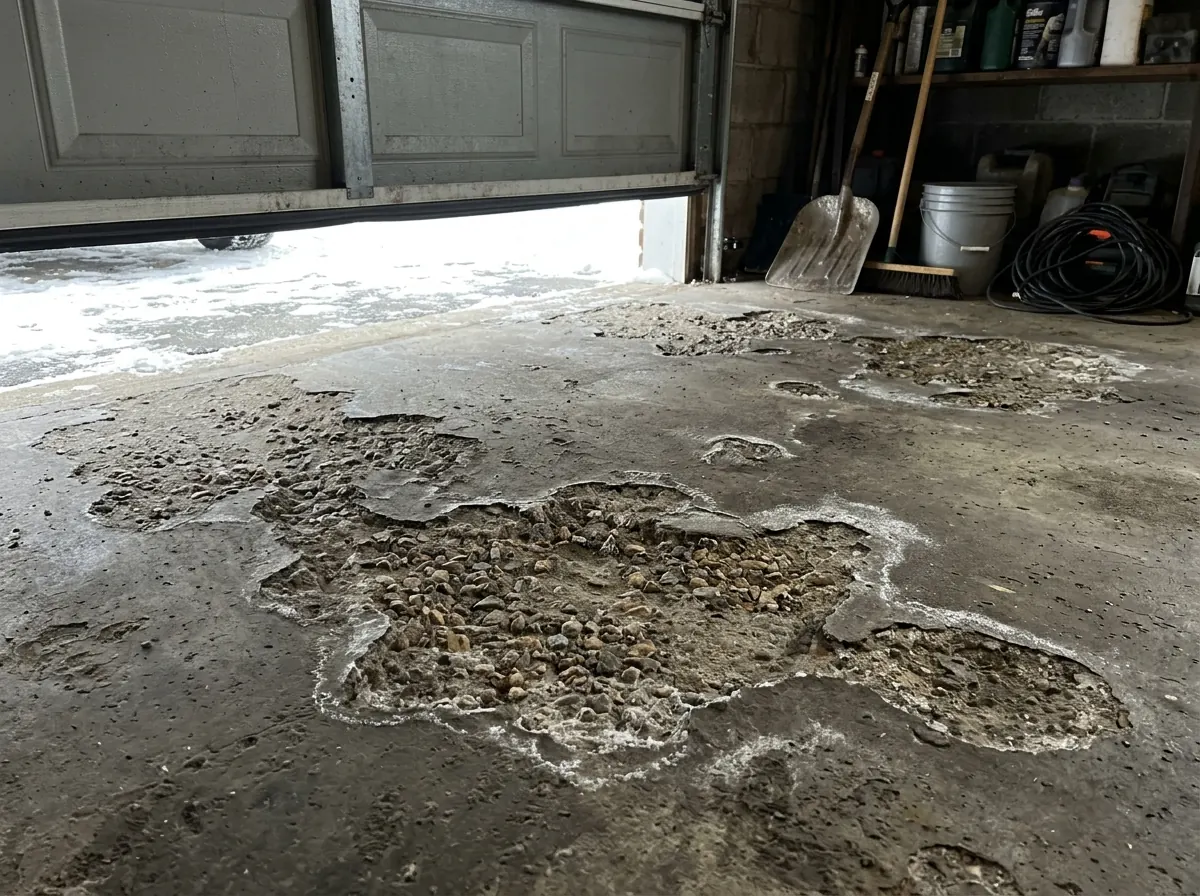
Salt-Scaled and Spalled Surfaces
Scaling is the top skin of the slab flaking off after repeated freezing and thawing. Road salt makes it worse by keeping the surface wetter and adding freeze-thaw cycles. Evansville brines and salts its streets every winter, and that salty slush melts off the car straight onto the garage slab. In moderate scaling the slab can lose 1/8 to 3/8 inch of surface mortar. The fix is to grind off everything loose, rebuild the low areas with a repair mortar or overlay, then coat.
- Spalling and scaling repair: about $3 to $5 a square foot
- Salt-damaged garage floor repair: about $200 to $750 per job
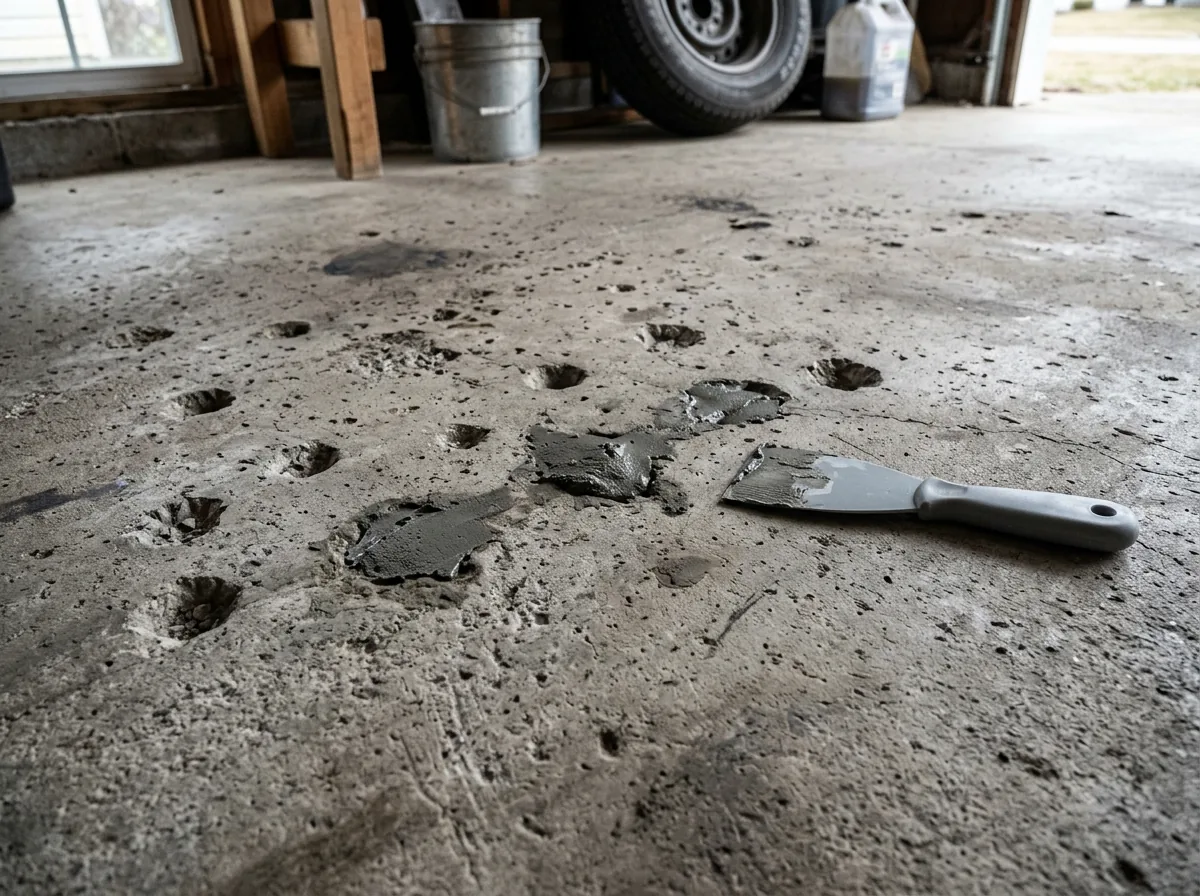
Pitted and Pop-Out Slabs
A popout is a small cone-shaped hole left when a stone near the surface soaks up water, swells and breaks. They run from 1/4 inch to a few inches across. Popouts are cosmetic and don't weaken the slab, but every one shows through a new coating. The standard repair is to chip out what's left of the stone, clean the hole and fill it with an epoxy mortar or similar patch, then grind it flush. On a heavily pitted floor, ask whether the quote counts holes or prices a skim coat over the whole slab.
Self-Leveling Overlays for Uneven Floors
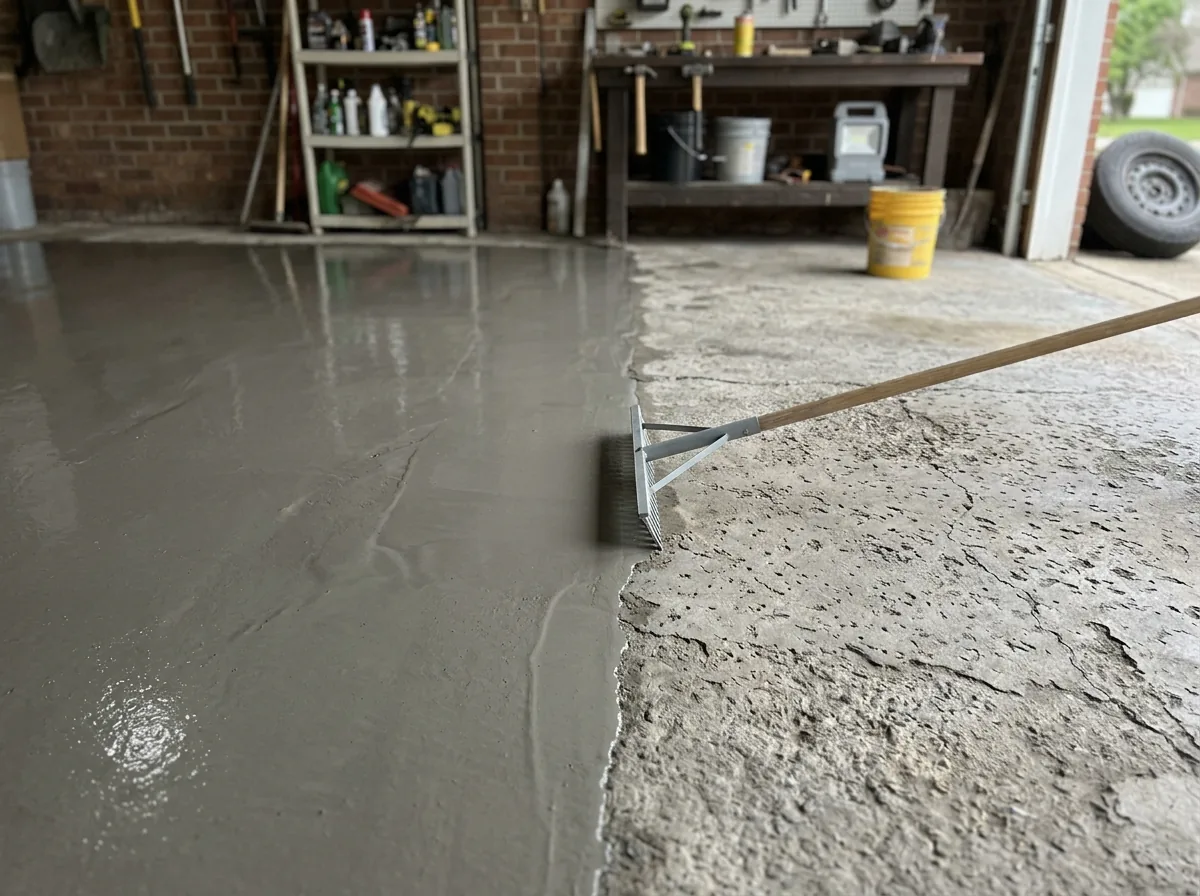
When a garage floor has low spots that hold water, or so much scaling that patching would never end, a cement-based self-leveling topping gives it a new surface. One exterior-rated product goes down 1/4 to 3/4 inch thick on its own, up to 2 inches with added aggregate, handles freeze-thaw, and takes foot traffic in 2 to 3 hours. An overlay raises the floor, so check the overhead door seal and the step into the house. Ask how long the topping cures before the coating goes on.
Oil-Soaked and Stained Concrete
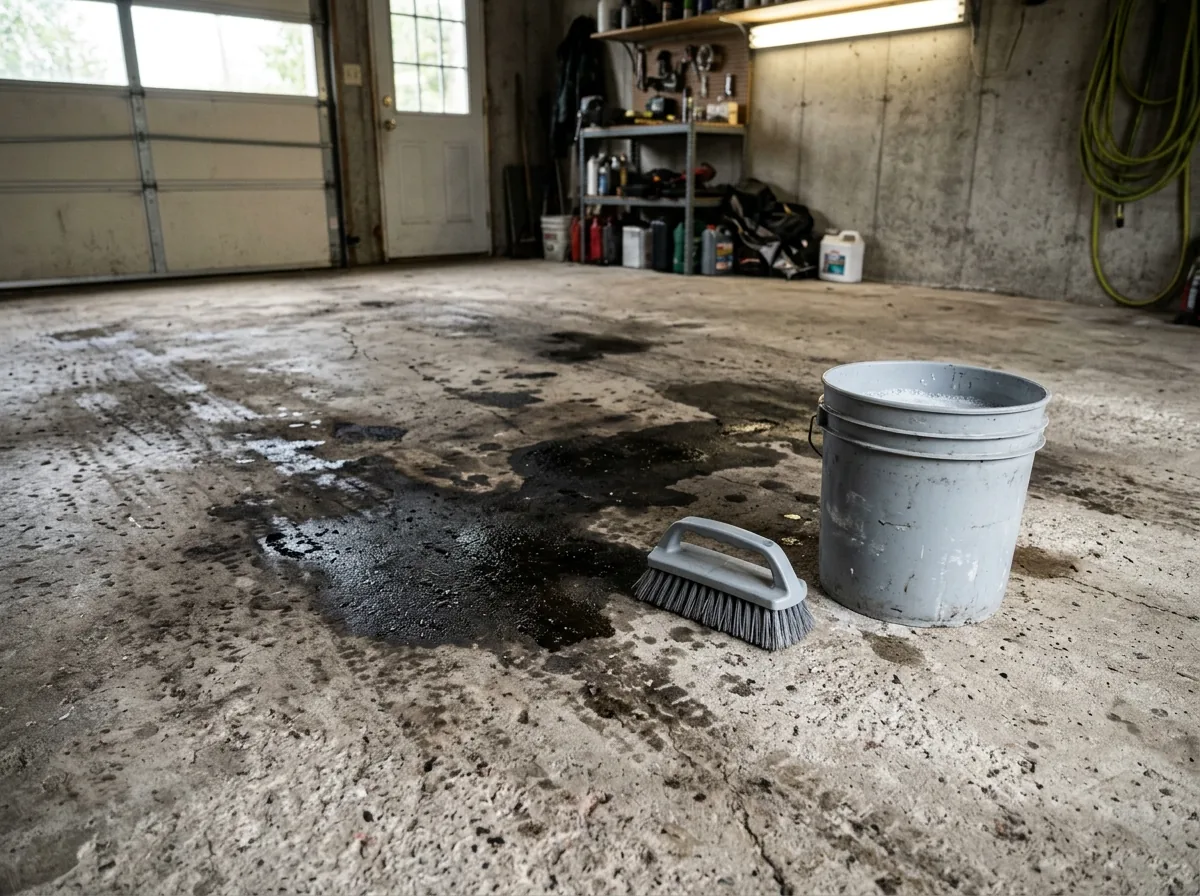
Coating specs want concrete free of grease and oil, because a resin can't bond to an oily surface. Grinding takes off surface staining; the question is how deep the oil has gone. A good installer will degrease, grind and check the spot again before coating, and cut out and patch any area that won't come clean. Ask what the plan is for your worst stain before you sign.
Why Evansville homeowners and businesses call Evansville Epoxy
- One installer per request, never a list of callers
- Ask for the coating system and cure times in writing
- Ask that the moisture test and grinding appear in the quote
- No charge to you for the referral
Resurface, Repair or Replace the Slab
Resurfacing is for a slab that's structurally sound with a damaged top. It isn't the answer for every floor:
Single cracks and joints
Point repairs and grinding prep are covered on concrete crack repair and grinding.A sound coating that's worn or chipped
That's a recoat or a patch, not a strip (epoxy floor repair).Cracks wider than about 1/4 inch, sinking sections or heaving
One cost guide treats cracks that wide as a possible structural problem. Get the slab looked at before paying for a finish on top of it.Damp slabs
If the old coating blistered rather than peeled in tire tracks, ask for a moisture test before anything new goes down (how slabs are moisture-tested).
Once the surface is rebuilt, the coating choice works like any garage floor; see epoxy garage floor coating for system costs by garage size.