
Outdoor Concrete Coatings by Surface
Back Patios
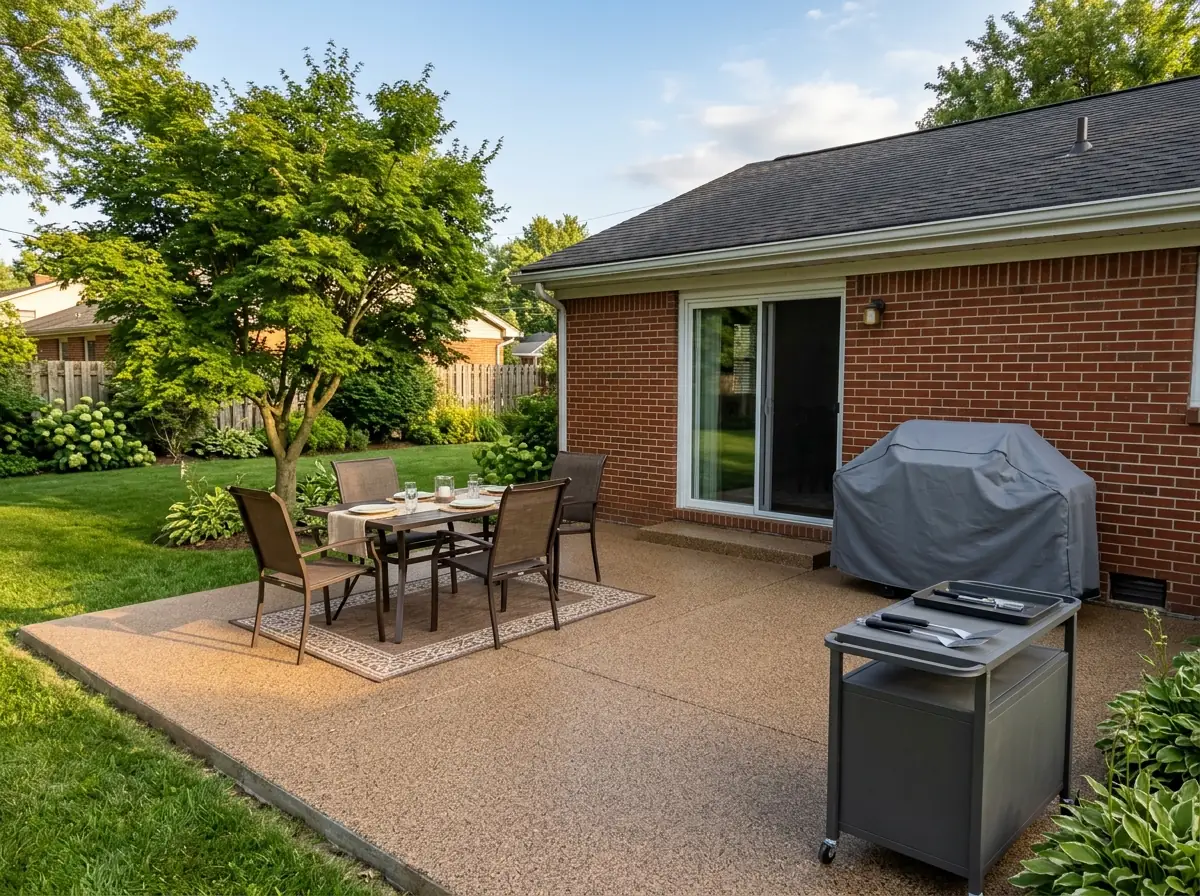
The back patio is usually the largest and sunniest slab, and the one with furniture dragged across it and a grill dripping grease. A textured polyaspartic flake system or a decorative overlay both work here; the choice comes down to look and how much the slab needs fixing first. A settled patio that holds puddles should be leveled before it's coated, not after.
- Epoxy-type coating on a 200 to 400 square foot patio: about $800 to $4,000 in one national guide
- Plain overlay on a 10 by 10 foot patio: about $300 to $700
Front Porches and Steps
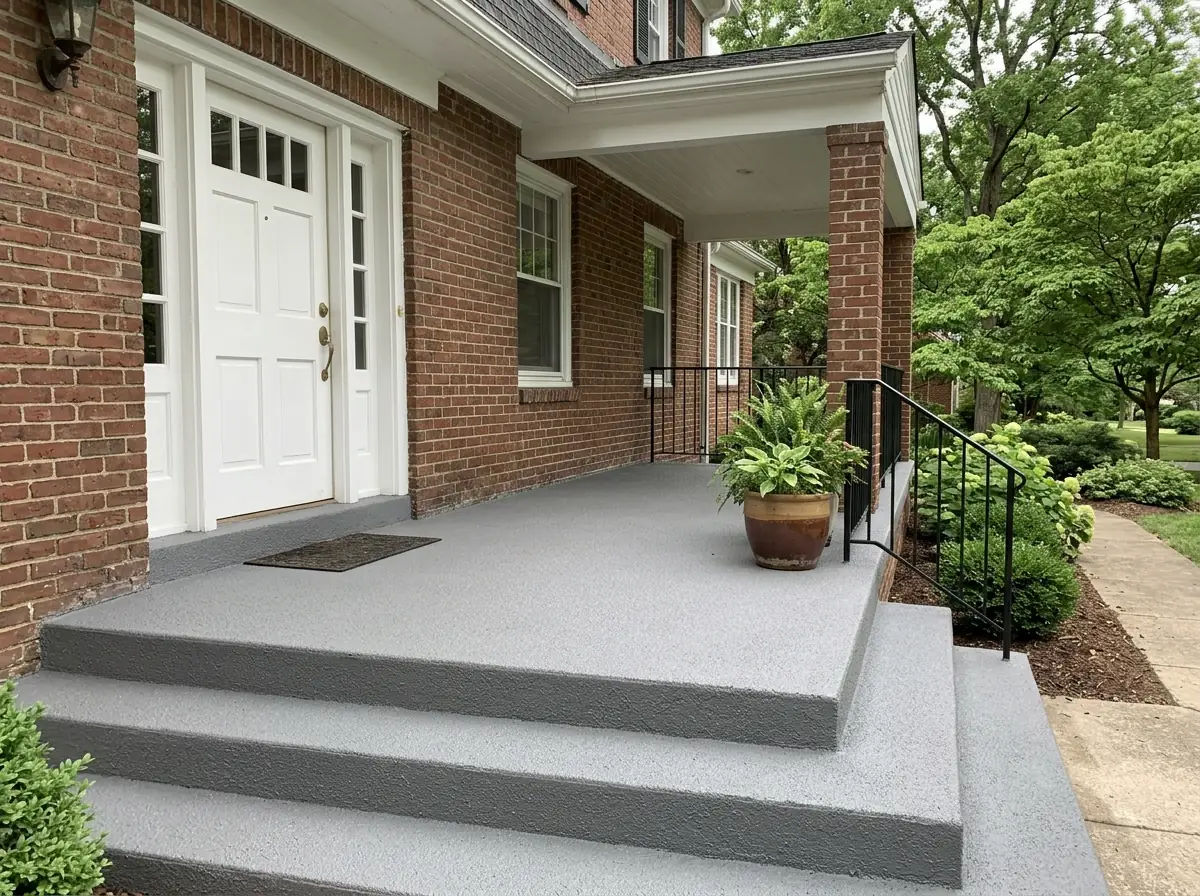
Porches and steps take ice melt and wet shoes, and a fall there is worse than anywhere on the patio. Ask for grit in the topcoat on every tread and how the step edges will be finished (slip-resistant floor coatings). Spalled or crumbling steps get repaired before any coating; cost guides put step repair at roughly $300 to $800. Cracks wider than about 1/4 inch in a porch slab should be checked as a possible structural problem before money goes into a finish.
Covered and Screened Porches
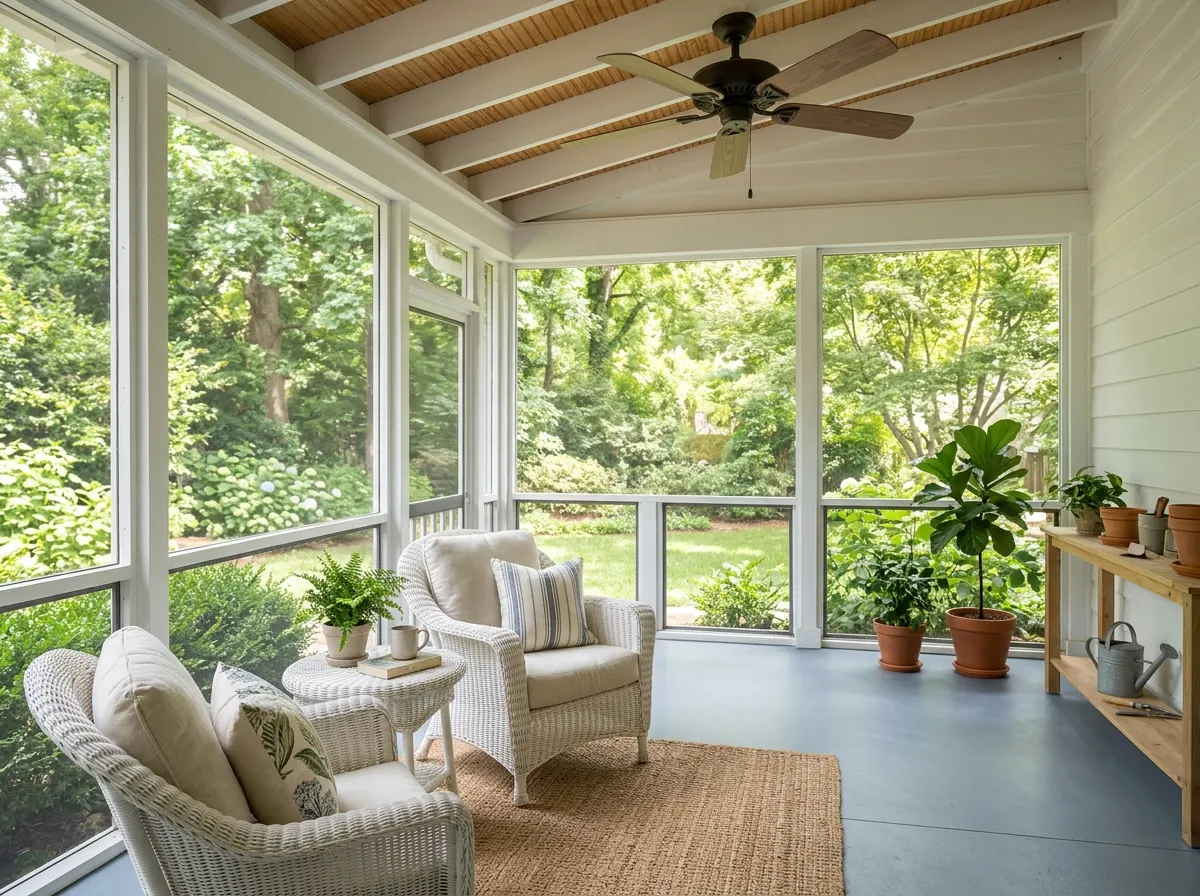
A roof keeps off rain and most direct sun, so fading and wet footing are smaller worries than on an open patio, and smoother or lighter finishes become reasonable choices. The slab still freezes in winter, and wind-blown rain and snow still reach the edges, so the coating should still be rated for exterior use. Ask whether the porch slab ties into the house foundation or sits on its own; the joint between them needs to stay flexible.
Walkways
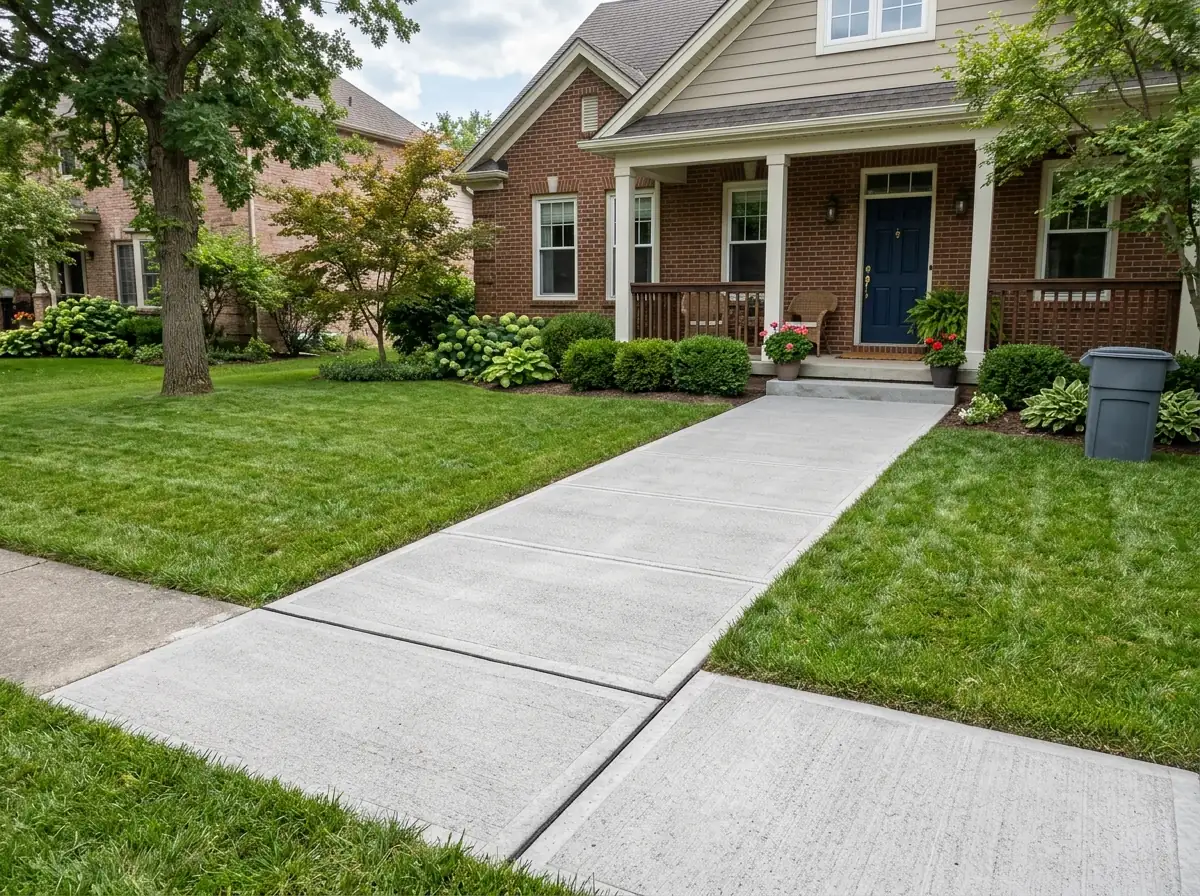
Walks are long and narrow, and they're cut by control joints at short intervals. Concrete guidance calls for an isolation joint wherever a walk meets a driveway, garage slab or steps, so those slabs can move separately. Control joints can be filled and coated over, but isolation joints should stay flexible (how joints are handled). A plain overlay on a 4 by 50 foot walk runs about $600 to $1,400.
Driveways
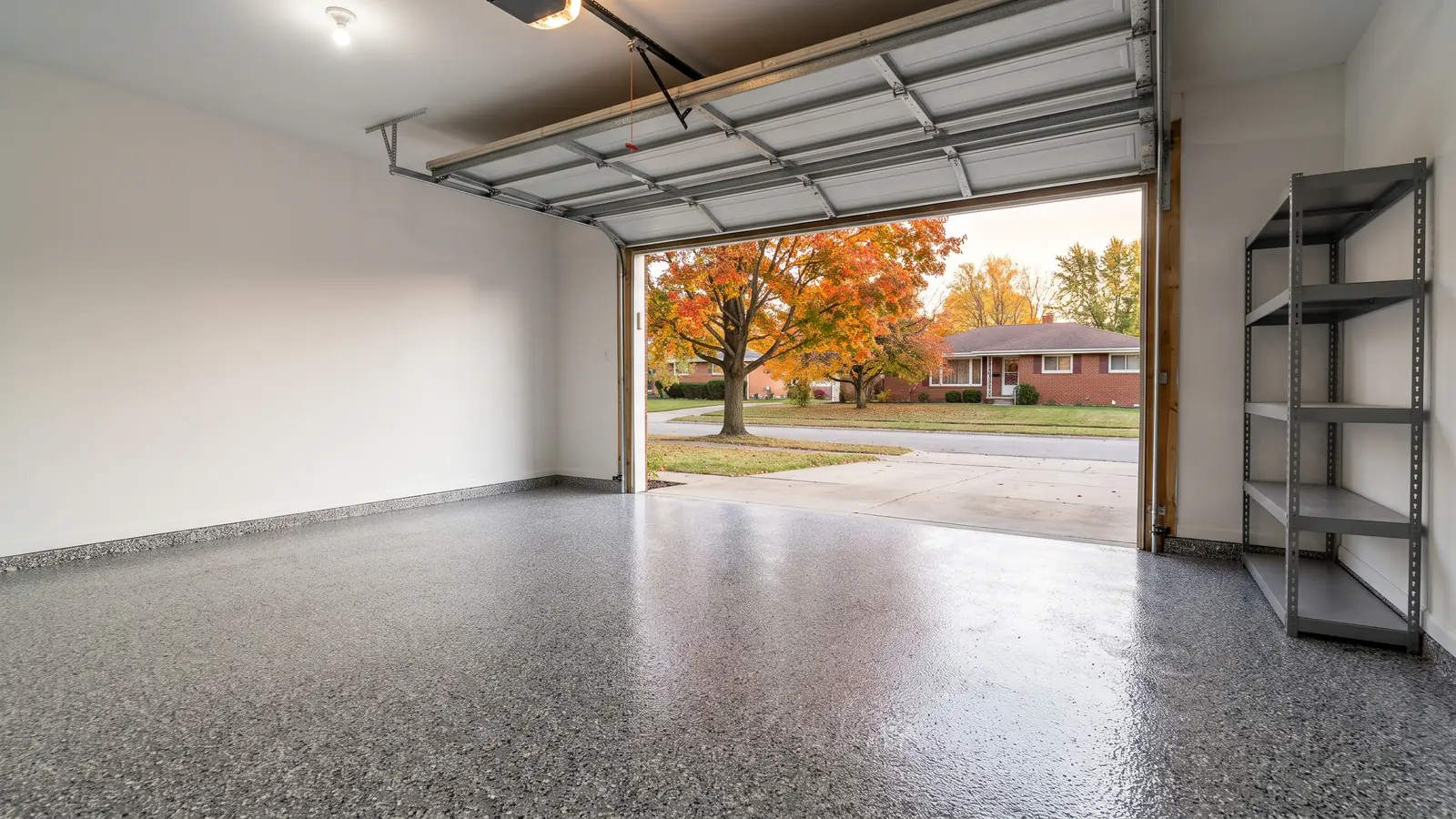
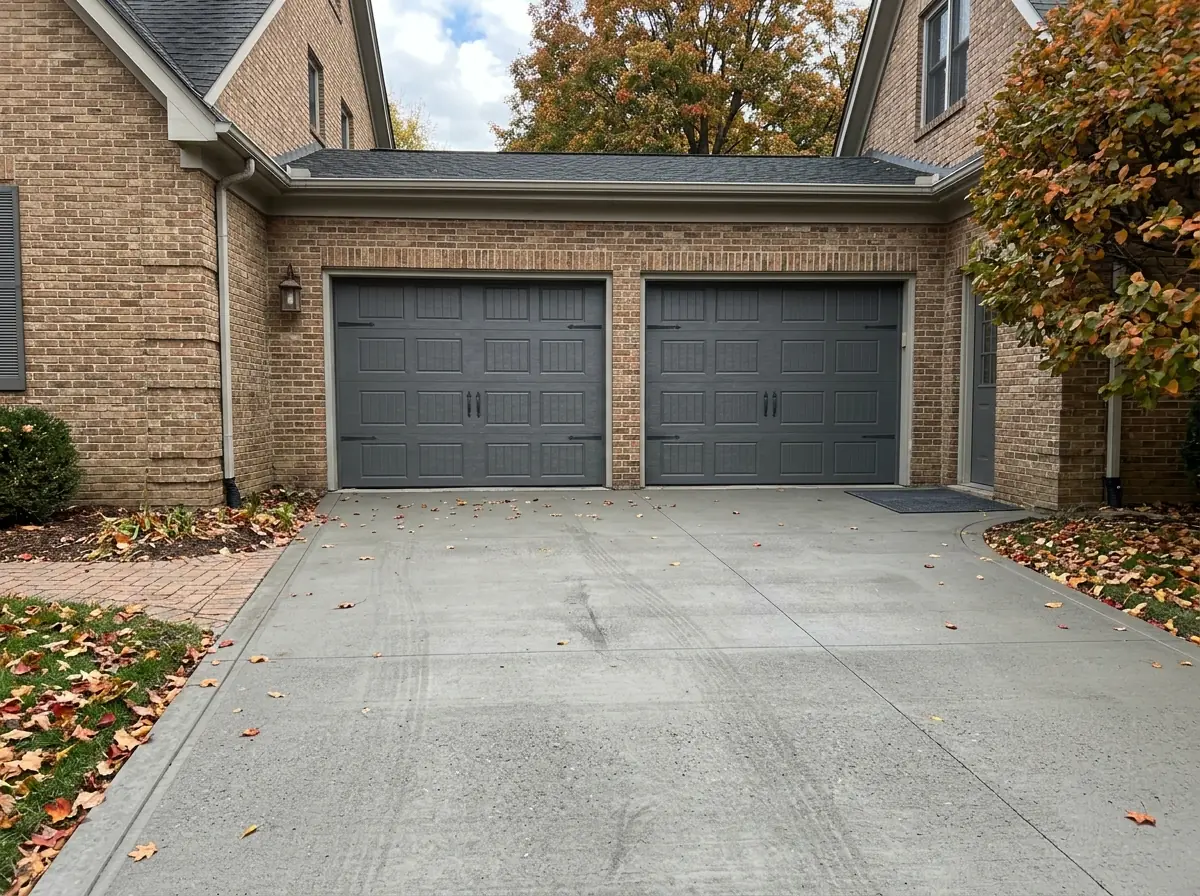
Driveways are the hardest outdoor slab to coat: full sun, hot tires, snow shovels and road salt in one place. One national guide puts epoxy on a 288 to 576 square foot driveway at about $1,200 to $5,800, and a basic overlay on a 20 by 20 foot driveway at $1,200 to $2,000. Hot tires can lift a weak coating outdoors just as they do in a garage (hot-tire pickup). For a driveway that's sound but stained, a penetrating sealer at about $1 to $3 a square foot may be the better buy. Ask the installer which they'd recommend for yours and why.
Why Evansville homeowners and businesses call Evansville Epoxy
- One installer per request, never a list of callers
- Ask for the coating system and cure times in writing
- Ask that the moisture test and grinding appear in the quote
- No charge to you for the referral
Sun, Salt and Freeze-Thaw on Outdoor Concrete in Evansville
Two things decide whether an outdoor coating lasts here: what the sun does to it, and what winter does to the concrete under it.
Sunlight. Standard epoxy isn't UV-stable. Ultraviolet light speeds the breakdown of cured epoxy, and the clear coat yellows, or ambers. UV stabilizers slow that but don't stop it. Polyaspartic coatings resist yellowing, which is why they're the usual topcoat on patios, porches and pool decks. The flake or quartz in the coating can fade too, and one flake maker tells installers to avoid bold, bright colors outdoors for that reason.
Freeze-thaw. Climate normals for Evansville's airport show 90.4 nights a year that drop to 32°F or below, but only 15.7 days when the high stays there. That leaves roughly 75 days a year when a slab can freeze overnight and thaw by afternoon, and each cycle stresses concrete that's holding water. Wet concrete that freezes over and over flakes at the surface (called scaling), and deicing salt makes it worse by keeping the surface wet and adding cycles. Scaled or spalled concrete has to be repaired before a coating goes on, or the coating comes off with the loose surface (resurfacing scaled concrete).
What to ask for. An exterior-rated system with a UV-stable topcoat, grit wherever people walk, a moisture-tolerant base if the slab stays damp, and an install date when the slab is inside the product's temperature window. Coating makers' windows commonly start at 40 to 50°F and top out around 85 to 90°F, so spring and fall are the easiest times to book. Pool decks have their own concerns: see pool deck coating.