
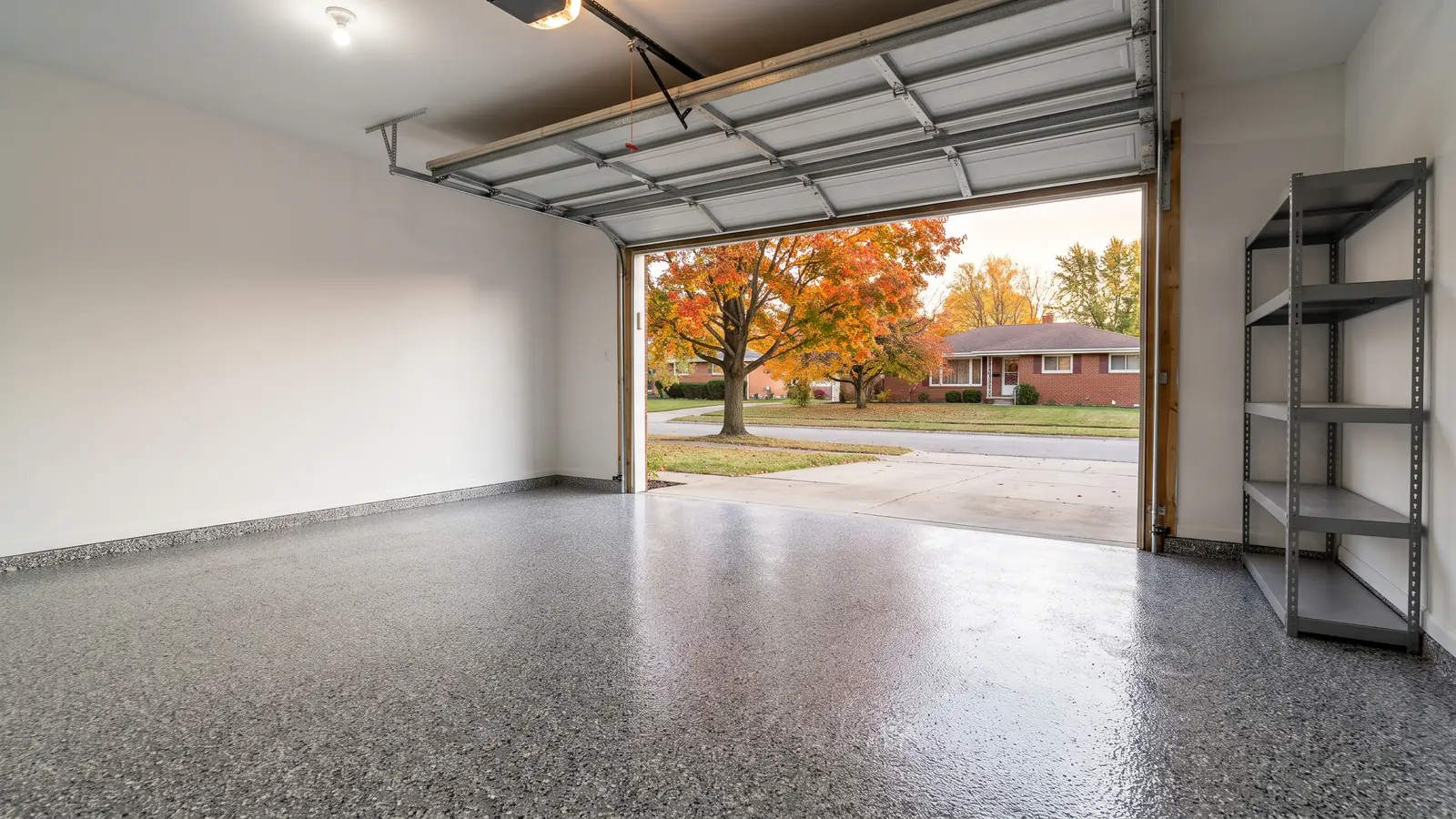
Flake Floor Types by Chip Size and Coverage
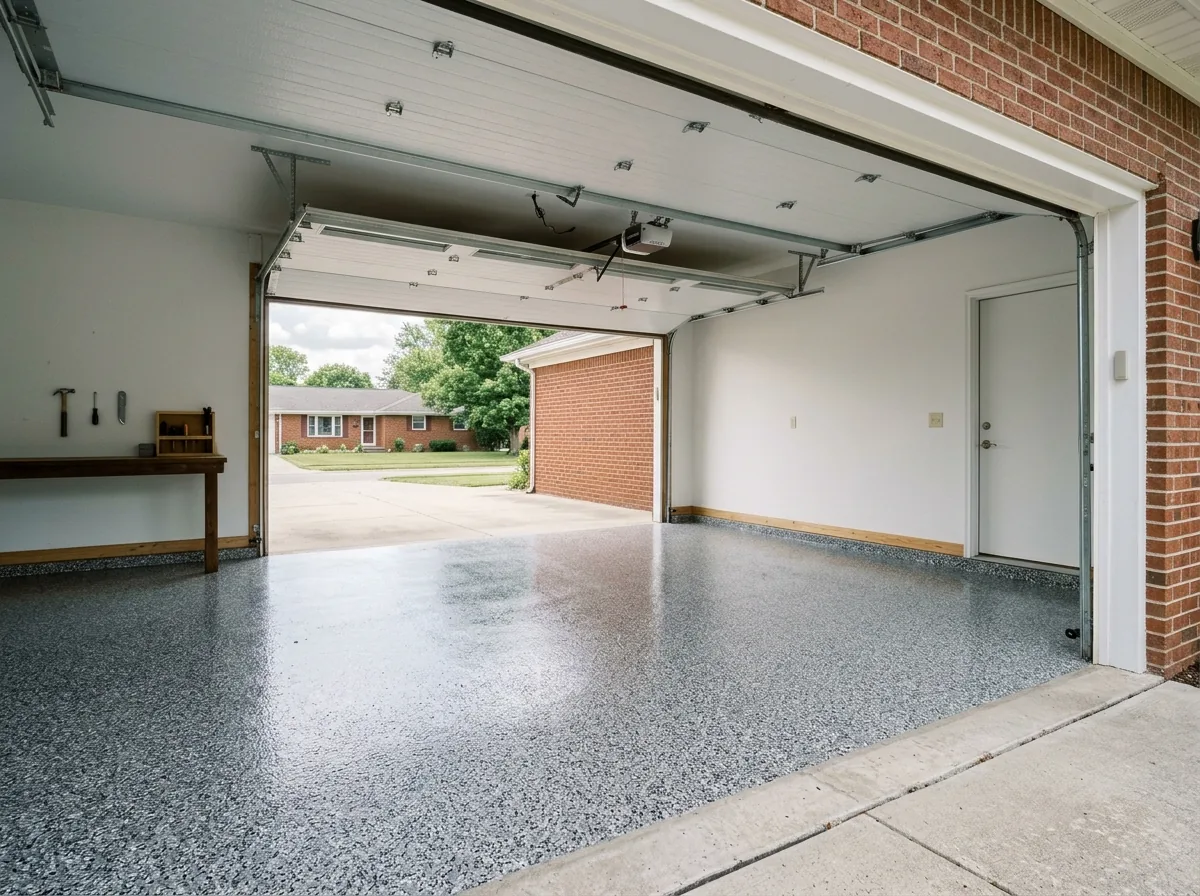
1/4-Inch Chip Full Broadcast
This is the flake floor most people picture, and the one most professional crews install. Chips are thrown into the wet base coat until none of the base shows, then the loose chips are scraped off and the floor is sealed. Quarter-inch is the most popular of the six standard flake sizes. A full broadcast uses a lot of flake, so ask how many pounds of flake the quote assumes.
- Flake use: about 0.2 pounds per square foot of 1/4-inch chip, so roughly 100 pounds for a 500-square-foot two-car garage
- Finished system thickness: typically 30 to 35 mils
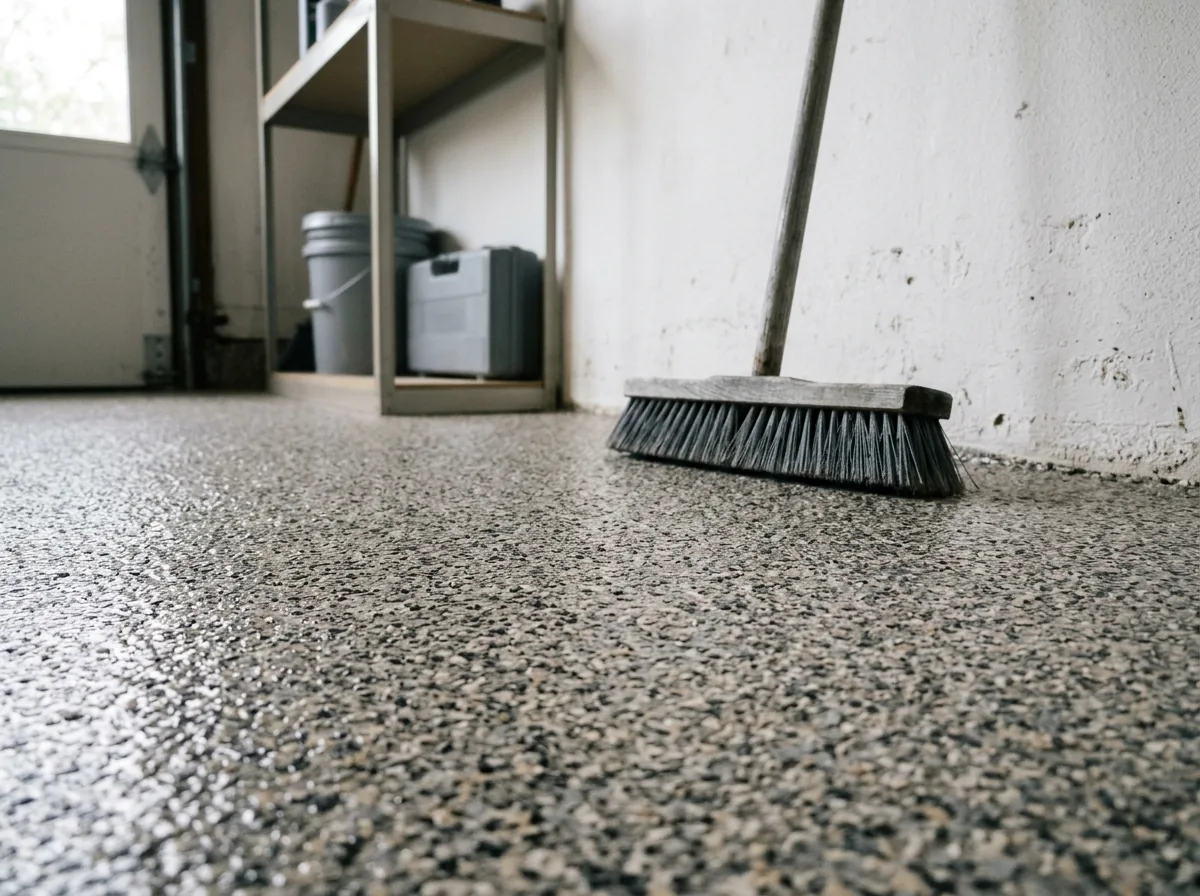
1/8- and 1/16-Inch Micro-Flake
Smaller chips read as one even tone from standing height, closer to granite or terrazzo than to confetti. The manufacturer's guidance is that sizes from 1/8 inch down give a natural, aggregate-like look, and that they take more material to cover the floor completely. Hybrid blends mix mostly 1/16-inch flake with some 1/4 or 1/8 inch for a polished-concrete look. Micro-flake suits a basement, a laundry room or a showroom garage. Ask for a sample board in the size you're buying, since the same blend looks very different at 1/16 inch than at 1/4.
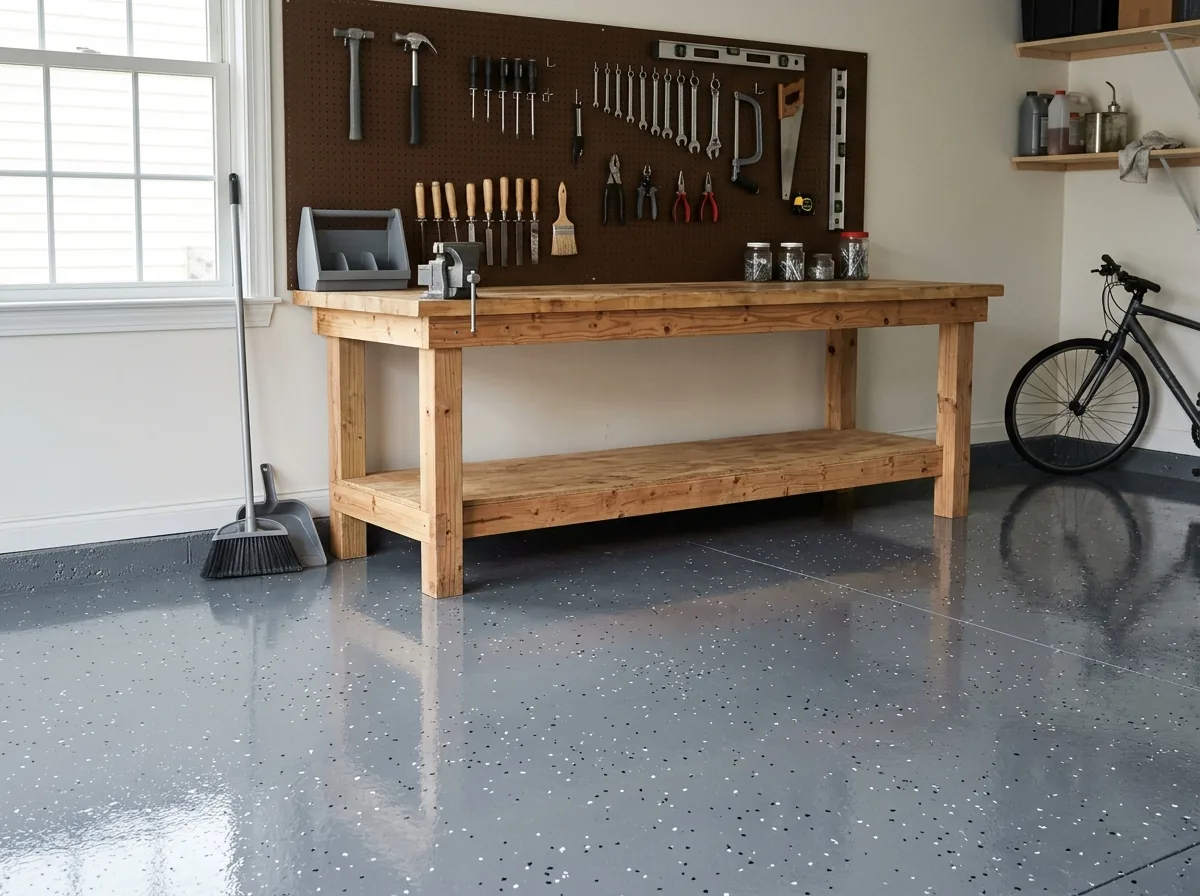
Partial (Light) Broadcast
In a partial broadcast, a few handfuls of flake are scattered into a pigmented base coat. The base color is what you see, with the chips as an accent. It uses a fraction of the material: one coating maker's rate for a light sprinkle of 1/4-inch flake is 0.008 pounds per square foot, against 0.2 for a full broadcast, about one twenty-fifth as much. That's why it's popular with do-it-yourself installers. The trade-off is that you lose much of the dirt-hiding a full broadcast gives. Ask about grit in the topcoat if the floor gets wet (slip-resistant floor coatings).
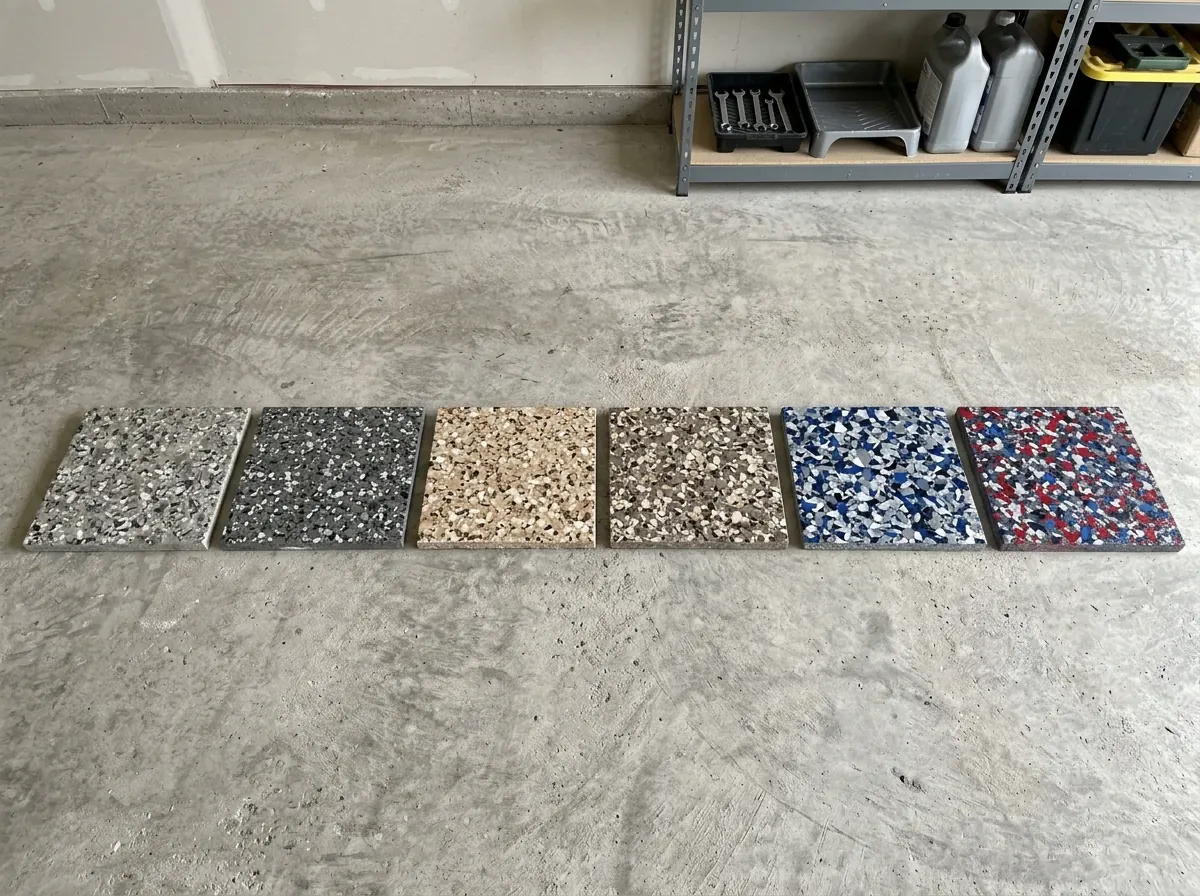
Custom Flake Blends
Blend choice is more than color. Neutral gray and brown blends look like stone, while bright statement blends show each color best in the larger sizes. For a garage where the door stays up on summer afternoons, or for any outdoor slab, the flake maker advises against bold, bright colors because they fade early. Ask to see the blend on a sample board under your own garage light before you sign, which is what the manufacturer itself recommends.
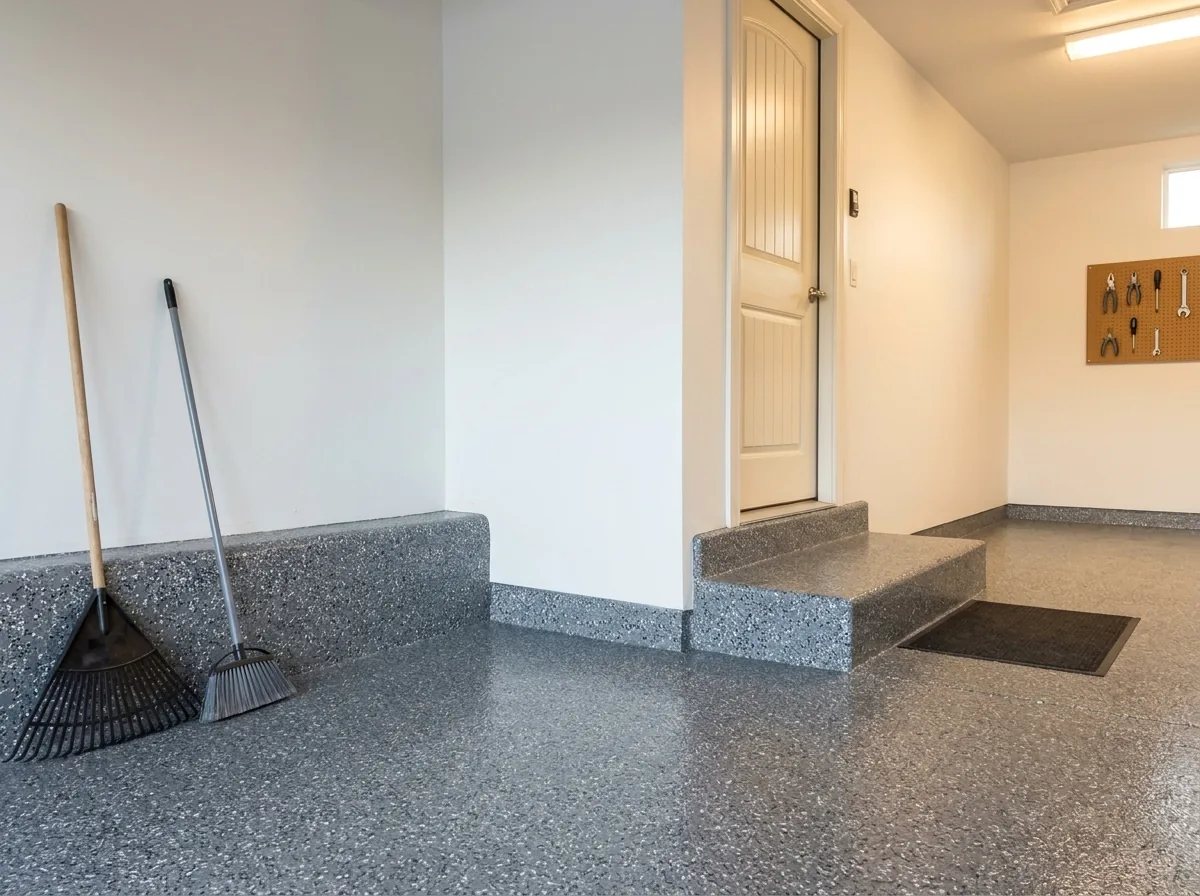
Flake on Stem Walls and Steps
The stem wall is the low concrete curb along the base of the garage walls. Running the flake up it ties the floor and walls together and keeps winter slush, which Evansville's brined and salted streets put on every car, off bare concrete at the edges. Vertical surfaces are slow hand work. Ask whether the quote includes stem walls, the step and the step's front edge, and whether the step gets grit for wet shoes.
Why Evansville homeowners and businesses call Evansville Epoxy
- One installer per request, never a list of callers
- Ask for the coating system and cure times in writing
- Ask that the moisture test and grinding appear in the quote
- No charge to you for the referral
What to Settle Before a Flake Floor Goes Down
The chips are the part you choose; the layers around them decide how long the floor lasts. Get these points in writing on the quote:
The topcoat
A clear epoxy topcoat yellows in sunlight; a polyaspartic topcoat doesn't (how sun affects outdoor and garage coatings). Polyaspartic also shortens the wait before you can drive on the floor (polyaspartic floor coating).The prep
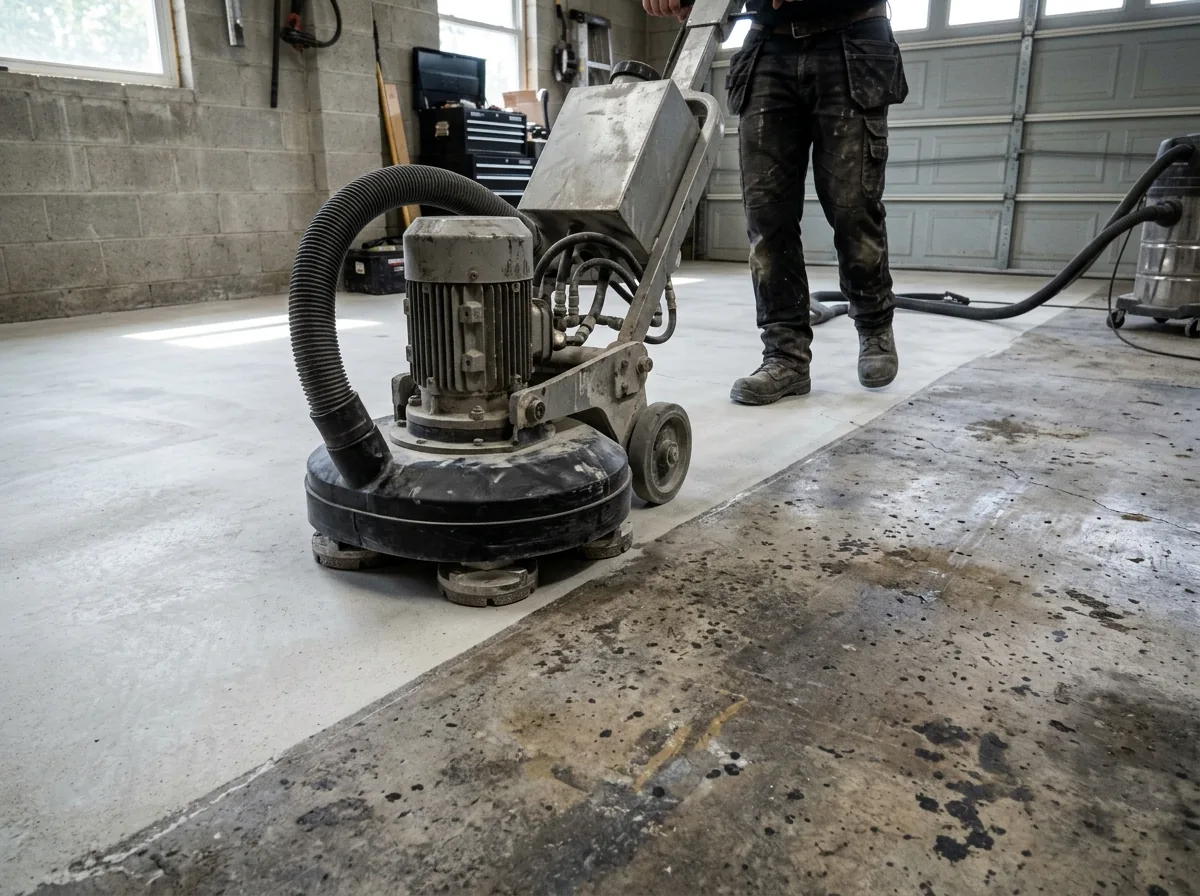
The slab should be ground to the profile the coating's data sheet calls for, with cracks filled first (concrete grinding and crack repair). A flake floor over etched or painted concrete is the classic setup for hot-tire pickup.Moisture
A slab that pushes vapor up will lift any coating, flake or not, so ask for a moisture test on basements and older slabs (how basement slabs are tested).The broadcast weight and chip size
Both belong on the quote, since they drive material cost and how well the floor hides dirt.
For a whole-garage price and the cost by garage size, see epoxy garage floor coating.