
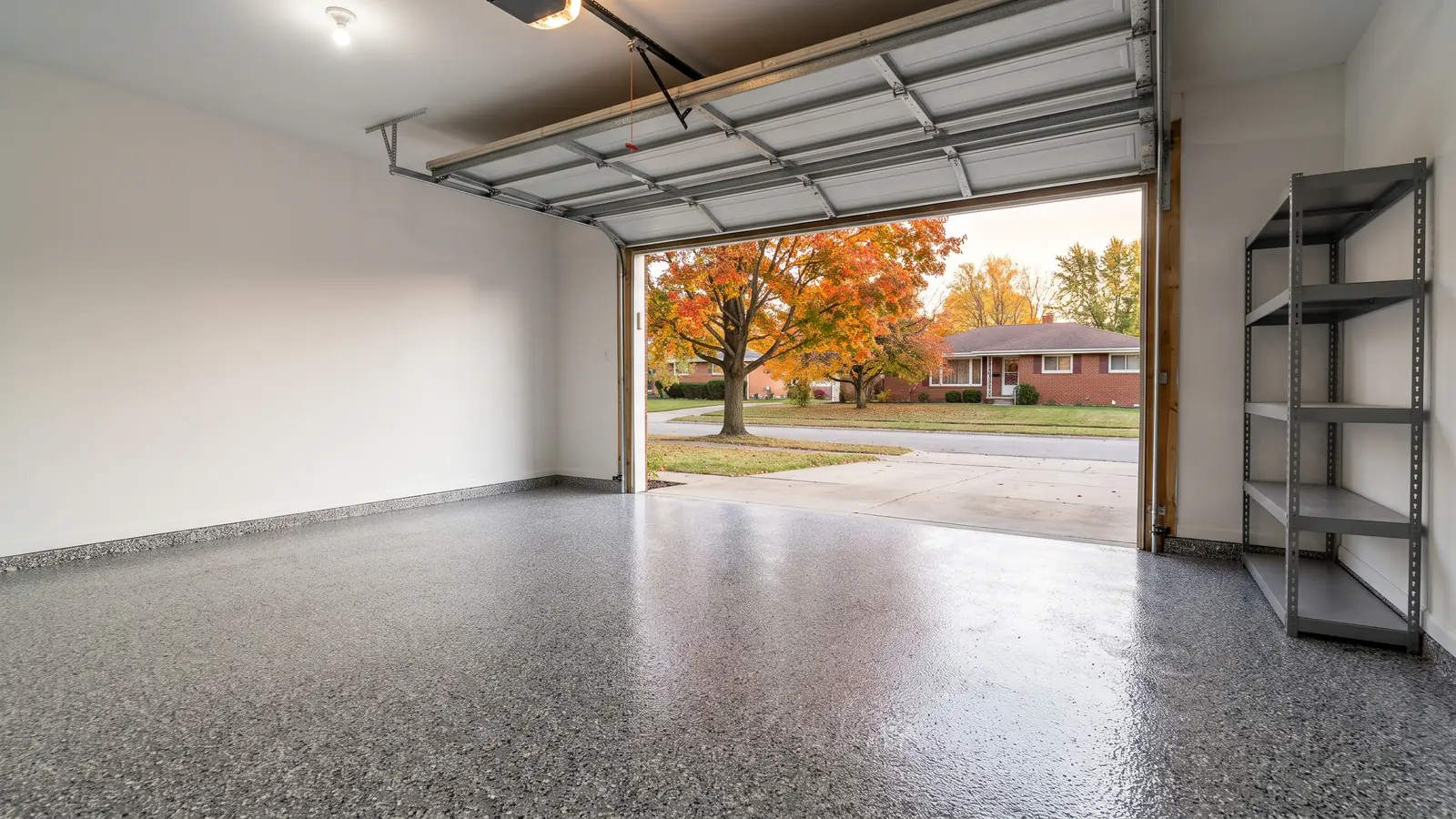
Auto Shop Floor Coatings by Bay Type
Every bay in a shop sees different abuse. A lift bay, a lube pit and a wash bay need different things from the floor, and an installer who prices them all the same is pricing a garage, not a shop.
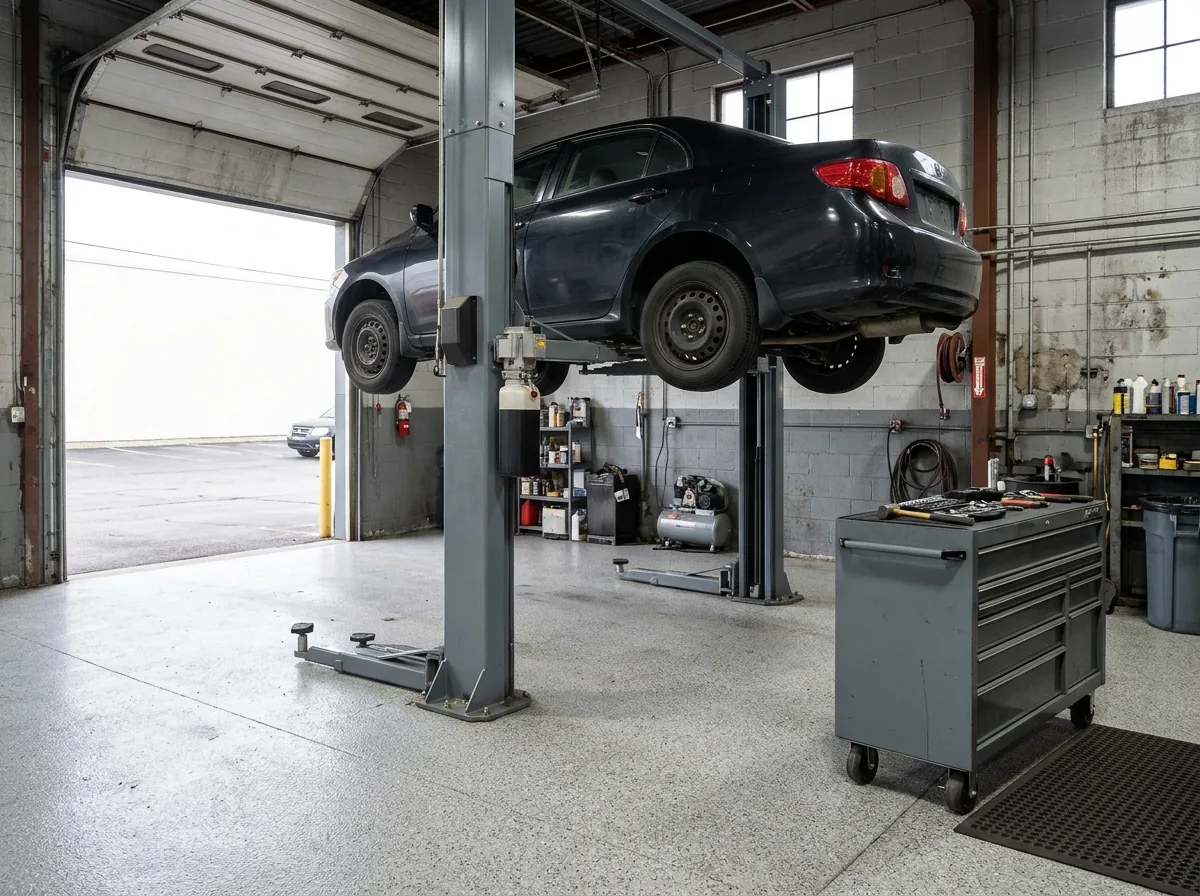
Lift Bays
The lift posts are bolted through the slab, so plan the coating around them. Many 9,000 to 10,000 lb two-post lifts call for about 4¼ to 5 inches of concrete rated at least 3,000 PSI at each anchor. Ask the installer whether to coat before the lift goes in or cut neatly around the base plates, and check the lift maker's anchoring rules either way. Brake fluid drips under every lift, and coatings vary a lot in how well they take it, so ask for the exact topcoat's rating (industrial epoxy flooring explains how to read a chemical chart).
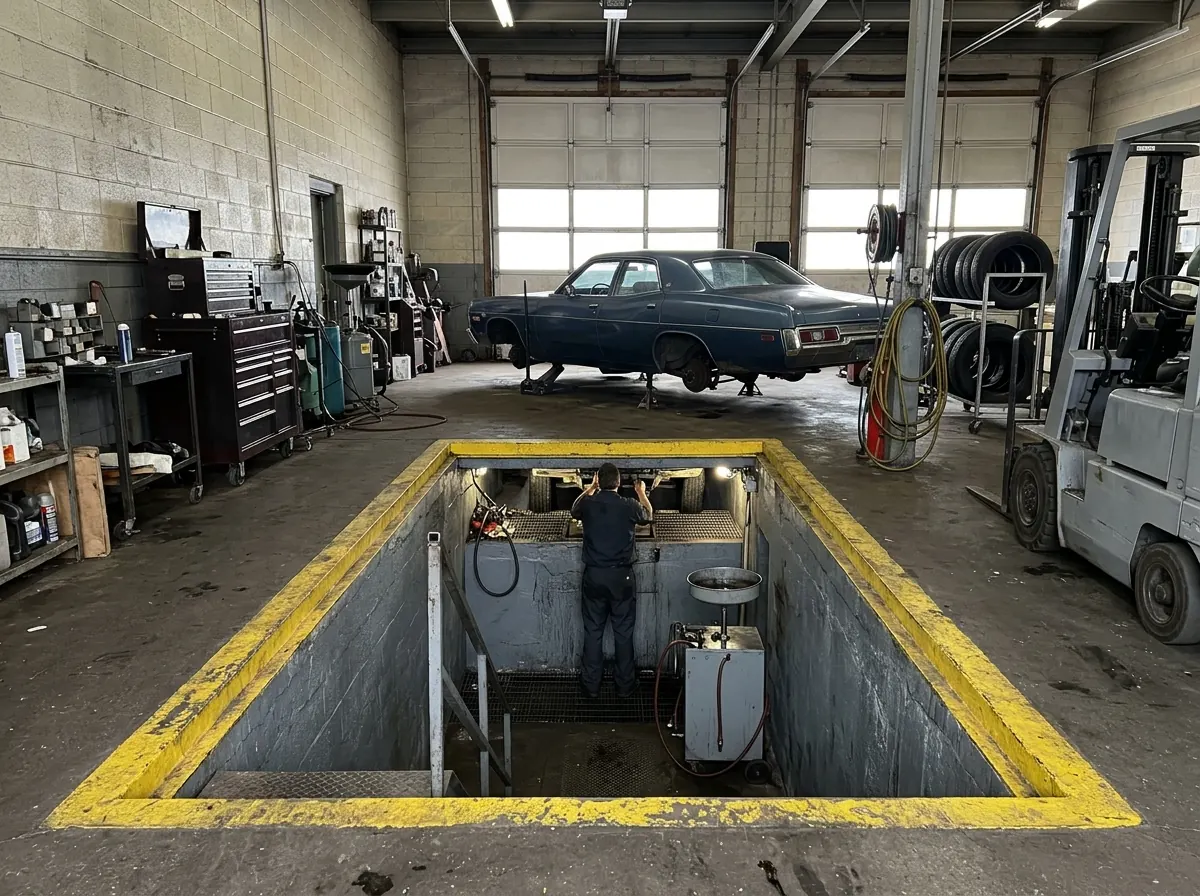
Lube and Oil-Change Pits
Pits collect every drip of motor oil and transmission fluid, and techs stand on that floor all day. Coat the pit walls along with the floor so oil can't soak into raw concrete at the edges. The rim is a fall hazard, so mark it in the caution color used for industrial safety marking. On the floor around the pit, ask for a textured topcoat rated for oily conditions, not just wet ones (anti-slip floor coating explains the difference).
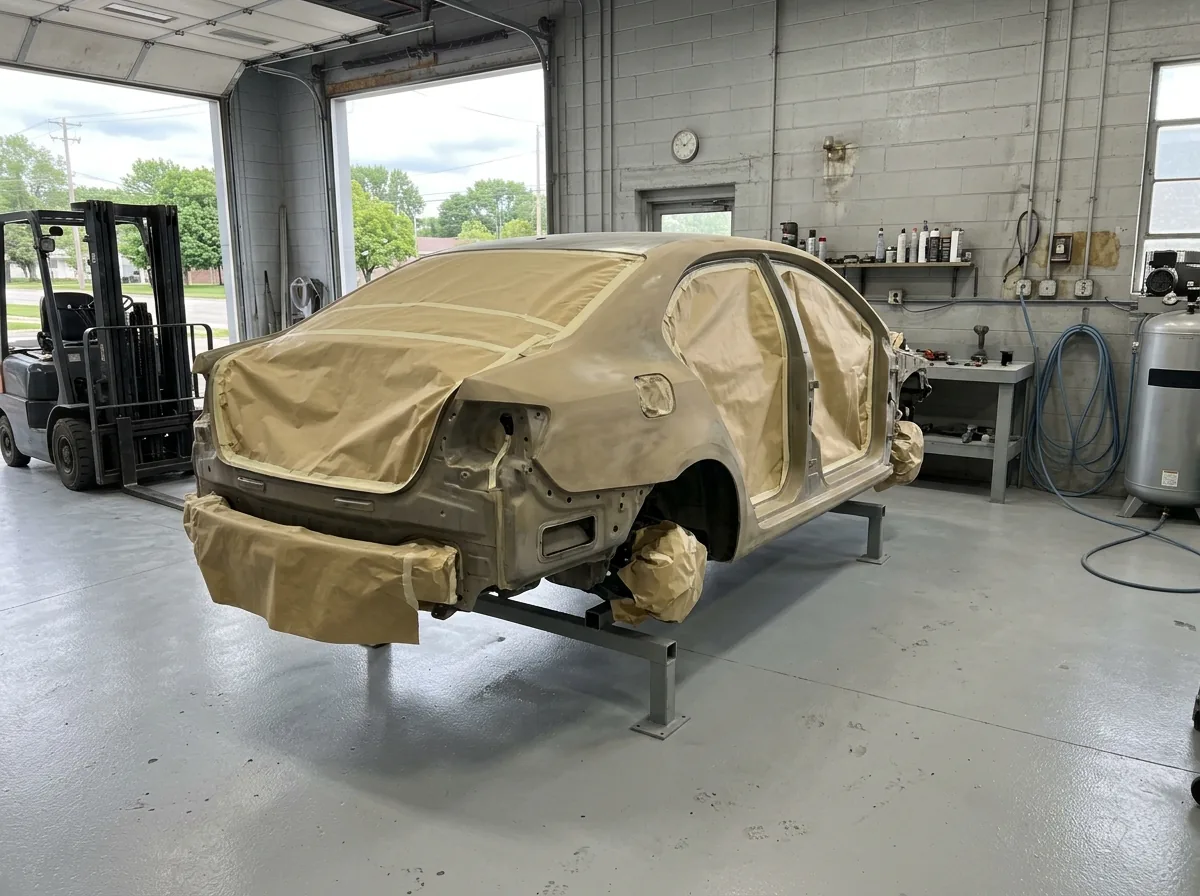
Body Shop and Paint Prep Areas
Body shops spill solvents, not oil. Acetone and MEK can damage coatings that handle oil without trouble. In the same manufacturer chart, MEK is rated not recommended for some epoxies and acceptable for others, so the product matters more than the category. A light gray, smooth finish makes dropped clips and sanding dust easy to find and sweep. Ask the installer to confirm the topcoat against the solvents you actually use.
Fleet Maintenance Garages
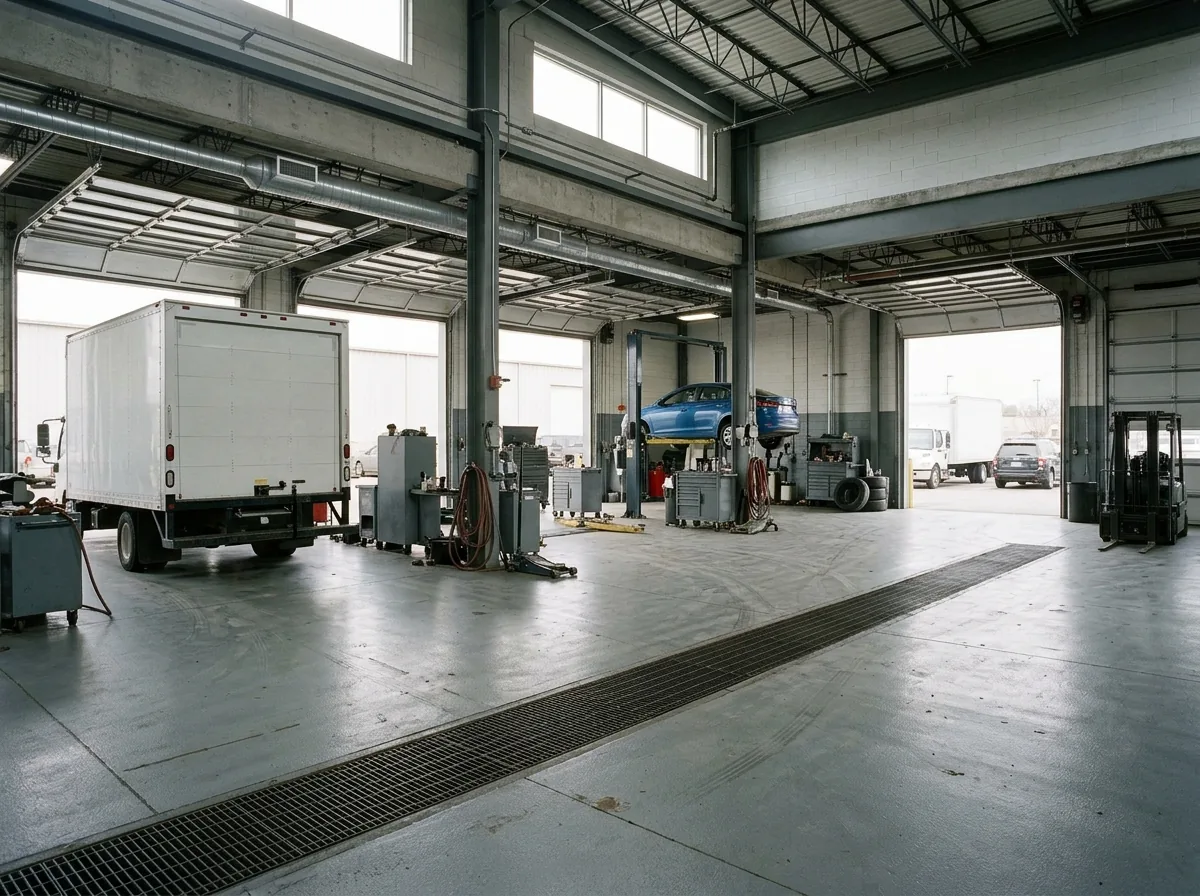
Fleet bays carry heavier trucks, diesel and, in winter, the brine the city sprays on Evansville streets before a storm. That slush melts onto the floor every night. Heavier vehicles and dragged equipment justify a thicker build than a car shop needs. If the bays are unheated, ask about cold-weather polyaspartic installs, since many epoxies won't cure properly on a cold slab. Trench drains need their edges sealed to the coating so fluids can't get underneath it.
Detailing and Wash Bays
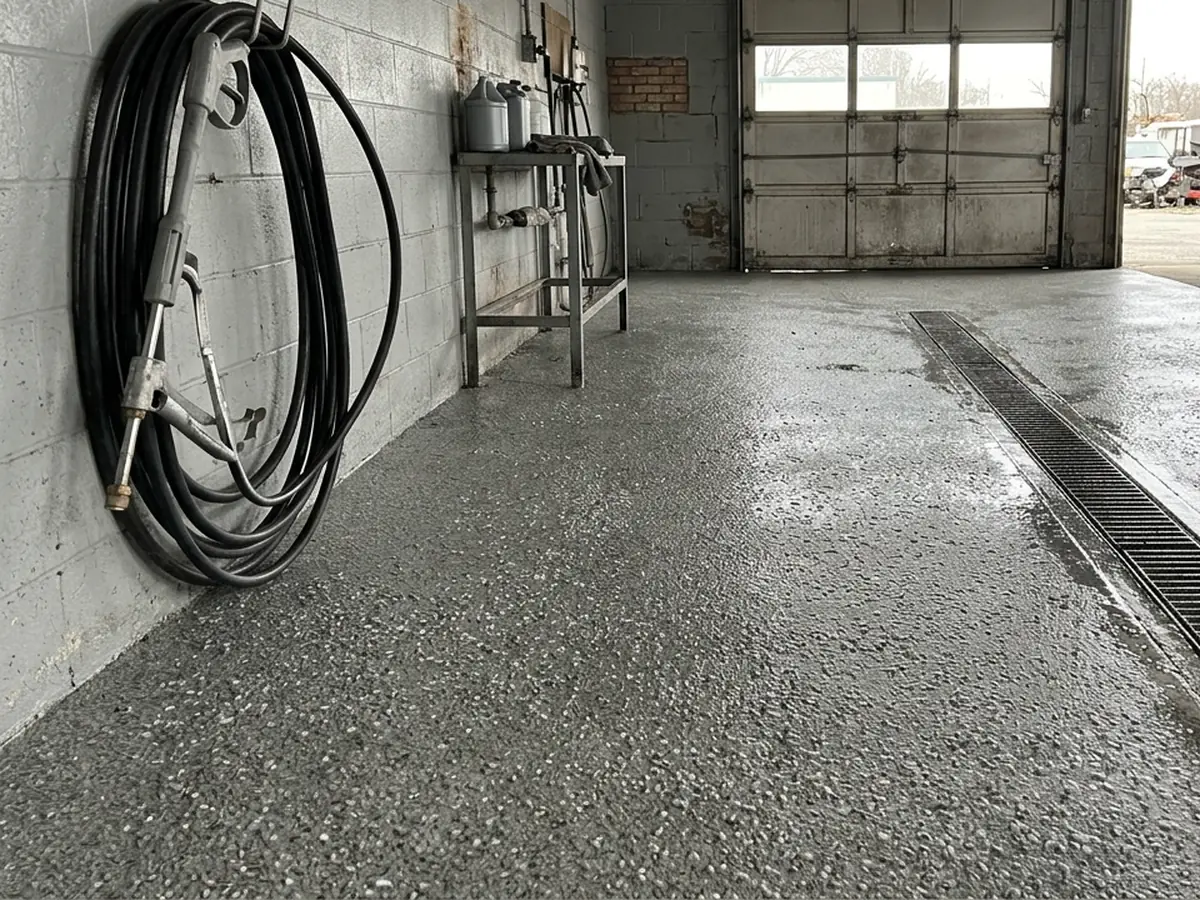
Wash bays are wet all day, so traction and drainage come first. Broadcast quartz leaves a gritty surface that a smooth coat lacks; see quartz epoxy flooring for how it's built. Ask the installer to keep the slope to the drain intact and to coat into the drain rim. Standing water finds any gap where the floor meets the walls, so the edges matter as much as the field.
Why Evansville homeowners and businesses call Evansville Epoxy
- One installer per request, never a list of callers
- Ask for the coating system and cure times in writing
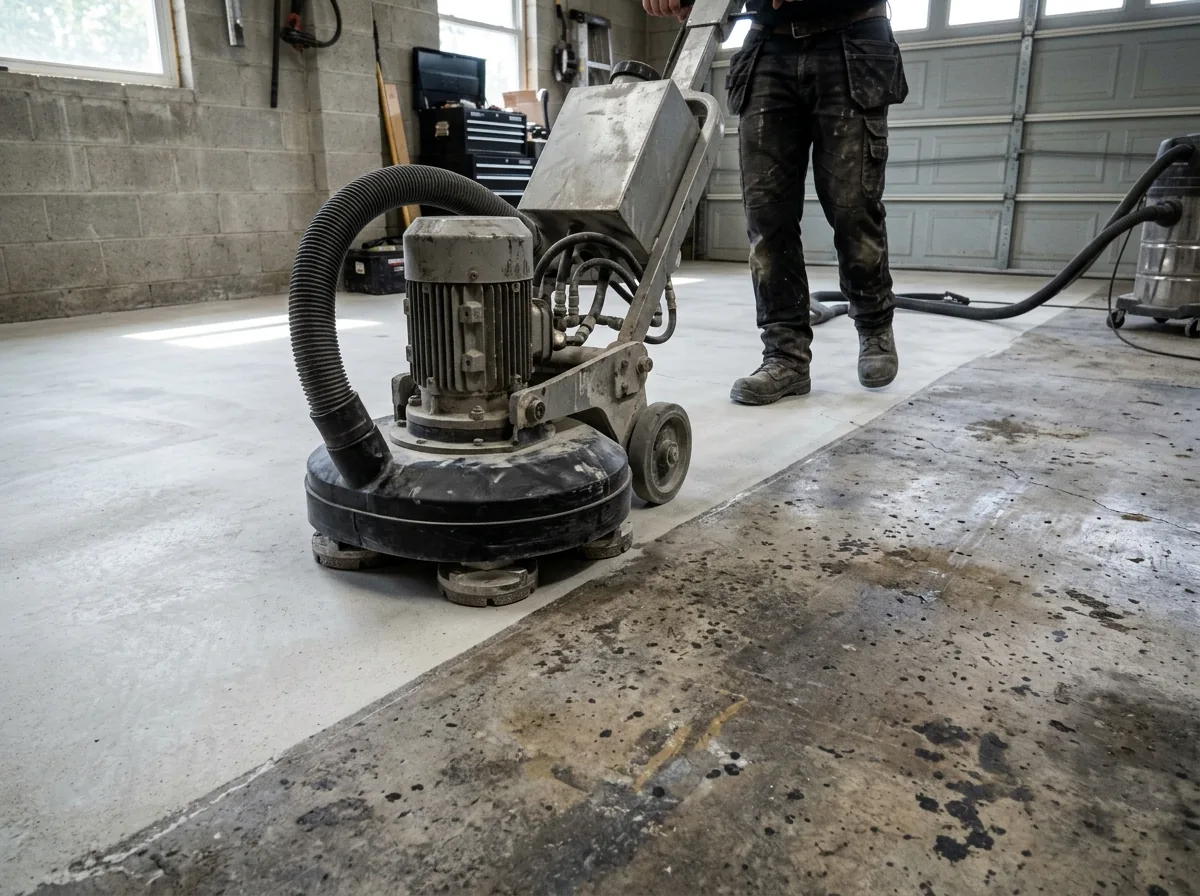
- Ask that the moisture test and grinding appear in the quote
- No charge to you for the referral
Scheduling a Shop Floor Around Open Bays
Most shops do one or two bays at a time. Before the crew arrives, lifts are lowered, toolboxes and tire machines moved, and the bays emptied. Each round then waits out its cure: about a day for a polyaspartic system, longer for epoxy and in cold weather. Cure times by system are compared in detail there.
Have a few things ready when the installer visits: the number and size of bays, which are heated, the lift models, and a list of the fluids and solvents your techs use. That list lets the installer match the topcoat to the chemical chart instead of guessing.
Ask for the coating system in writing, product by product, and for which bays get texture. A good installer will walk the shop with you and note the oil-soaked patches, cracked areas around old lift anchors and drains that don't drain. Those items move the price.