
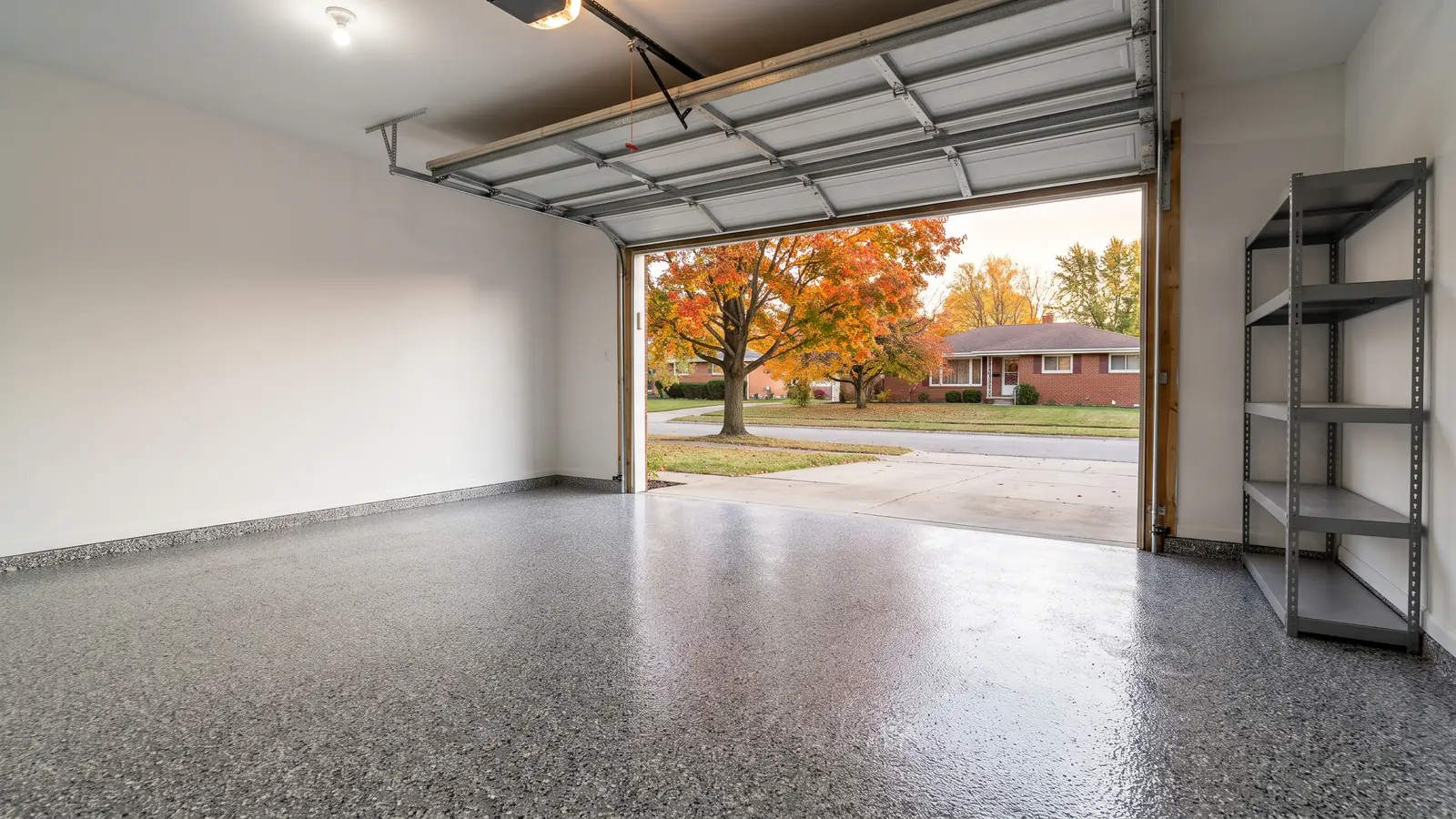
Epoxy Floor Repairs by Type of Damage
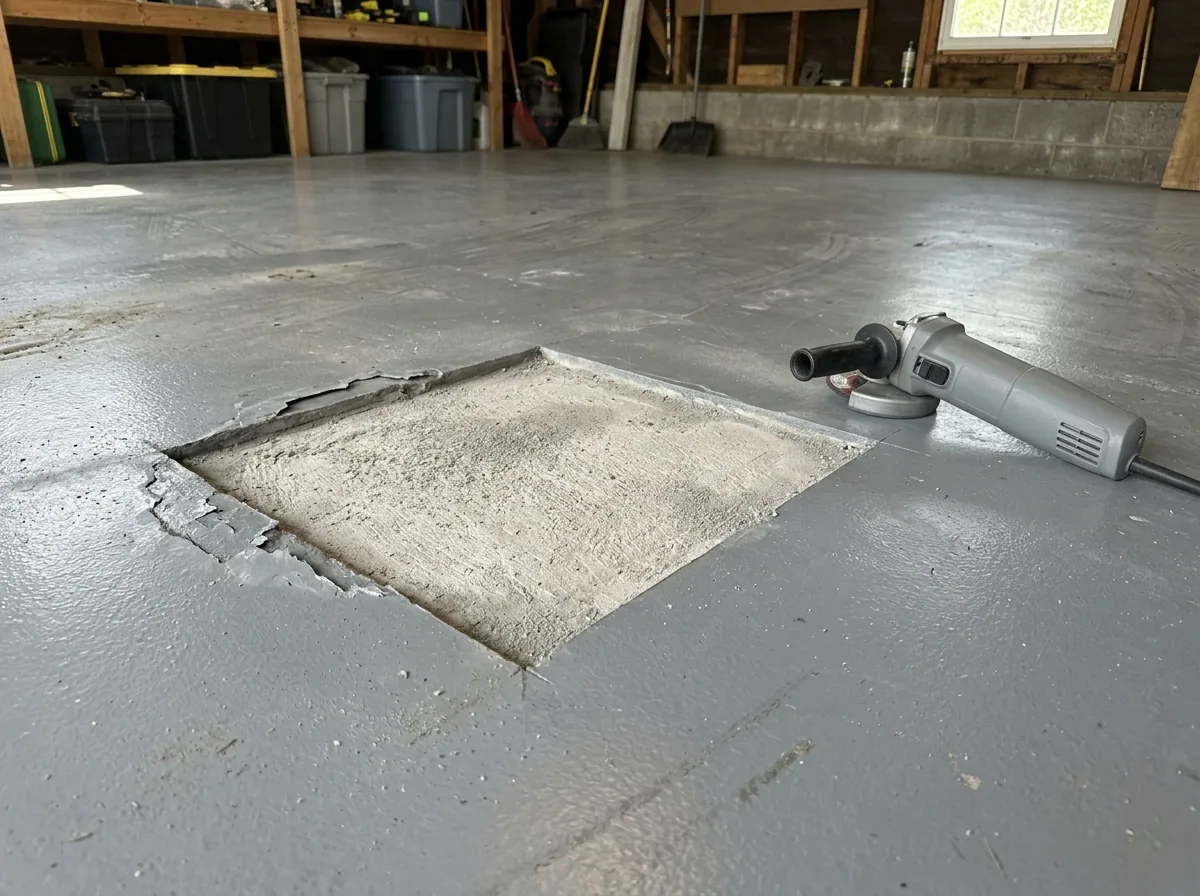
Delaminated Patch Repair
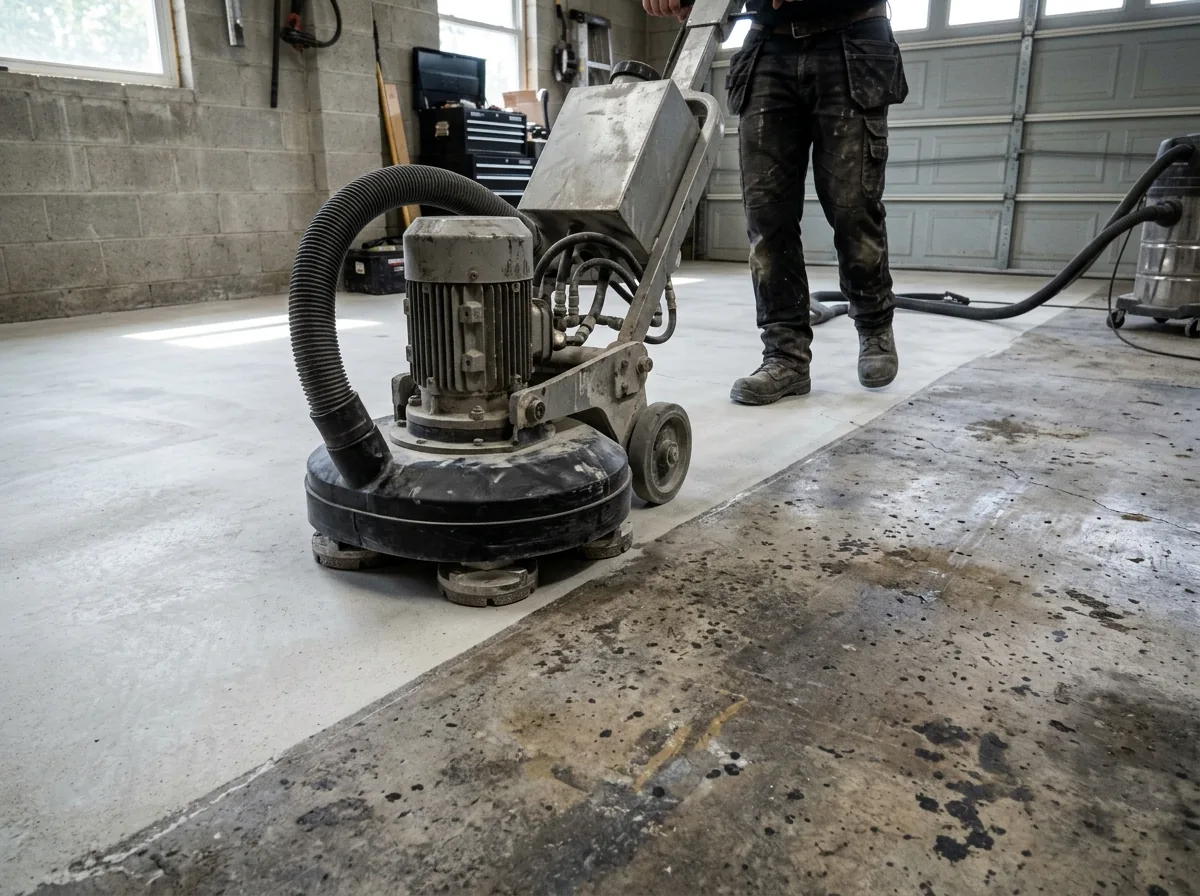
Delamination is coating coming loose from the concrete in one area while the rest holds. Before anyone patches it, a good installer will find out why it let go: vapor coming up through the slab, a spot that was never ground properly, or oil left in the concrete. A patch over an unsolved moisture problem lifts again (how slabs are moisture-tested). The repair itself means cutting back to firmly bonded coating, grinding the exposed concrete, and rebuilding the coating layers over it. Ask the installer to check the rest of the floor for loose areas while they're there.
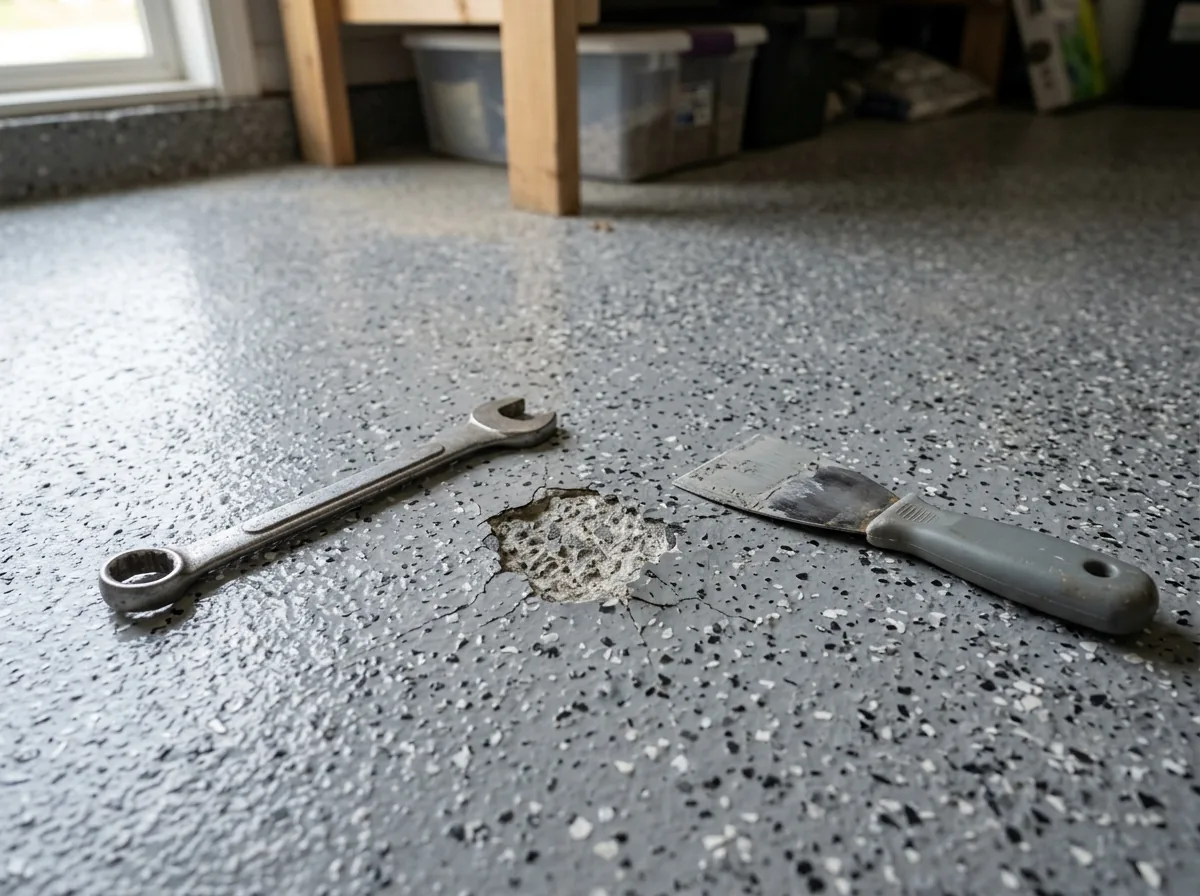
Chips and Gouges
Dropped tools, jack stands and trailer tongues knock chips out of even good floors. Small scratches and worn spots can be filled with an epoxy that's compatible with the original. Compatibility matters because a few resin types won't bond to each other, so dig out the invoice or product name if you have it. On a flake floor, the chip gets filled, re-broadcast with matching flake and topcoated. Ask whether the repair includes a topcoat over the surrounding area, which hides the edge better than a spot fix.
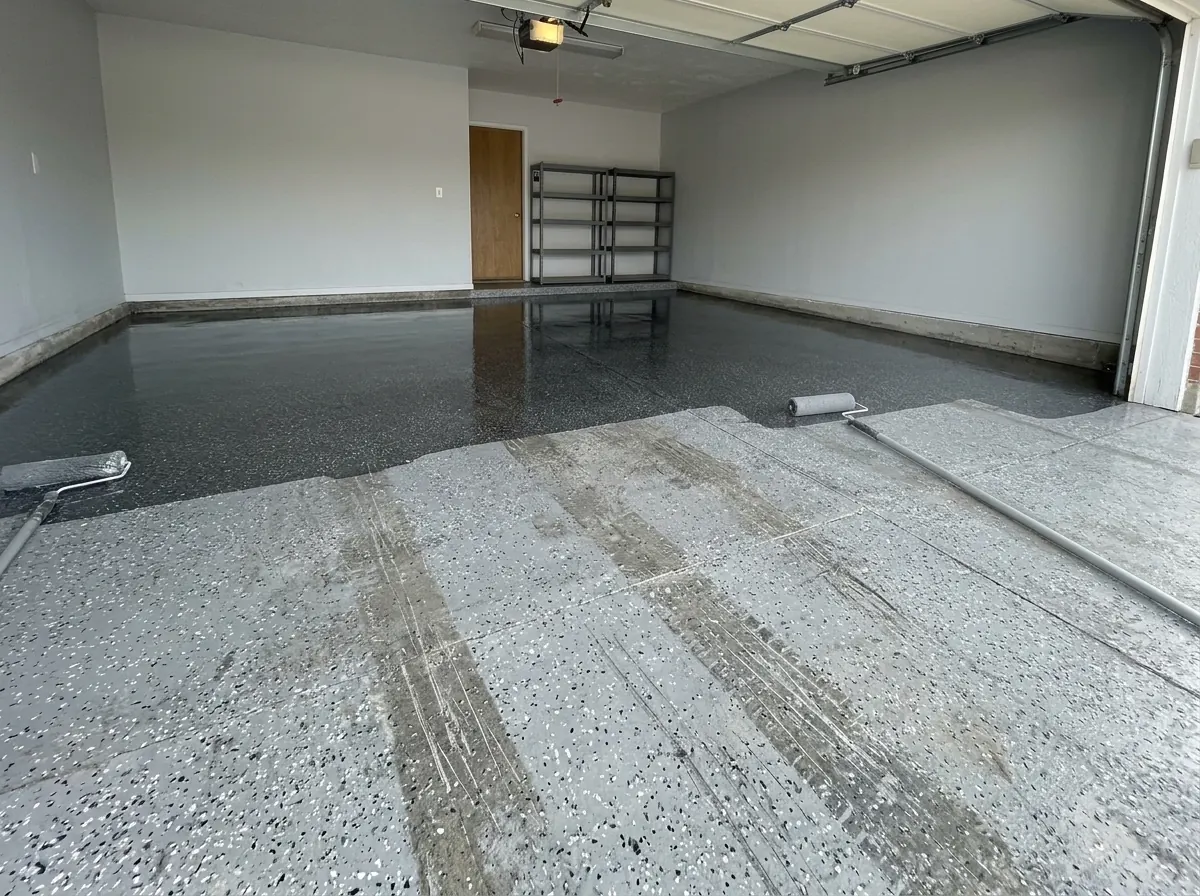
Worn Topcoat Recoat
A dull, scratched traffic path with the color coats intact is the easiest fix there is. Resinous floors don't have to be torn out when they get old; another finish coat renews them. The work is cleaning, then abrading the old topcoat so the new one bonds, then rolling on the new coat. Outside a product's recoat window, which is 24 hours for one quartz system, cured resin needs that sanding first. One coating maker puts the normal interval at every 3 to 5 years, depending on wear.
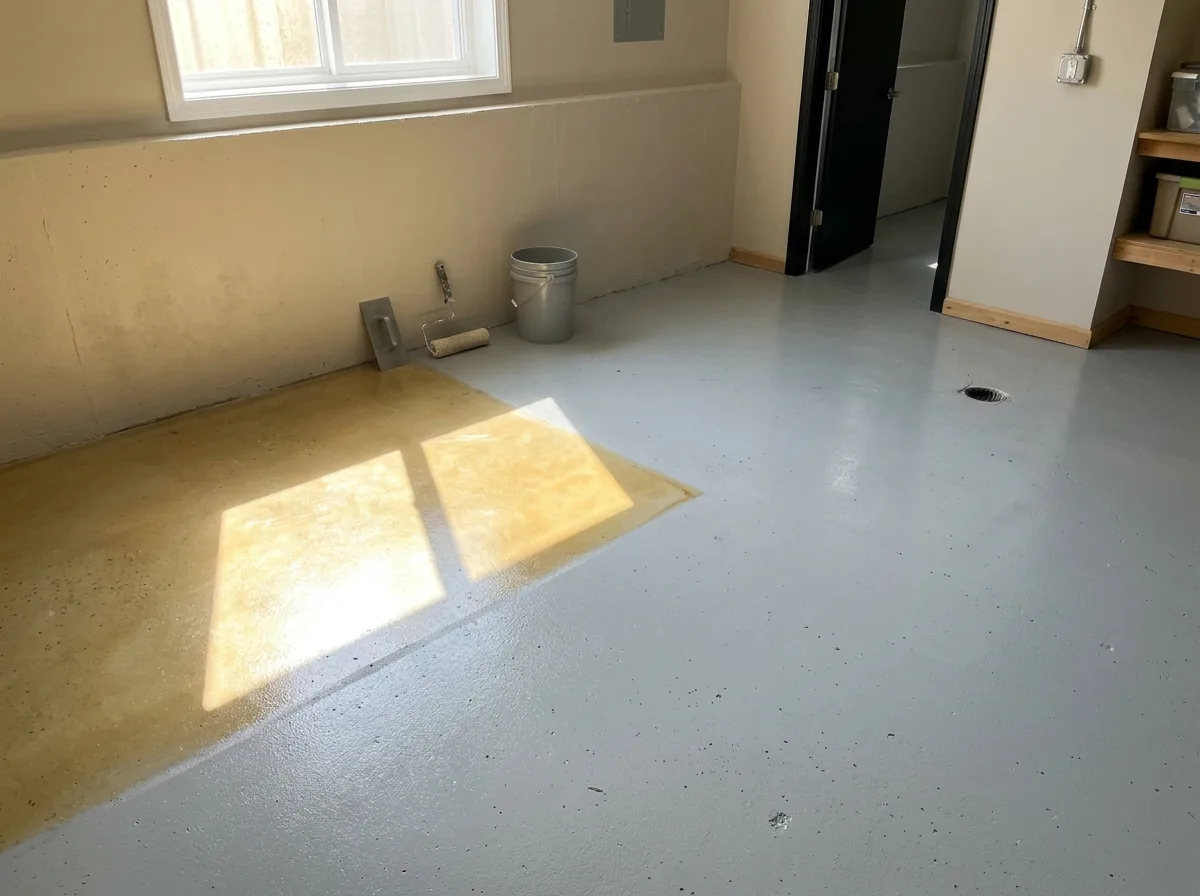
Ambered or Yellowed Epoxy
Standard epoxy isn't UV-stable. Sunlight speeds up the breakdown of the cured resin, and the clear coat turns amber, most of all near windows and open garage doors. UV stabilizers in the resin slow this down but don't stop it, and no cleaner takes the yellow out. The fix is to abrade the floor and recoat it with a UV-stable topcoat, usually polyaspartic, which doesn't yellow. Floors outdoors face the same problem in a harsher form (outdoor concrete coatings).
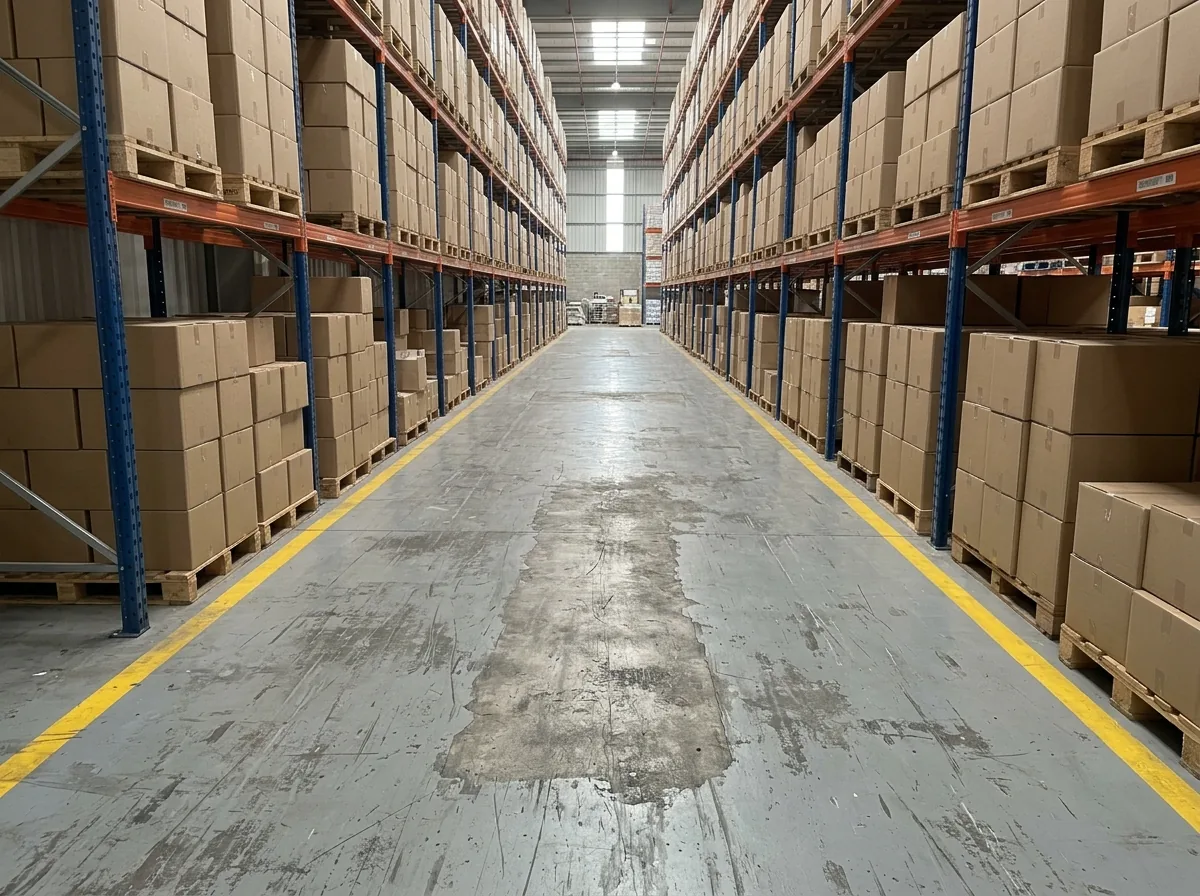
Commercial Traffic-Lane Wear
In shops, warehouses and stores, the coating wears where wheels and feet repeat the same path: forklift aisles, doorways, the route to the register. One maker's care guide tells owners to inspect those high-traffic areas regularly. A lane recoated before it wears through needs only a new topcoat; one worn to bare concrete needs the full build-up again. Joint edges in those lanes chip under hard wheels, and a semi-rigid joint filler protects them (joint and crack repair). Lane repairs on a working floor are about downtime, so ask about night and weekend work (commercial epoxy flooring) and, for warehouses, getting the aisle lines redone at the same visit (industrial epoxy flooring).
Why Evansville homeowners and businesses call Evansville Epoxy
- One installer per request, never a list of callers
- Ask for the coating system and cure times in writing
- Ask that the moisture test and grinding appear in the quote
- No charge to you for the referral
Repair or Start Over?
The deciding question is whether the coating is still stuck to the slab.
Repair or recoat
when the damage is local or only the topcoat is worn, and the rest of the floor is firmly bonded.Strip and redo
when the coating is lifting in many places, peeling in tire tracks, or blistering across the floor. That's a resurfacing job (garage floor resurfacing), with the cause fixed first.Ask for a written scope
naming the products, the prep (cleaning, sanding or grinding) and the cure time before use. For the wait before driving on each type of coating, see polyaspartic floor coating.