
Quartz Epoxy Floor Types for Wet Rooms
Double-Broadcast Quartz
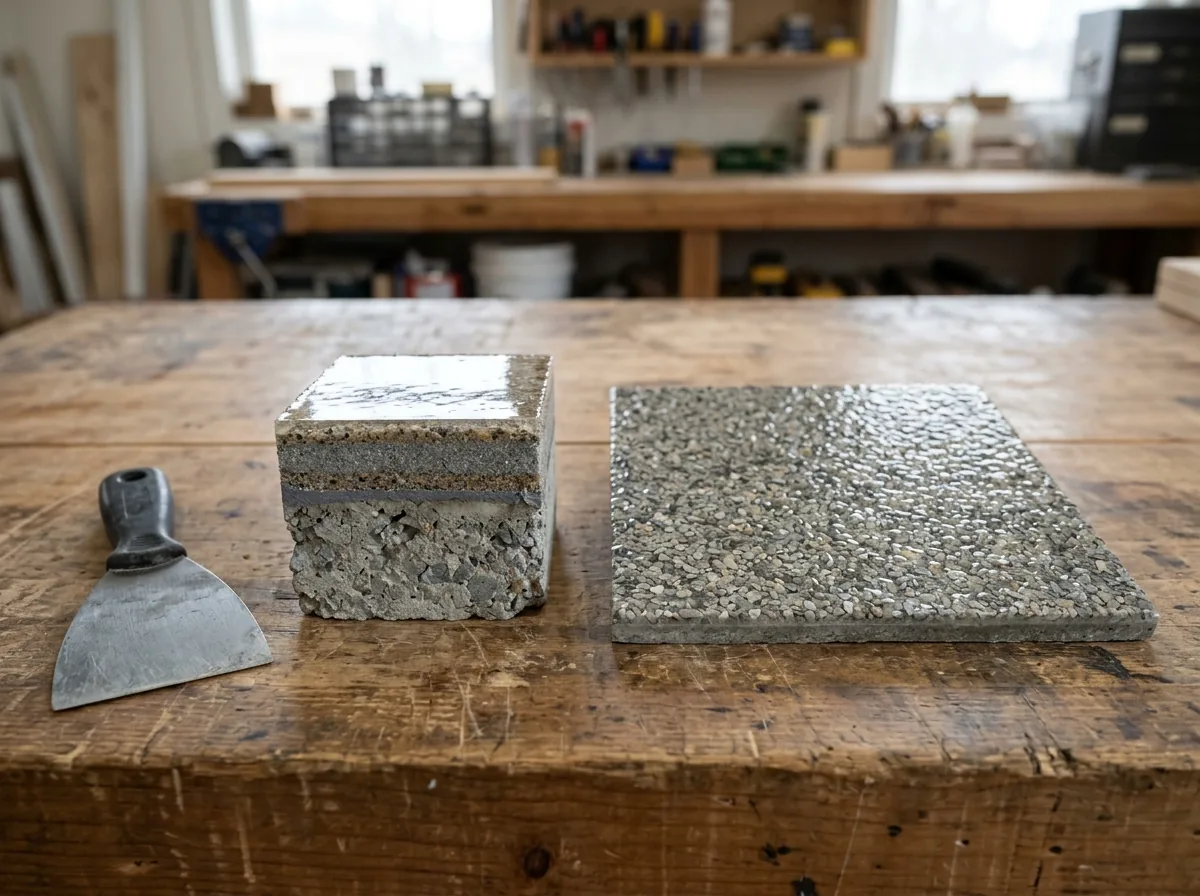
A standard quartz floor is built in layers. A primer goes on the ground concrete, then a base coat that gets quartz sand thrown into it until no wet spots show. A second epoxy coat and a second broadcast follow, the excess sand is swept off, and a clear topcoat seals it. More topcoat means a smoother floor that mops easily; less means more grip. Ask how many topcoats the quote includes and to see a sample with that texture.
- System thickness: about 1/8 inch (125 mils), several times a 30-35 mil flake floor
- Quartz per broadcast: roughly 100 square feet per 50-pound bag
- Traffic: off the floor for 48 hours after the topcoat
Mudrooms and Back Entries
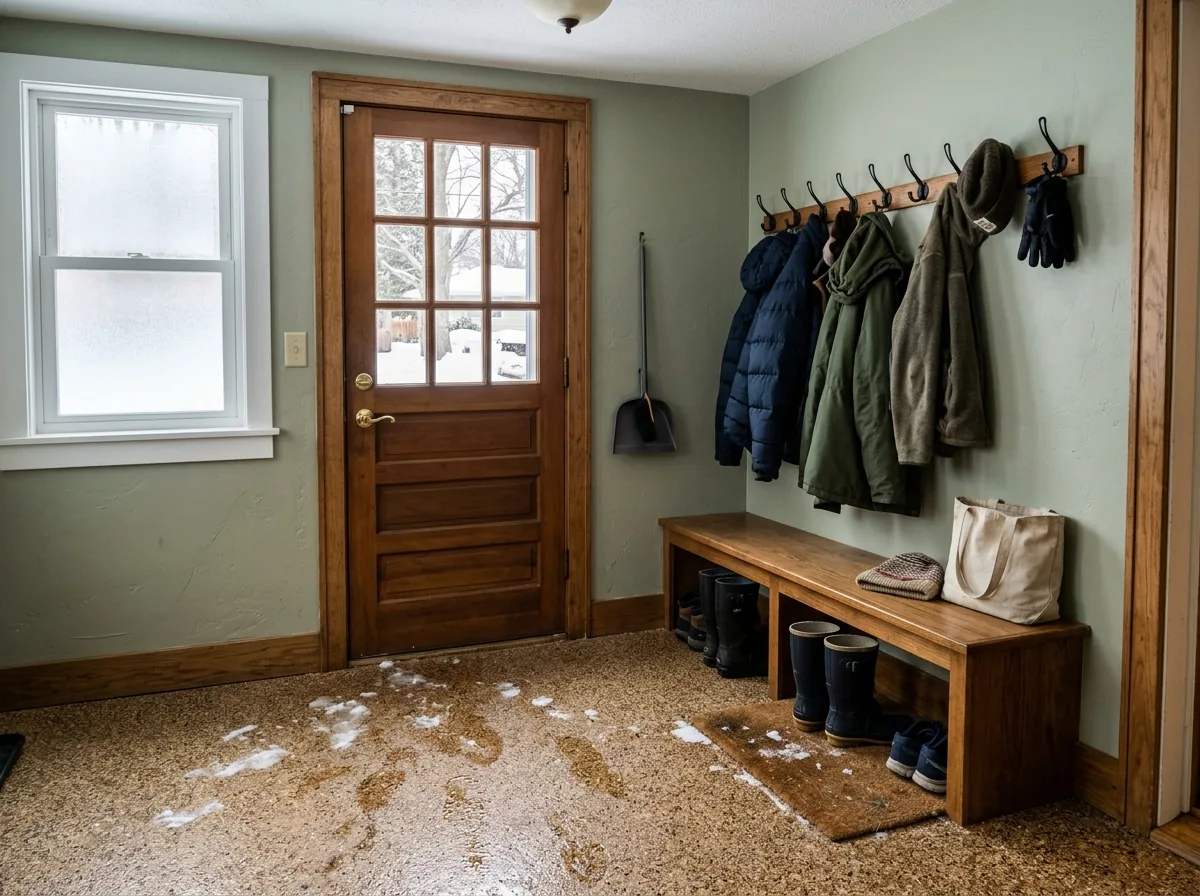
A mudroom takes the worst of an Evansville winter: boots carrying slush from brined and salted streets, wet dogs, sports gear. The quartz texture holds traction when that floor is wet, and the jointless surface keeps meltwater on top instead of in the concrete. If the mudroom sits on a slab poured on the ground, ask for a moisture test before the job is priced (basement floor moisture testing), and ask how the installer will finish the edge under the door.
Laundry Rooms
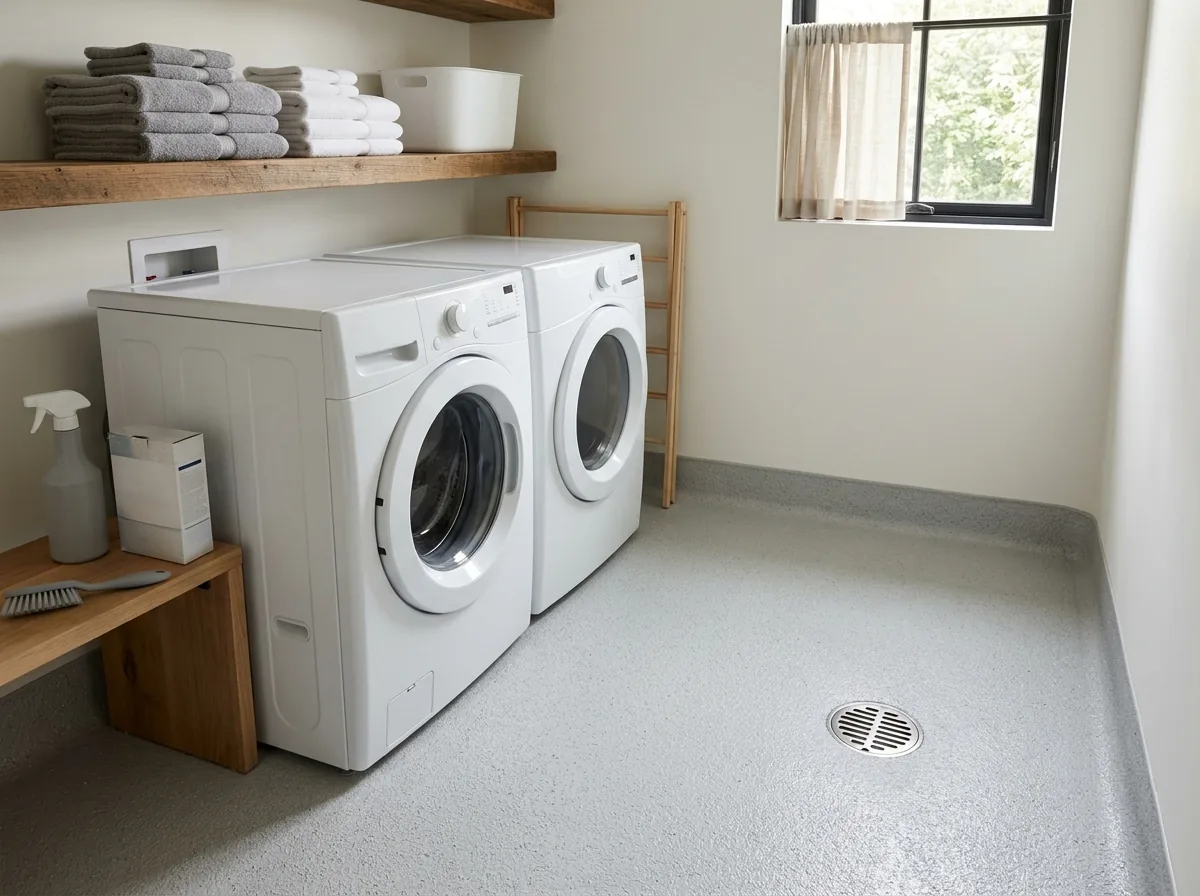
Washers leak and supply hoses burst. Ask for the coating to be turned a few inches up the wall as an integral cove base (how cove base works), so water on the floor meets resin instead of drywall. The washer and dryer have to come out for the whole install and stay out for the cure, so settle who moves and reconnects them. Basement laundry rooms need the same moisture check as any below-grade slab.
Bathrooms and Locker-Room Showers
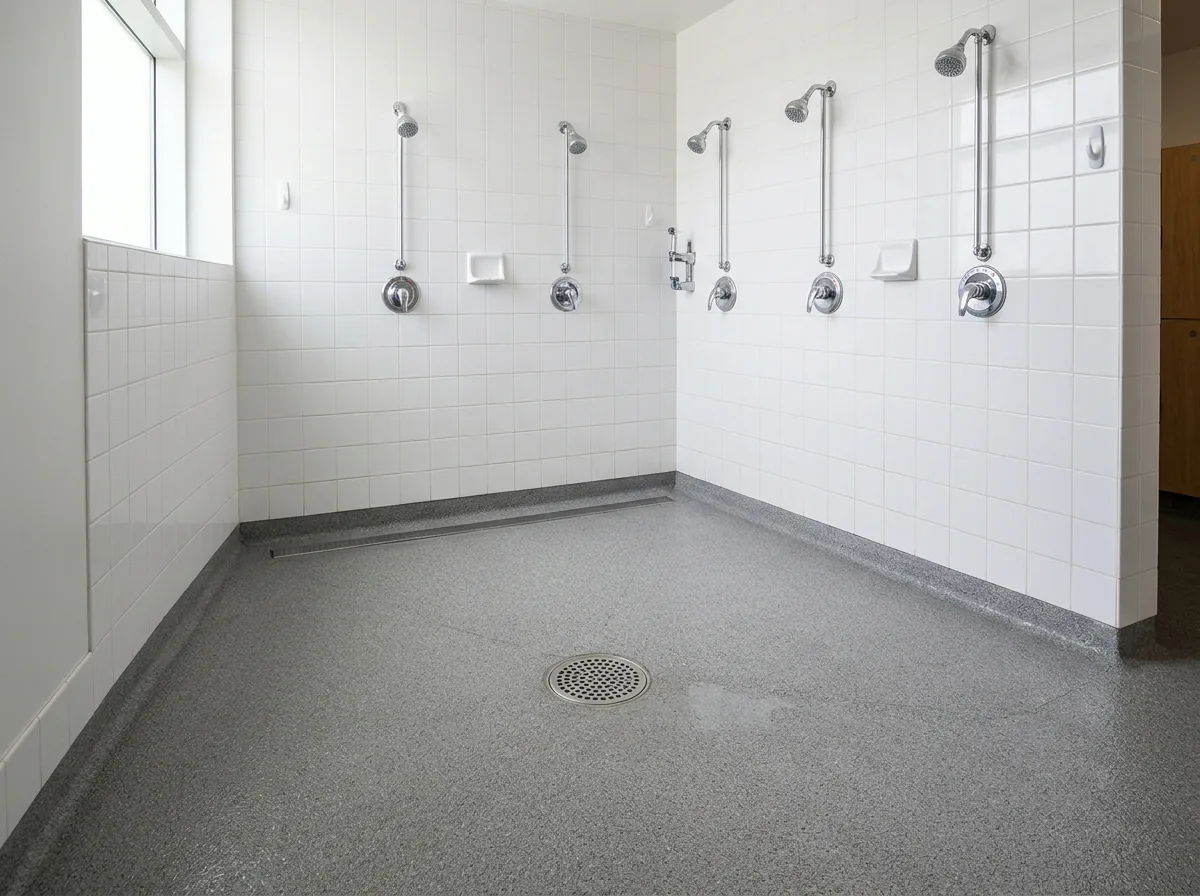
Quartz suits bathrooms on a concrete slab: basement baths, pool-house changing rooms, gym and school locker rooms. Showers ask the most of the texture, because the floor is wet and people are barefoot. A thinner topcoat leaves more of the sand's texture, and the floor still has to slope to the drain. For a shower, ask the installer to show you how the texture compares with a wet-area slip standard (slip-resistant floor coatings), and to cove the coating up the wall so water can't get under its edge.
Commercial Restrooms
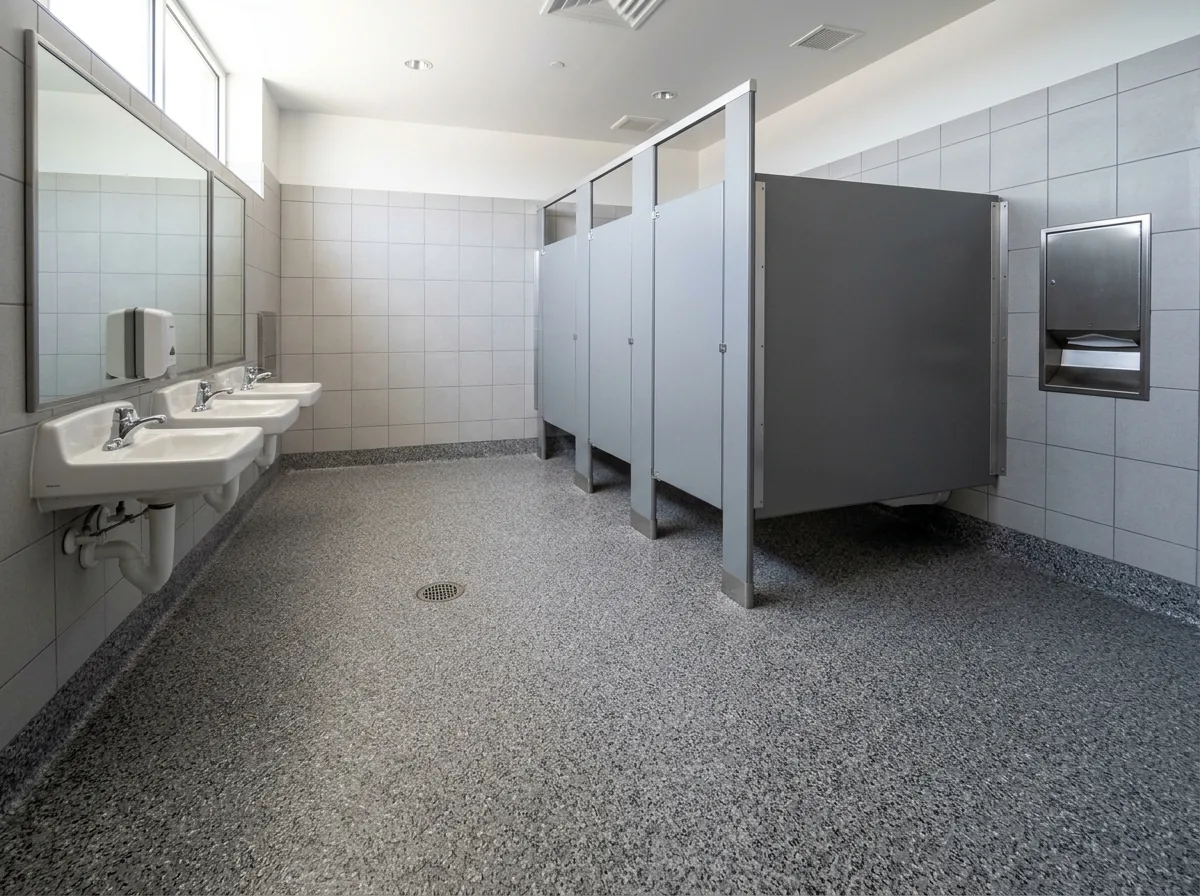
Restrooms appear on quartz-system makers' lists of uses, next to restaurants, schools and clinics. A quartz floor has no grout lines for dirt to collect in, and the usual cleaning is mopping, scrubbing or hosing with a mild cleaner. The cove base matters most here, at the walls and around partition posts. A restroom can't close for long, so ask about night or weekend scheduling (commercial installs and downtime).
Why Evansville homeowners and businesses call Evansville Epoxy
- One installer per request, never a list of callers
- Ask for the coating system and cure times in writing
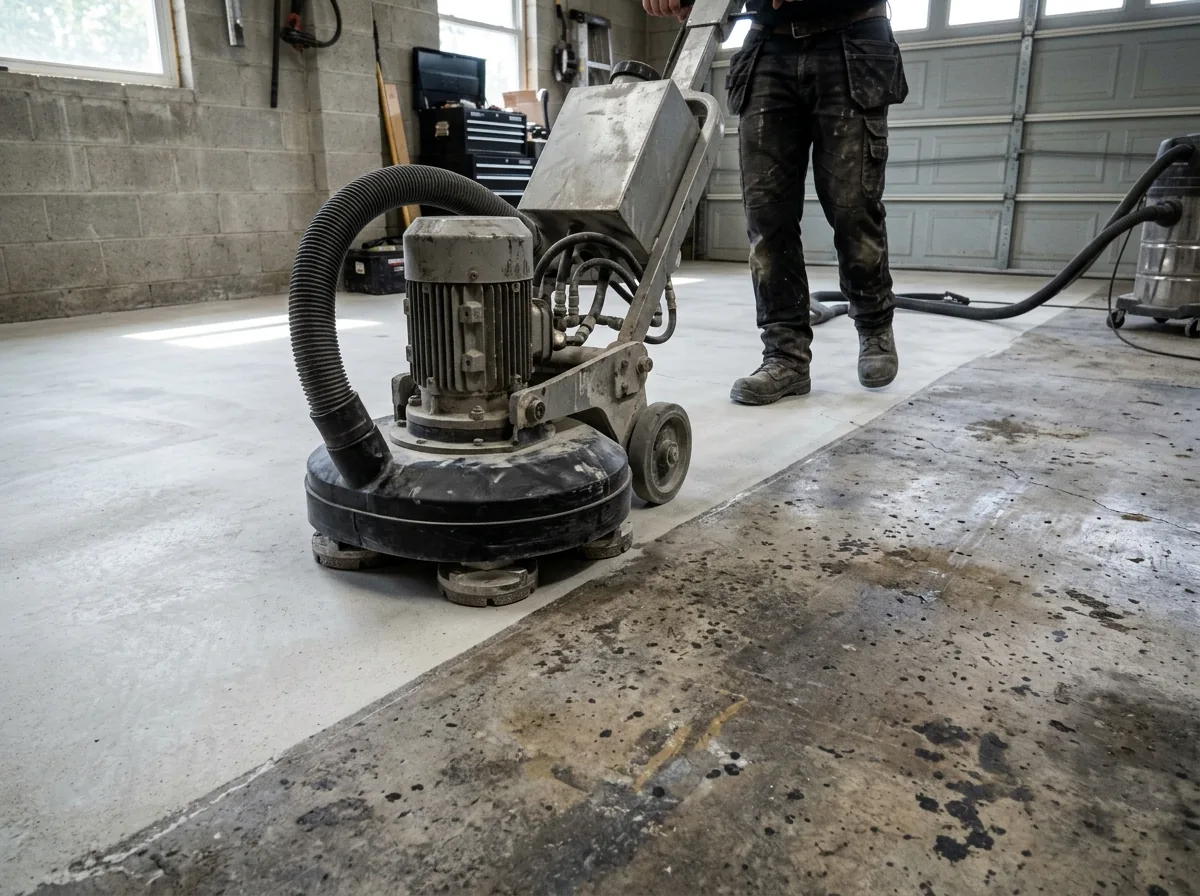
- Ask that the moisture test and grinding appear in the quote
- No charge to you for the referral
Quartz or Flake: Picking Between the Two
Both are broadcast floors, and the published contractor price above covers both. The difference is in how they wear and feel.
Thickness
Quartz builds to about 1/8 inch; a broadcast flake floor typically runs 30 to 35 mils.Texture
Quartz sand leaves a gritty surface under the topcoat. On a flake floor, extra grip usually comes from a texture additive mixed into the topcoat.Look
Quartz gives a fine, sandy speckle. Flake comes in chip sizes from 1/32 inch to 1 inch and in bolder blends (flake epoxy floor).Where each fits
Quartz goes in mudrooms, showers and restrooms. Flake suits garages and basements, where the look counts for more and the floor is wet less often.
If a room sees harsh cleaners or hot water, give the installer a list of them. Chemical and heat resistance depend on which resin goes down, so it has to be chosen for what the floor will actually see.