
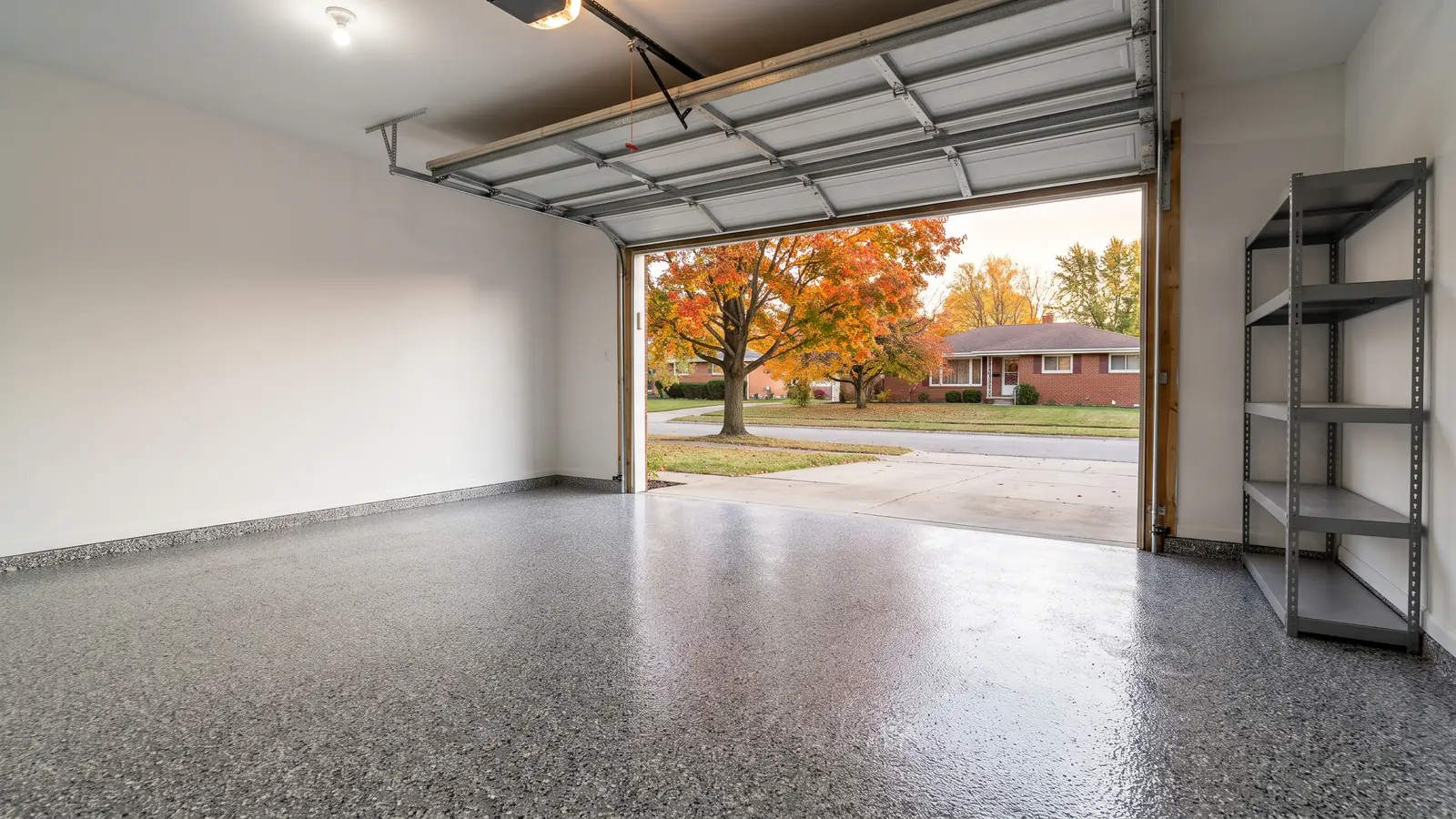
Basement Floor Epoxy by Room and Slab Type
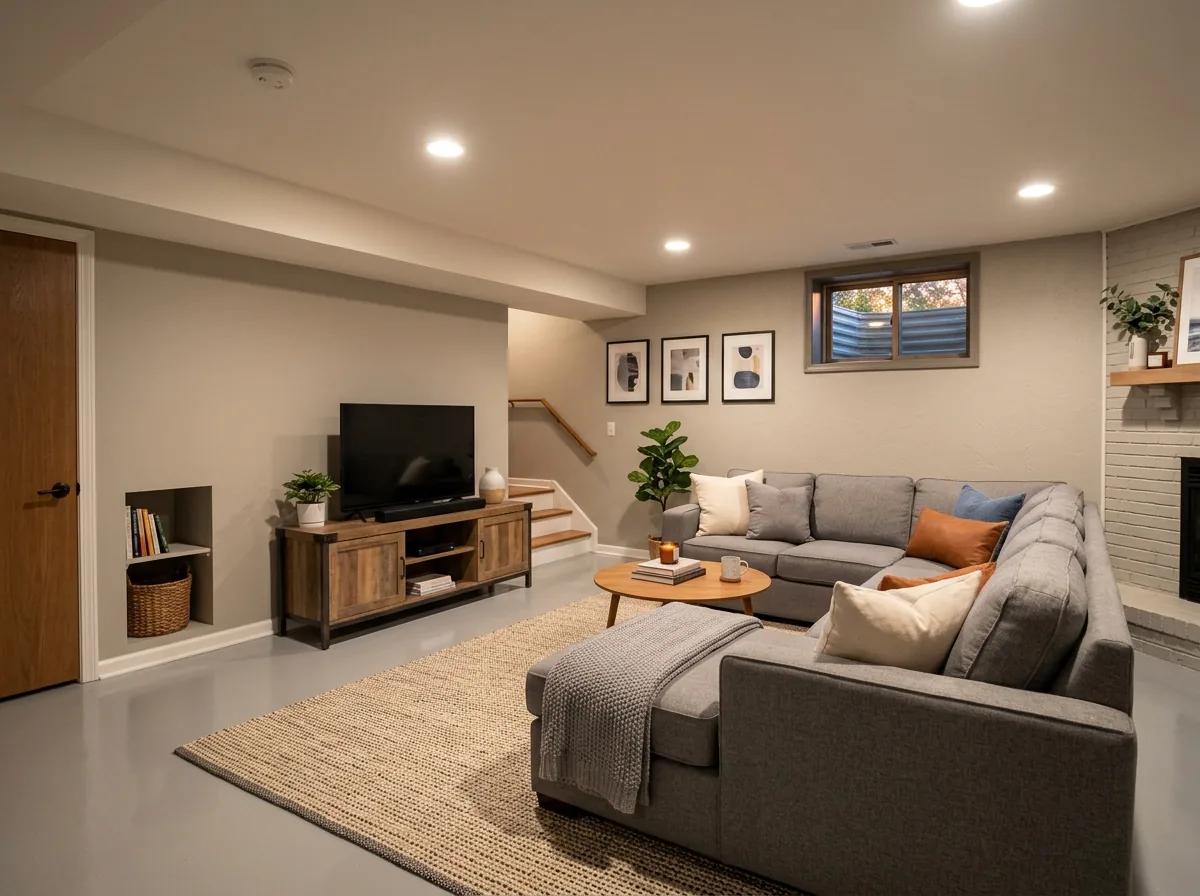
Finished Basement Living Areas
In a family room or home office, the coating is the finished floor, so the look matters as much as the toughness. A light solid color or a fine flake in satin reads more like a room than a garage, and rugs make it warmer underfoot. Basement light is mostly artificial, so ask to see a sample board in satin and in gloss under your own ceiling lights before you pick. Unlike carpet, a coated floor can be mopped dry after a pipe leak or a sump backup. Want something more decorative? See metallic epoxy floors, which are poured thick and show every bump in the slab.
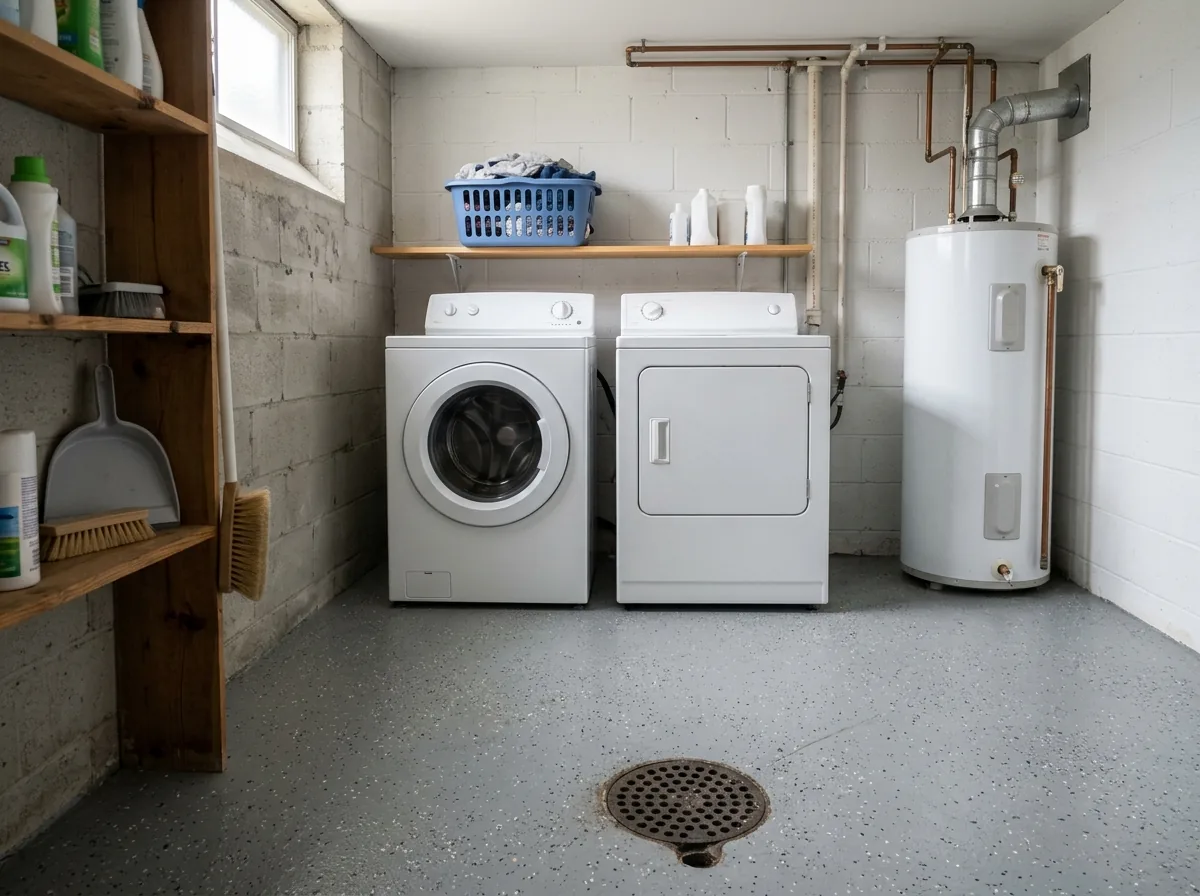
Basement Laundry and Utility Rooms
Washers overflow, water heaters leak and condensate lines drip, so the floor around them needs to be sealed and to drain. Ask the installer to carry the coating all the way to the floor drain without blocking it, and to say whether the water heater, furnace stand and washer will be lifted and coated under or coated around. Where the floor meets the wall, a coating turned a few inches up the wall keeps mop water and leaks out of that joint; the commercial kitchen flooring page explains how that cove base is built. If the floor will often be wet, a textured or quartz finish grips better than a smooth one; the quartz epoxy flooring page covers that system.
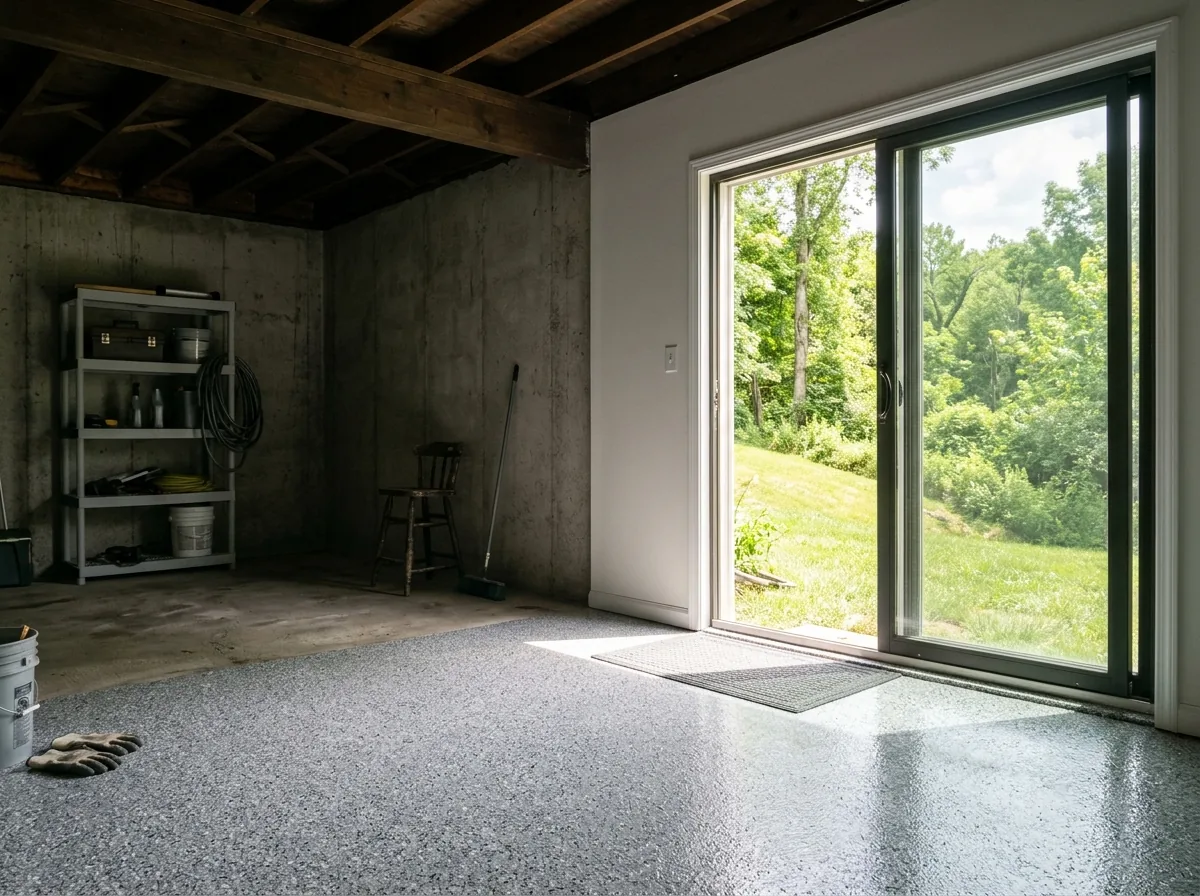
Walkout Basements
A walkout is two slabs in one. The back of the room is dug into the ground, while the front sits at grade behind a patio door that lets in sun and tracked-in water. Ask for moisture readings near the buried wall as well as near the door, because one reading in the middle can miss the wet end. Sunlight through the glass will amber standard epoxy over time, so a polyaspartic topcoat is worth asking about near the door (polyaspartic floor coating).
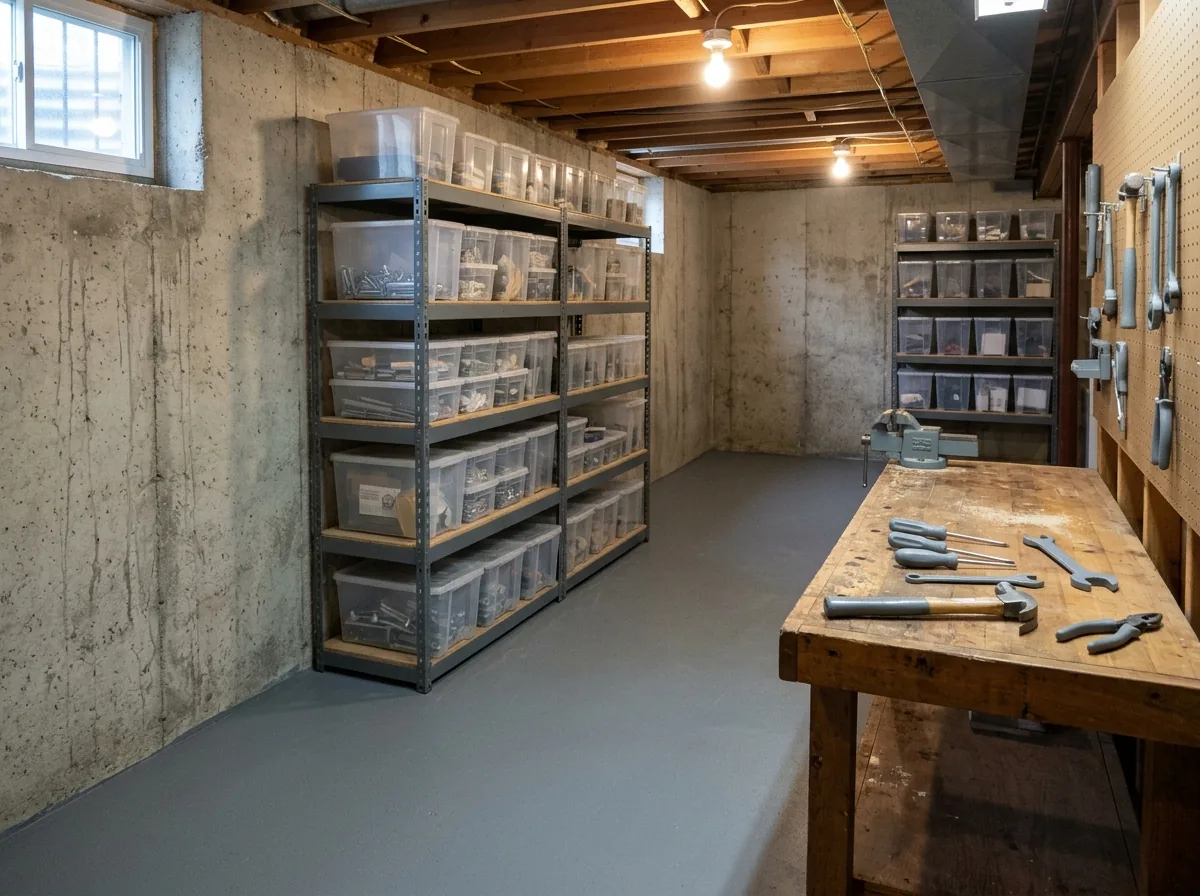
Basement Workshops and Storage
A storage or shop basement can take a plain solid-color epoxy, because nobody needs it to look like a living room. What drives the job is emptying the space. Every shelf, box and tool has to come out for grinding and stay out through the cure, so plan where it all goes before you book. Heavy shelving can return once the coating takes heavy traffic, about 2 days after the last coat on one 100% solids epoxy.
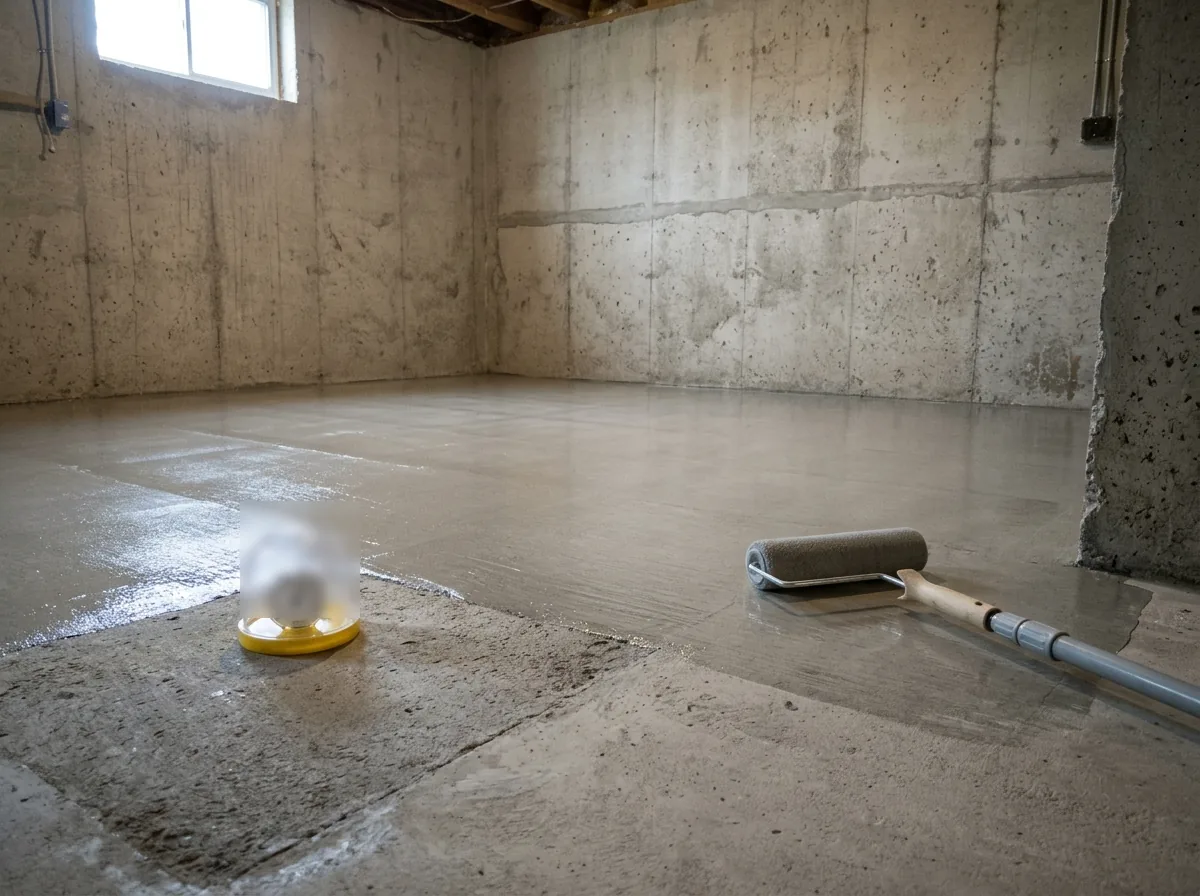
Moisture-Vapor Barrier Primer Systems
When the test numbers come back too high for a normal primer, the fix is a vapor-barrier primer, a 100% solids epoxy applied heavily (about 100 square feet per gallon on one product) before the base coat. It adds material and a coat to the job, and it's the step coating data sheets point to when readings run over their limits. Products differ widely in what they handle, so ask which primer the quote names and what moisture rating its data sheet gives.
- A standard 100% solids epoxy: up to 3 pounds per 1,000 sq ft per day and 75% in-slab RH
- One vapor-barrier primer: up to 25 pounds per 1,000 sq ft per day and 99% RH, at about 100 sq ft per gallon
Why Evansville homeowners and businesses call Evansville Epoxy
- One installer per request, never a list of callers
- Ask for the coating system and cure times in writing
- Ask that the moisture test and grinding appear in the quote
- No charge to you for the referral
How Basement Slabs Are Moisture-Tested
Two ASTM tests are used, and many installers run both:
Calcium chloride test (ASTM F1869)
Anhydrous calcium chloride takes up the vapor coming off a patch of bare concrete, and the result is stated in pounds of moisture per 1,000 square feet over 24 hours. The test can't be run over coatings or patching compound, which is why old paint comes off first.In-slab relative humidity (ASTM F2170)
Probes set into the slab measure the relative humidity inside the concrete, in percent.
Each coating sets its own limits, so the result only means something next to the data sheet of the product you're buying:
| Product type | Emission limit (F1869) | In-slab RH limit (F2170) |
|---|---|---|
| 100% solids epoxy (data sheet) | 3 lb / 1,000 sq ft / 24 h | 75% |
| Water-based epoxy (data sheet) | 5 lb / 1,000 sq ft / 24 h | 75% |
| Polyaspartic (data sheet) | 3 lb / 1,000 sq ft / 24 h | 75% |
| Vapor-barrier primer (data sheet) | up to 25 lb / 1,000 sq ft / 24 h | up to 99% |
Two limits on what a test tells you. ASTM notes that the calcium chloride result reflects the floor at the time of testing and may not predict later conditions. And coating makers warn that on slabs without a vapor barrier underneath, seasonal changes in ground moisture can push vapor up regardless of what a single test showed. If nobody knows whether an older basement has a vapor barrier under it, ask the installer whether a borderline reading should mean the barrier primer.
Before You Book: Cracks, Water and Old Paint
Fix seepage first
The tests and limits above are about vapor rising through the slab, not water running in through a crack or wall joint.Cracks get filled, not just coated
Ask how cracks will be chased and filled before the primer (crack repair).Sump pits and drains
Ask how the coating ends at the sump lid and the drain rims, so water runs into them and not under the edge.Framing plans
If walls or a bar will be built later, ask whether to coat before framing, so the coating runs under the bottom plates, or after.Radon
Coating a floor seals some cracks but doesn't count as radon mitigation. EPA recommends testing every home, whatever its zone.Painted floors in older houses
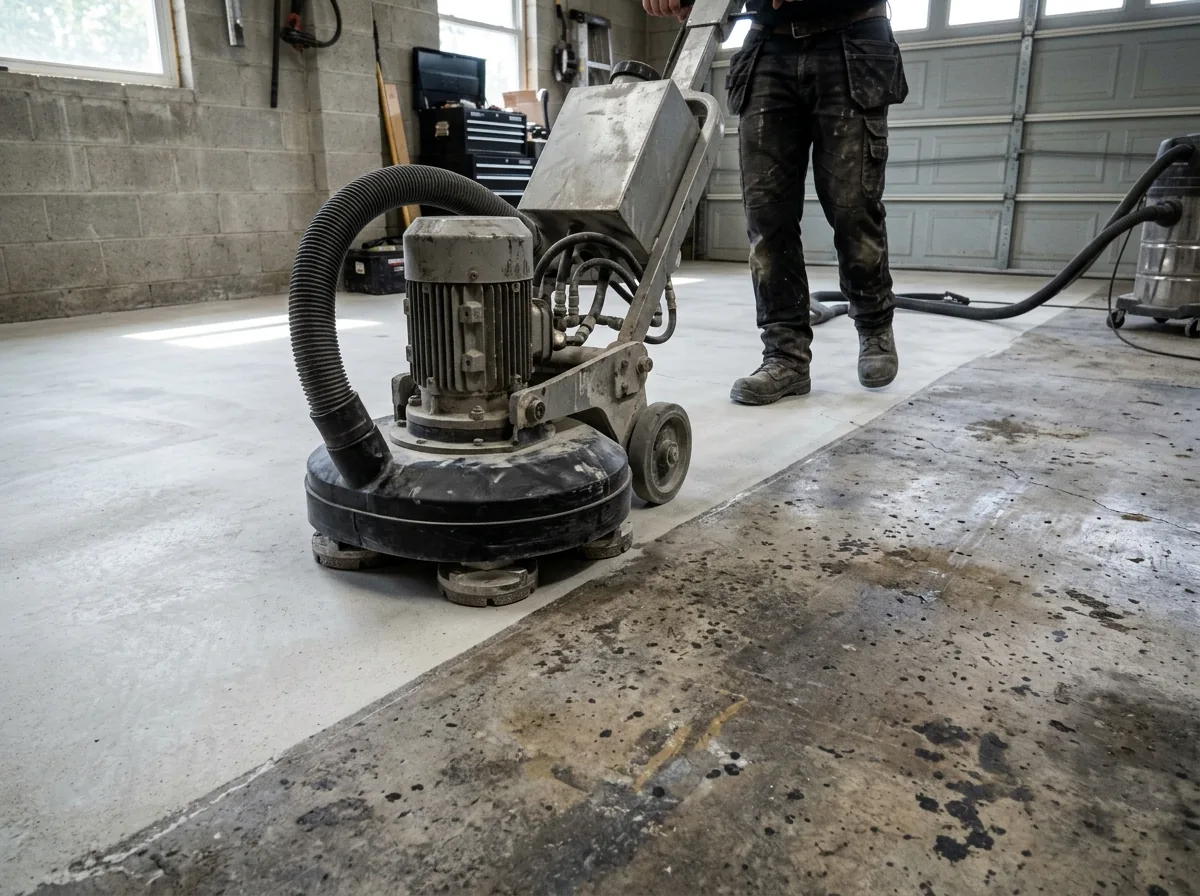
Grinding off old paint in a pre-1978 house can raise lead dust. Ask whether the crew is lead-safe certified and how it controls dust.