
Polished Concrete Finishes by Grind Depth
Polishing grinds the slab itself with diamond tooling, hardens it with a densifier and brings it to a sheen. No coating goes on top. The deeper the grind, the more aggregate shows, and the more the floor costs.
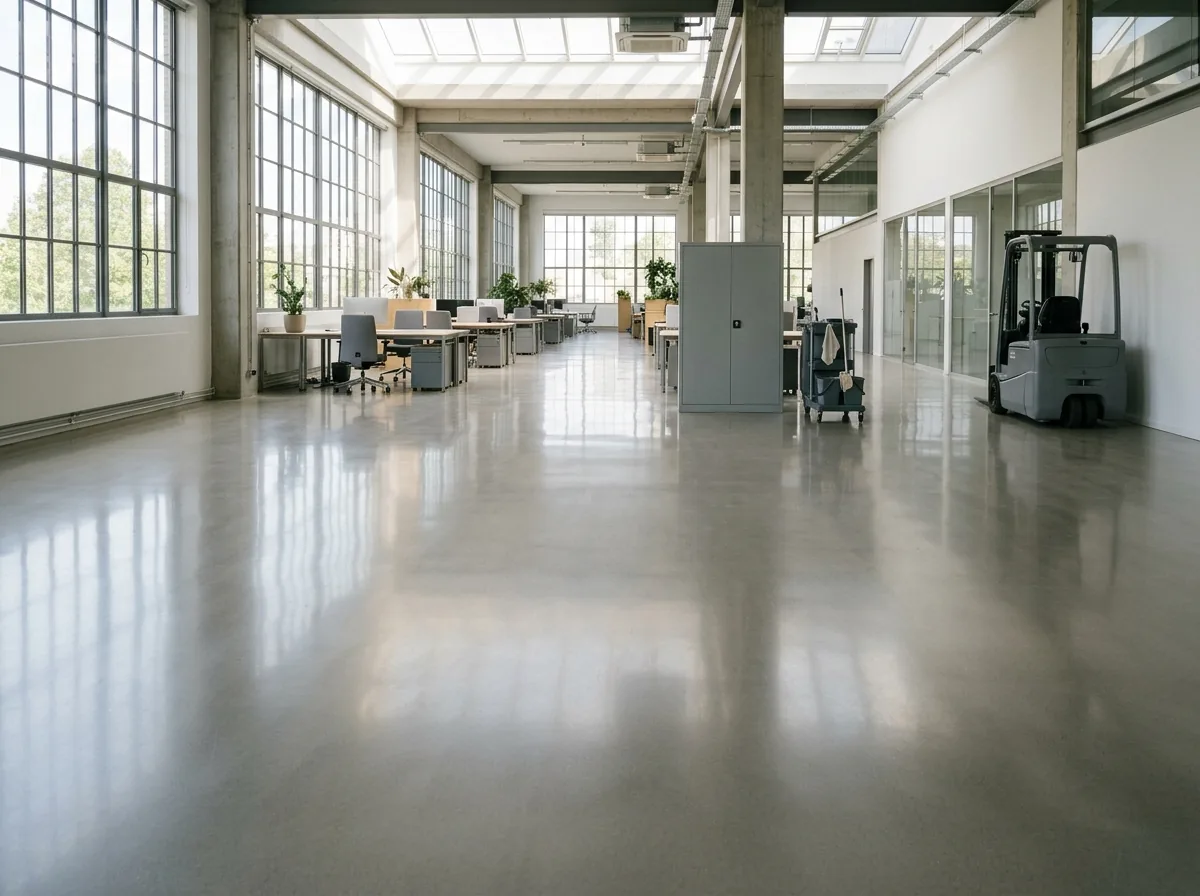
Cream Polish
A cream finish takes off only the top skin. The Concrete Polishing Council's Class A surface is 85 to 95% cement fines with a little fine sand showing. It is the least grinding and the lowest price, at about $3 to $8 a square foot. The catch: with so little cut depth, a cream polish won't remove blemishes. It suits a newer slab with few patches, cracks or stains.
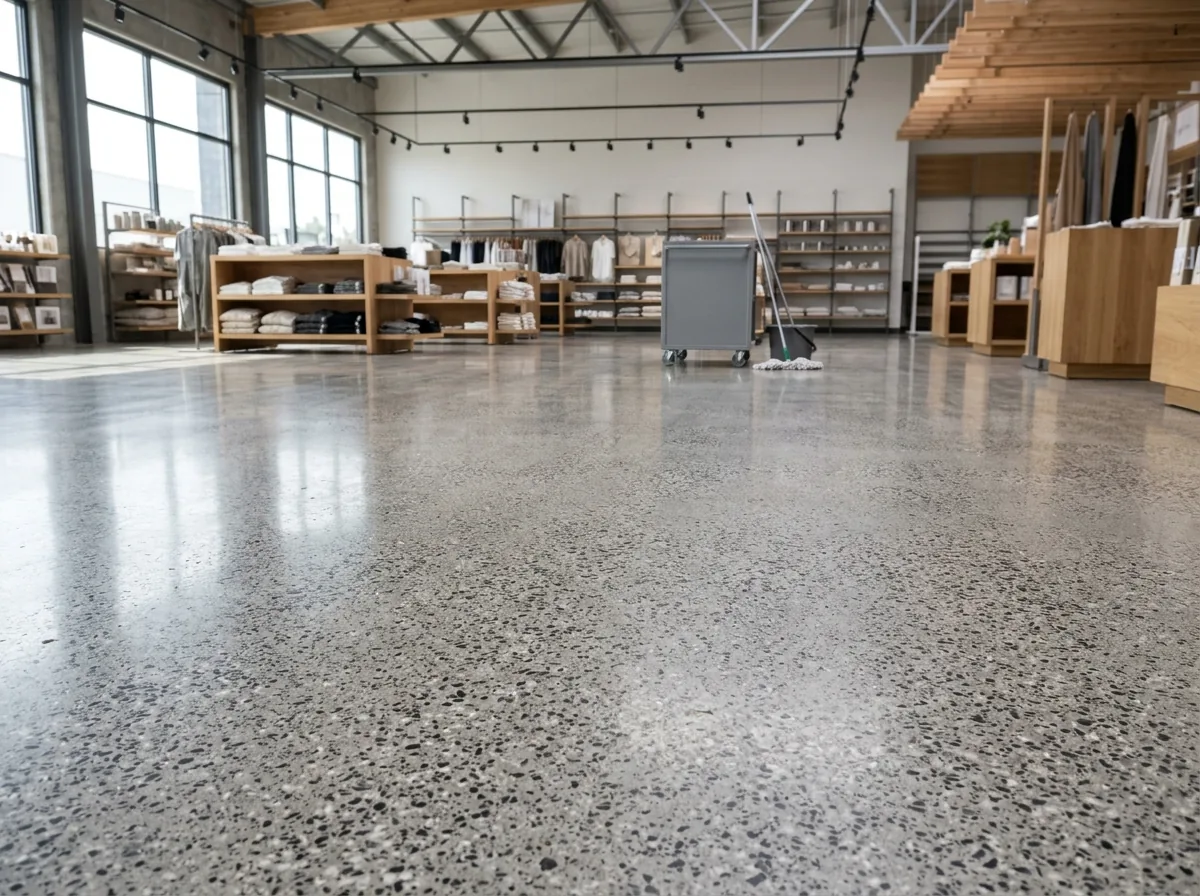
Salt-and-Pepper Finish
Grinding a little deeper brings up the fine aggregate. In Class B, 85 to 95% of the surface is fine aggregate, which gives the speckled look. Expect about $4 to $10 a square foot. Color can shift as the paste comes off, from gray toward brown depending on the sand. Ask for a mock-up on your own slab before the whole floor is ground.
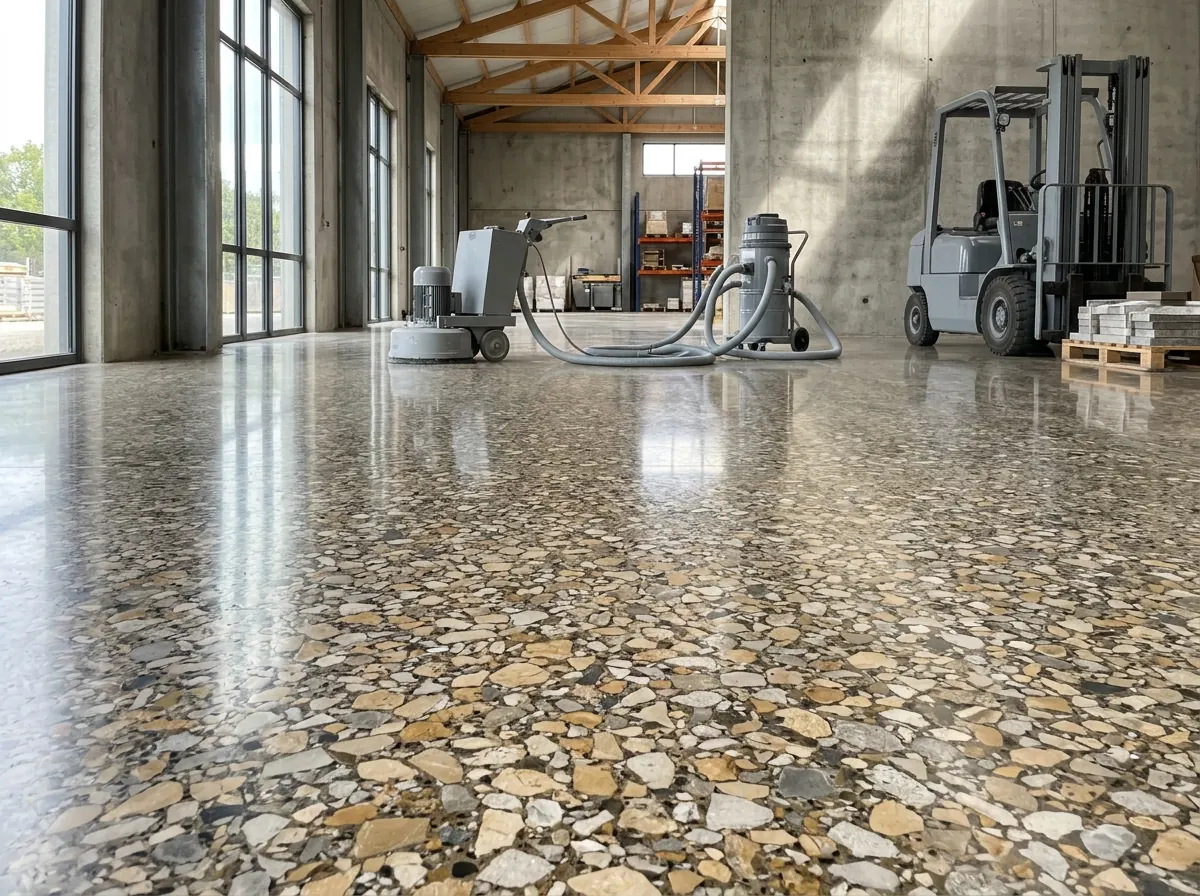
Exposed Aggregate
The deepest grind cuts through to the coarse stone. Class C is 80 to 90% full aggregate, and the look is close to terrazzo. It runs about $6 to $12 a square foot. Deeper grinding also opens pits and voids in the slab that have to be filled, which the polishing council calls grouting. What you'll see depends on the stone in the original mix, so two slabs ground the same way can look very different.
Dyed Polished Concrete
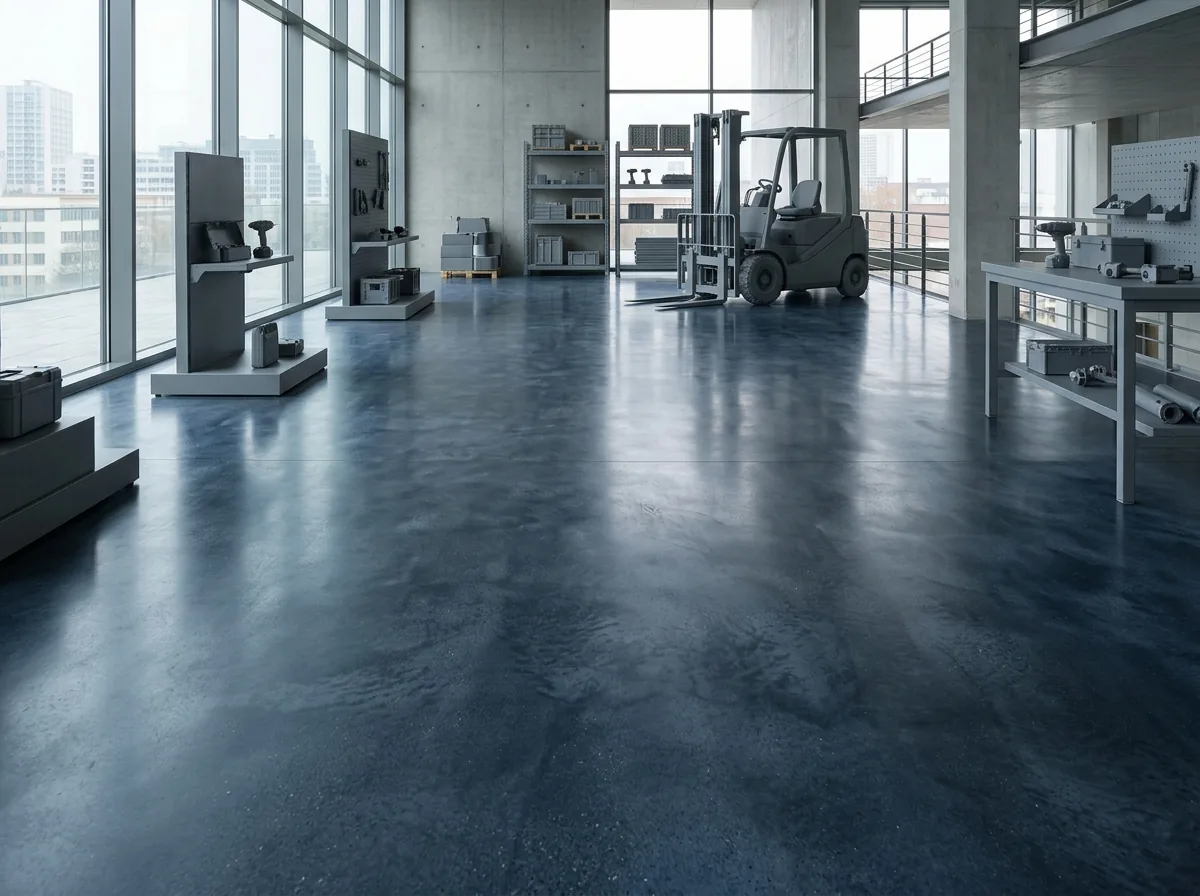
Dye adds color without a coating, at roughly $1 to $3 a square foot on top of the polish. It colors the concrete itself instead of sitting on top as a film. Because the exposed sand and stone still set the base tone, the same dye looks different over a cream finish than over salt-and-pepper. Ask to see the dye on a test patch of your slab.
Grind-and-Seal
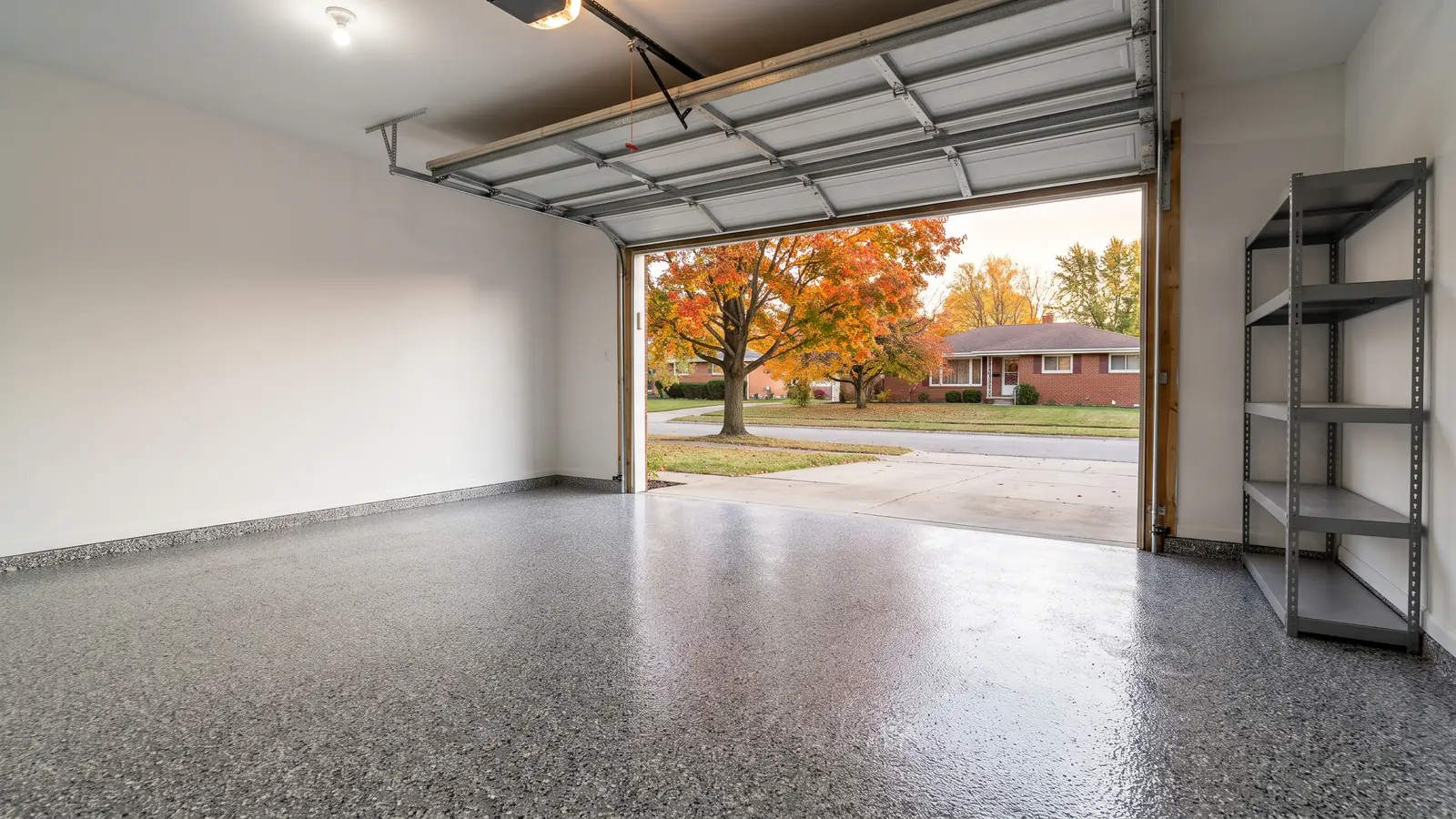
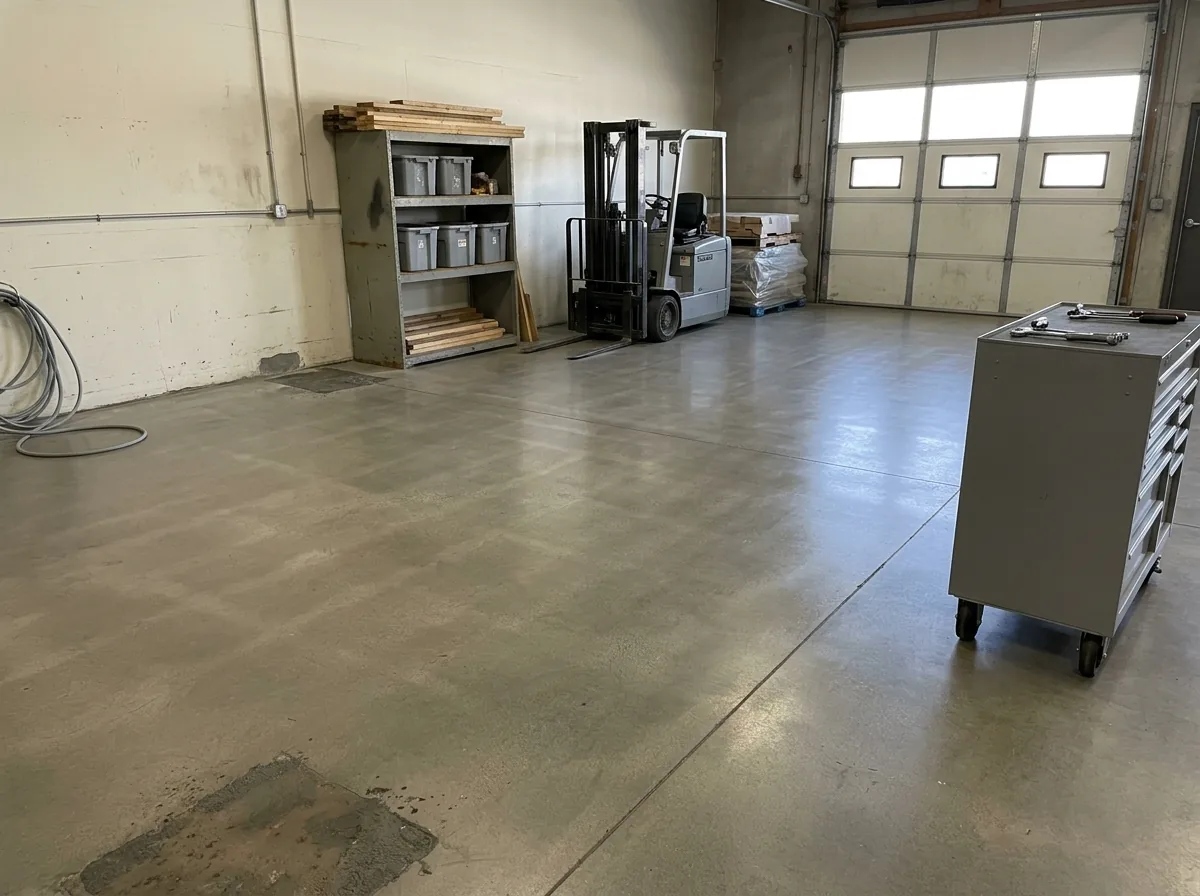
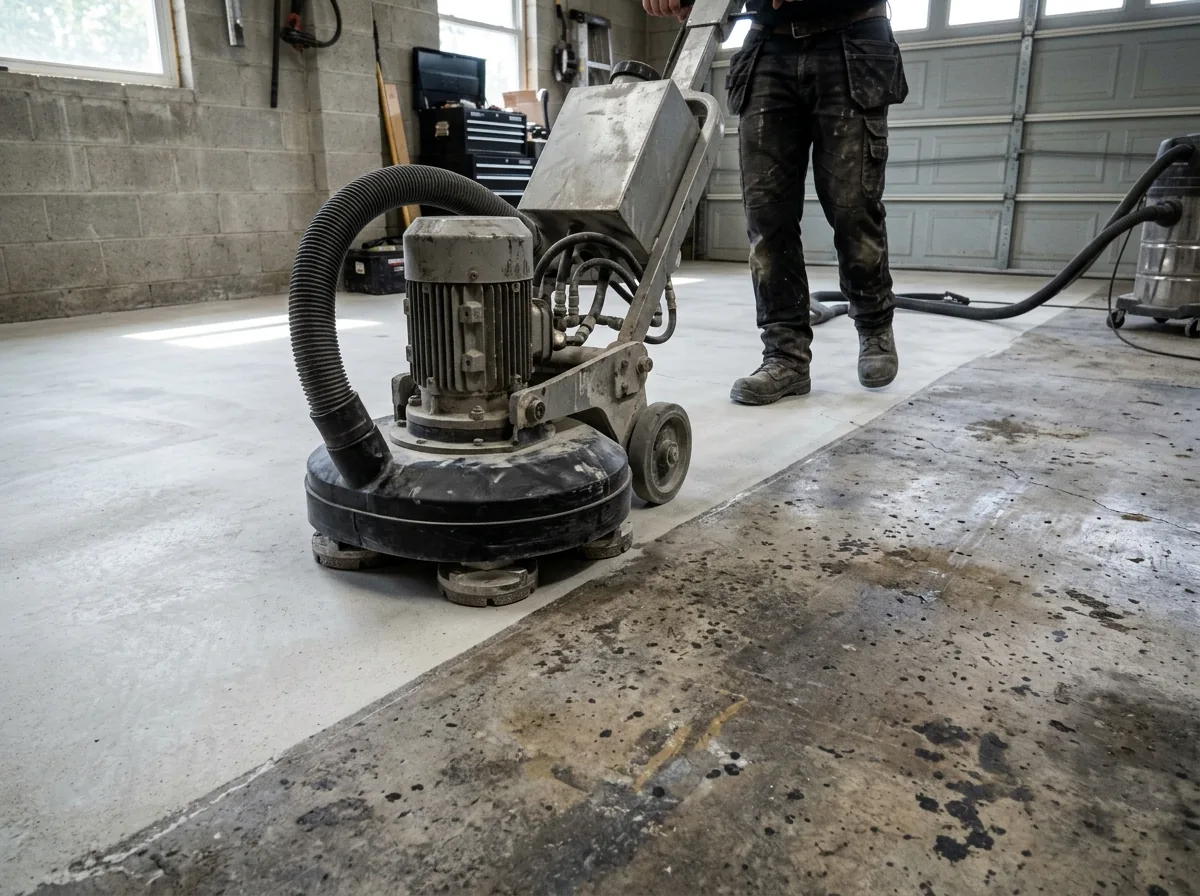
Grind-and-seal skips the finer polishing steps: the slab is ground, cleaned and coated with a clear sealer. Sealing alone costs about $1 to $3 a square foot. A true polished floor doesn't need a sealer because the densifier hardens the surface, though a stain guard helps in kitchens, garages and high-traffic areas. Grind-and-seal suits basements, garages and shops where a satin look is enough. A topical sealer wears with traffic, so ask how often yours will need a fresh coat.
Why Evansville homeowners and businesses call Evansville Epoxy
- One installer per request, never a list of callers
- Ask for the coating system and cure times in writing
- Ask that the moisture test and grinding appear in the quote
- No charge to you for the referral
Choosing a Sheen Level
Gloss is set by how far up the grit sequence the crew goes. The polishing industry describes four levels:
Level 1, flat
stopped below 100-grit resin bond; hazy, little reflectionLevel 2, satin
stopped at 400 grit; low sheen, a slight reflection from about 100 feet awayLevel 3, semi-polished
800 grit or higher; clearly reflects lights at 30 to 50 feetLevel 4, highly polished
up to 3,000 grit or burnished; a mirror-like look
A high gloss suits a showroom, but cost guides warn that a polish that doesn't meet slip-resistance standards is slippery when wet. For kitchens, entries and anywhere water lands, ask about a lower level or a slip-resistant treatment; anti-slip floor coating explains how slip resistance is rated.
When a Coating Is the Better Call
Polished concrete is not stain-proof, and chemicals can damage it. Shops where oil, brake fluid or solvents spill are better served by a coating; see industrial epoxy flooring for chemical-rated systems. Slabs with many cracks and patches are a poor fit too, since a polish shows every repair. For those, concrete crack repair followed by a coating covers what polishing would leave in view.