
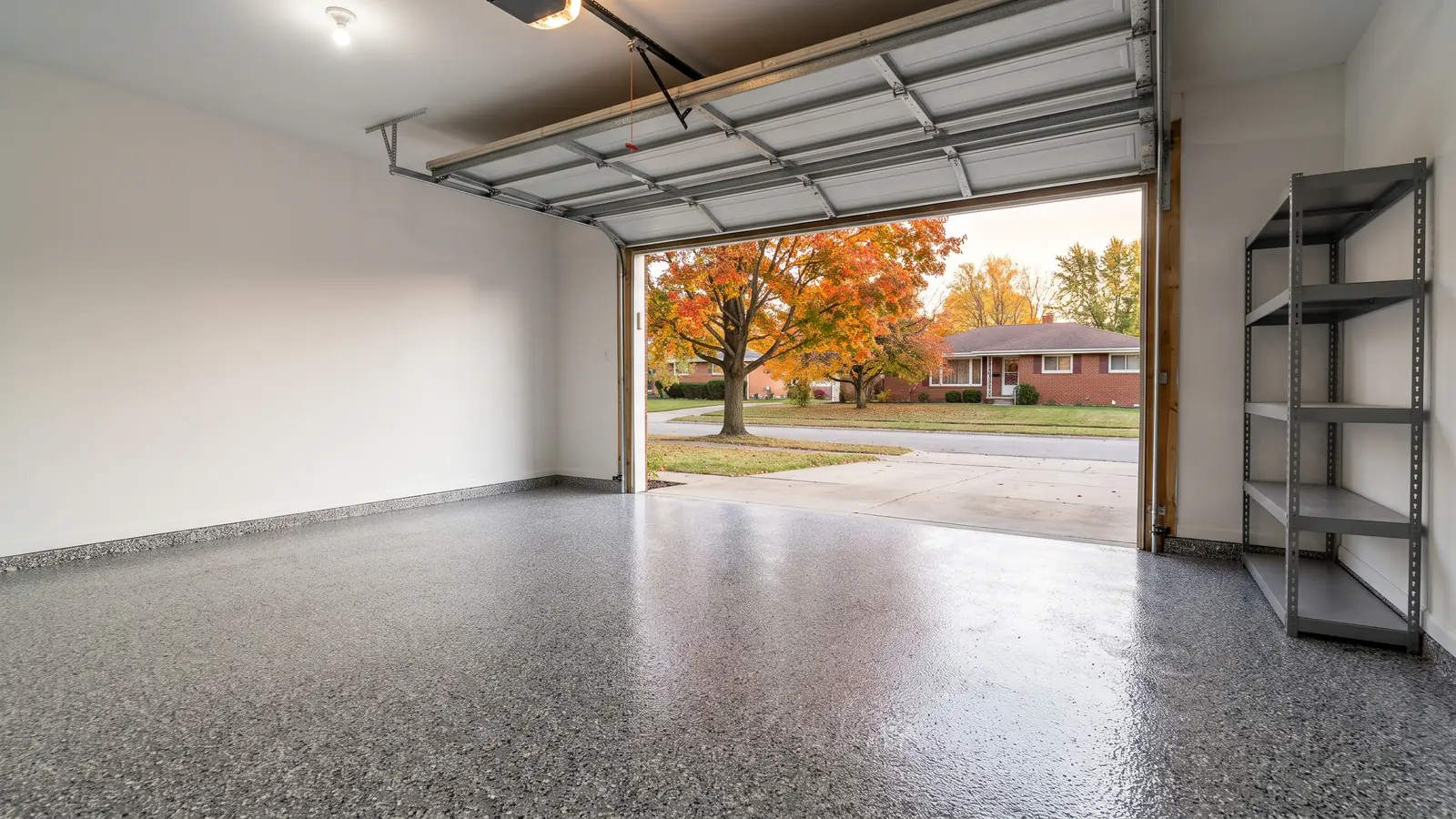
Anti-Slip Floor Textures and Where They Go
Resin floors are non-porous and easy to clean, and that same smooth surface can be slippery. Texture additives fix it, but they differ a lot in bite, look and how easy the floor is to clean.
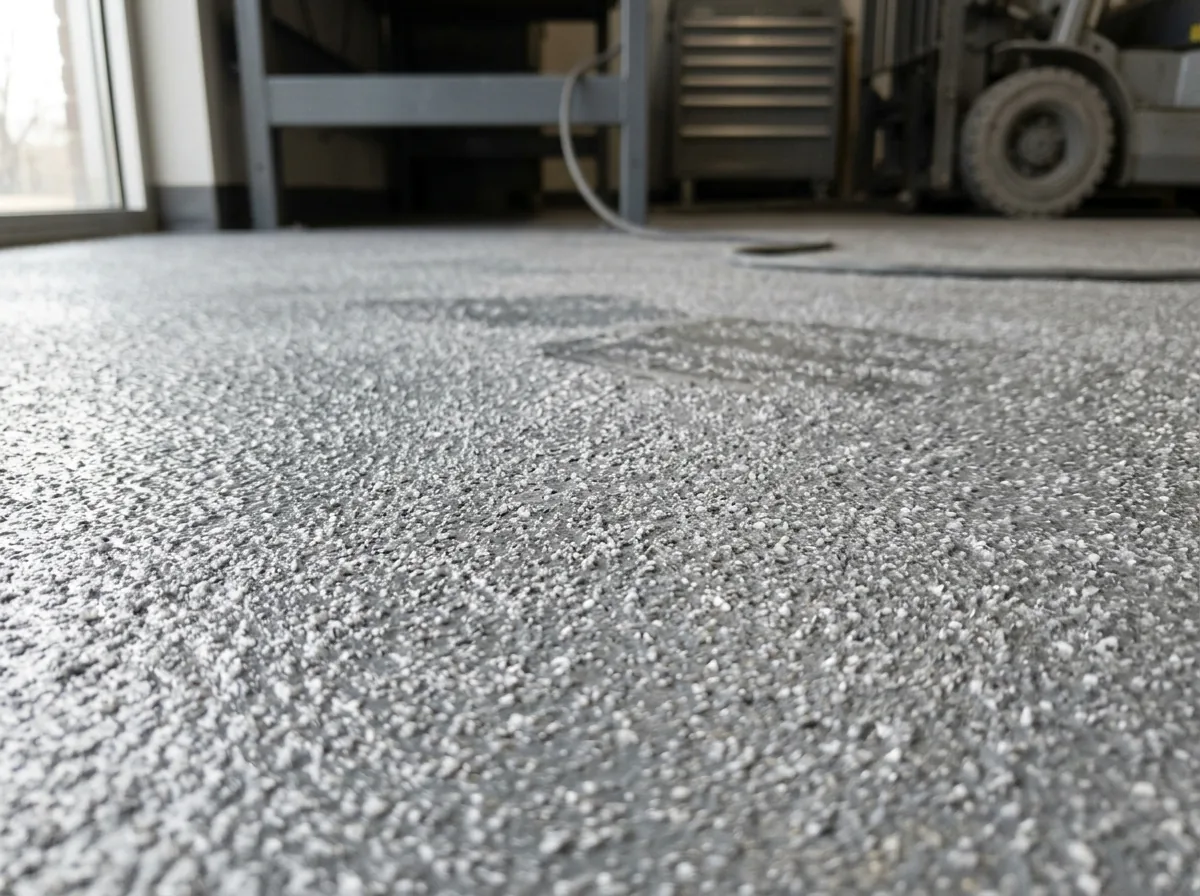
Aluminum Oxide Grit
Aluminum oxide is the harsh one: a dense white grit that dries clear in the topcoat. It's meant for places that need the most grip or carry a higher fall risk, and it isn't right for every room. One maker's product sheet shows how size changes the method:
- 320 grit: mixed into the topcoat, about 1/4 to 1/2 lb per gallon in thin topcoats and 1 to 2 lb in high-solids ones
- 36 and 60 grit: broadcast into the wet topcoat and back-rolled, not mixed in
The finest grade, 325 mesh in one maker's line, only flattens the sheen. It gives a matte look, not real slip resistance.
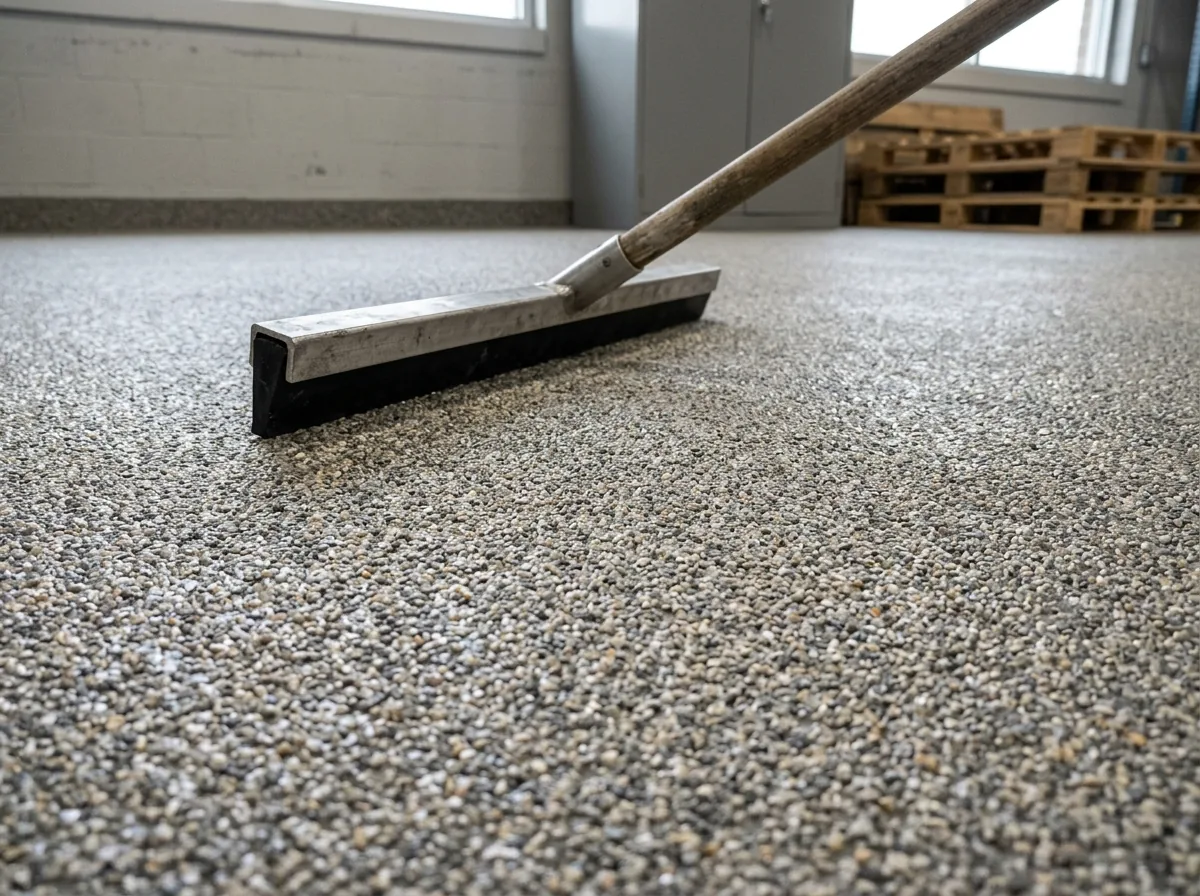
Quartz Texture
Clear-coated quartz is an aggressive, durable texture used in industrial and heavy-traffic floors. It usually sits under a colored topcoat, because quartz under a clear coat stays visible. A full double-broadcast quartz system builds texture through the whole floor rather than just the top; quartz epoxy flooring shows how that's laid.
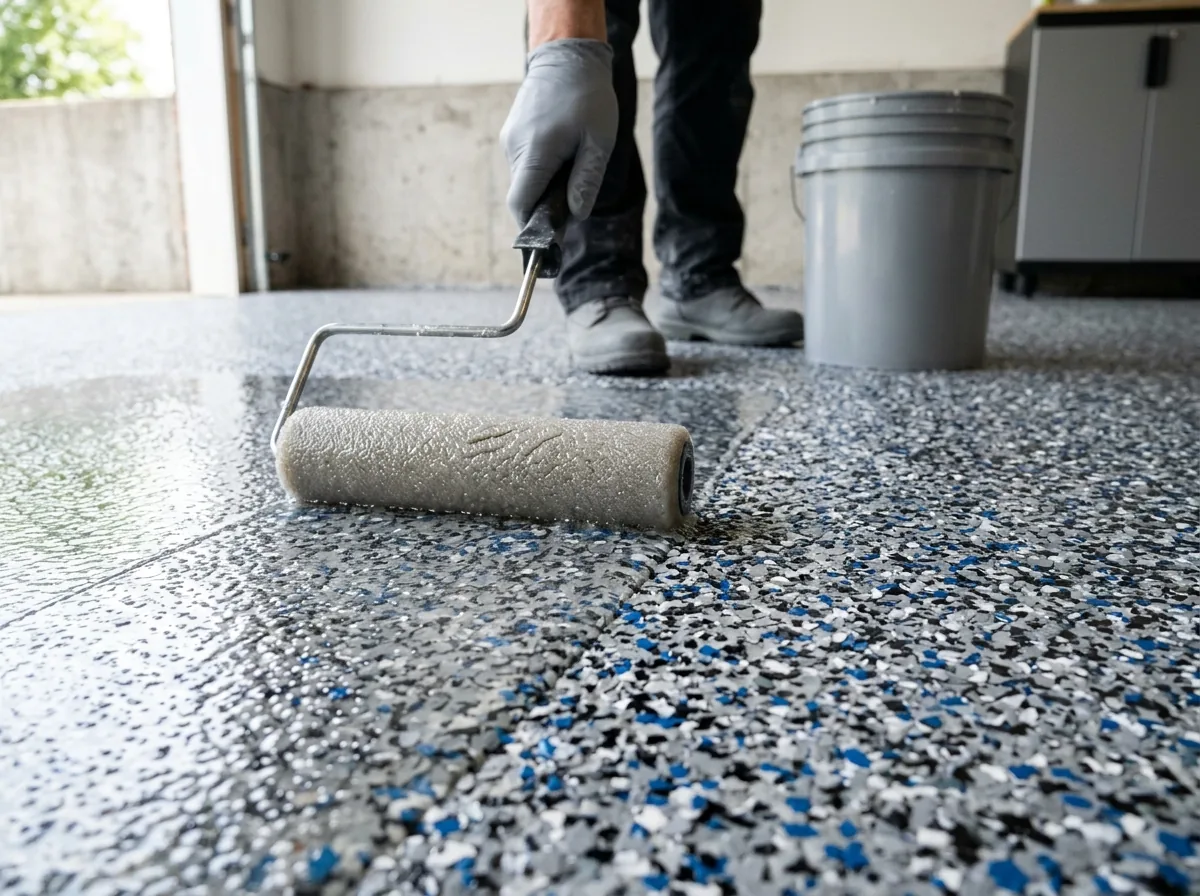
Polymer Grit Additives
Polypropylene beads are the mild option. They are clear in the topcoat, less aggressive than aluminum oxide, and suit almost any room, which makes them the common choice for garages and homes. They come in 20, 30, 50 and 100 mesh. Thin coatings take smaller beads; in a thick topcoat a small bead sinks and leaves no texture, so the installer should match the bead to the coating.
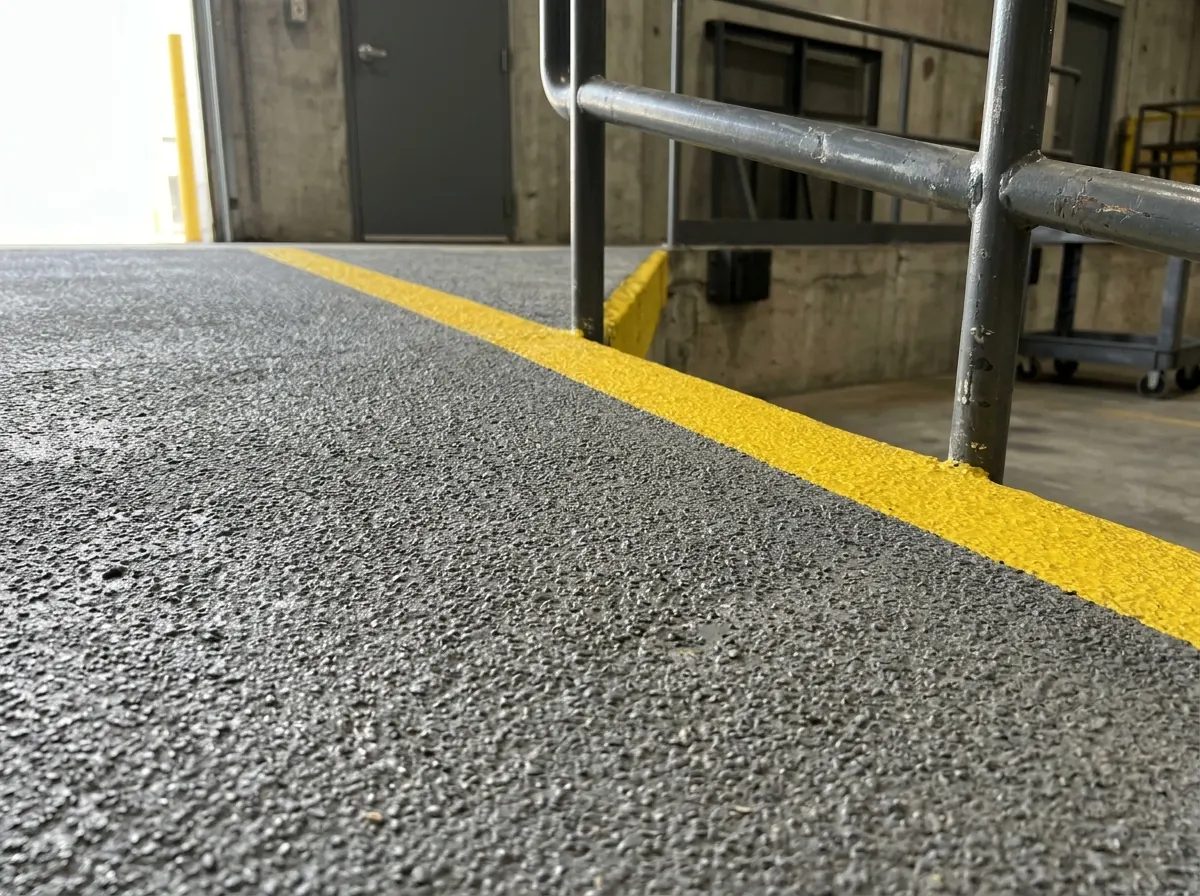
Ramps and Stairs
ADA standards require accessible floor and ground surfaces to be stable, firm and slip resistant. The 0.42 friction minimum in ANSI A326.3, described below, was set for level interior floors, so a slope that gets wet calls for more bite than that. Ask for a coarser broadcast on ramps, steps and dock approaches, and for the stair nosings to be textured, not just the treads.
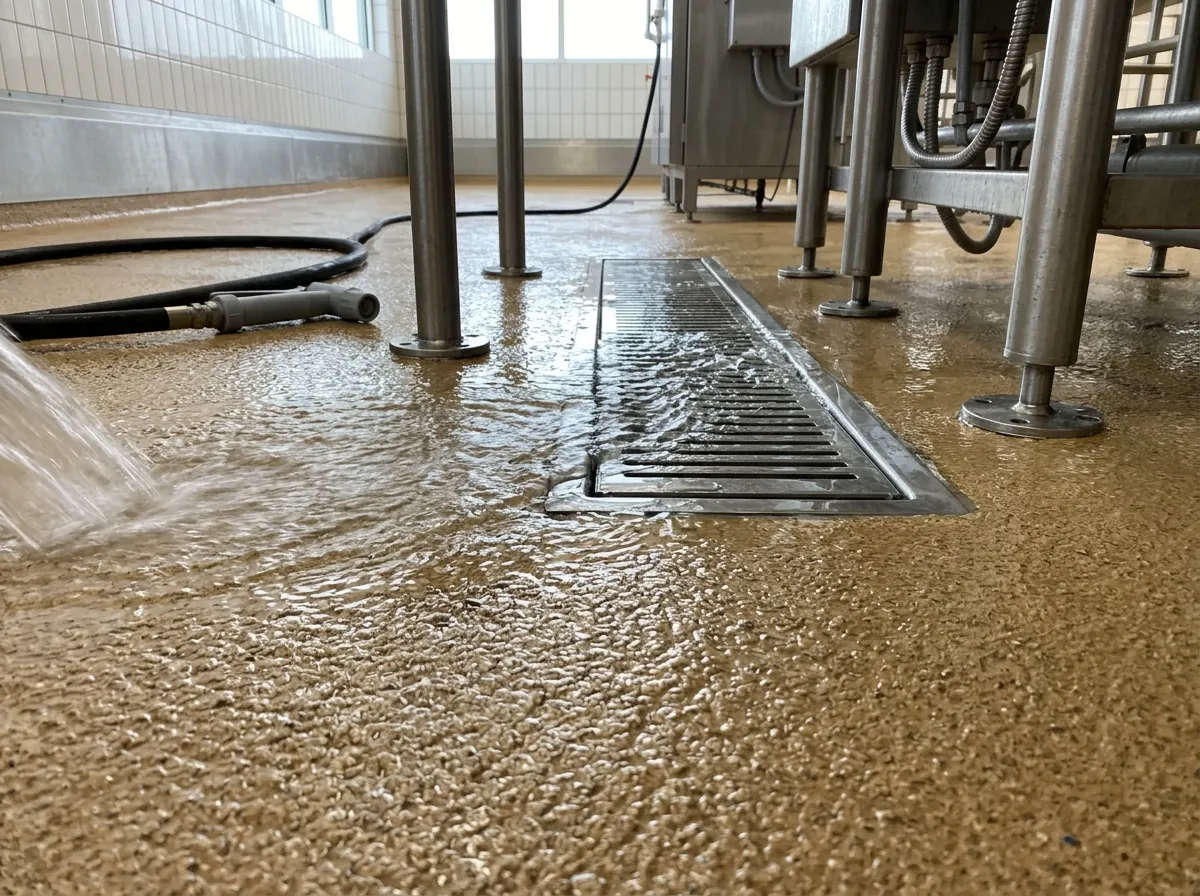
Wet Process Areas
OSHA's walking-working surface rule requires each workroom floor to be kept clean and, as far as possible, dry. Where wet processes are used, drainage must be maintained, with dry standing places such as platforms or mats where feasible. Surfaces must be kept free of hazards such as spills, leaks and ice. A textured resin floor sloped to drains helps a plant meet that. Wash-down rooms, dish pits and wash bays need the coarsest texture they can still clean.
Why Evansville homeowners and businesses call Evansville Epoxy
- One installer per request, never a list of callers
- Ask for the coating system and cure times in writing
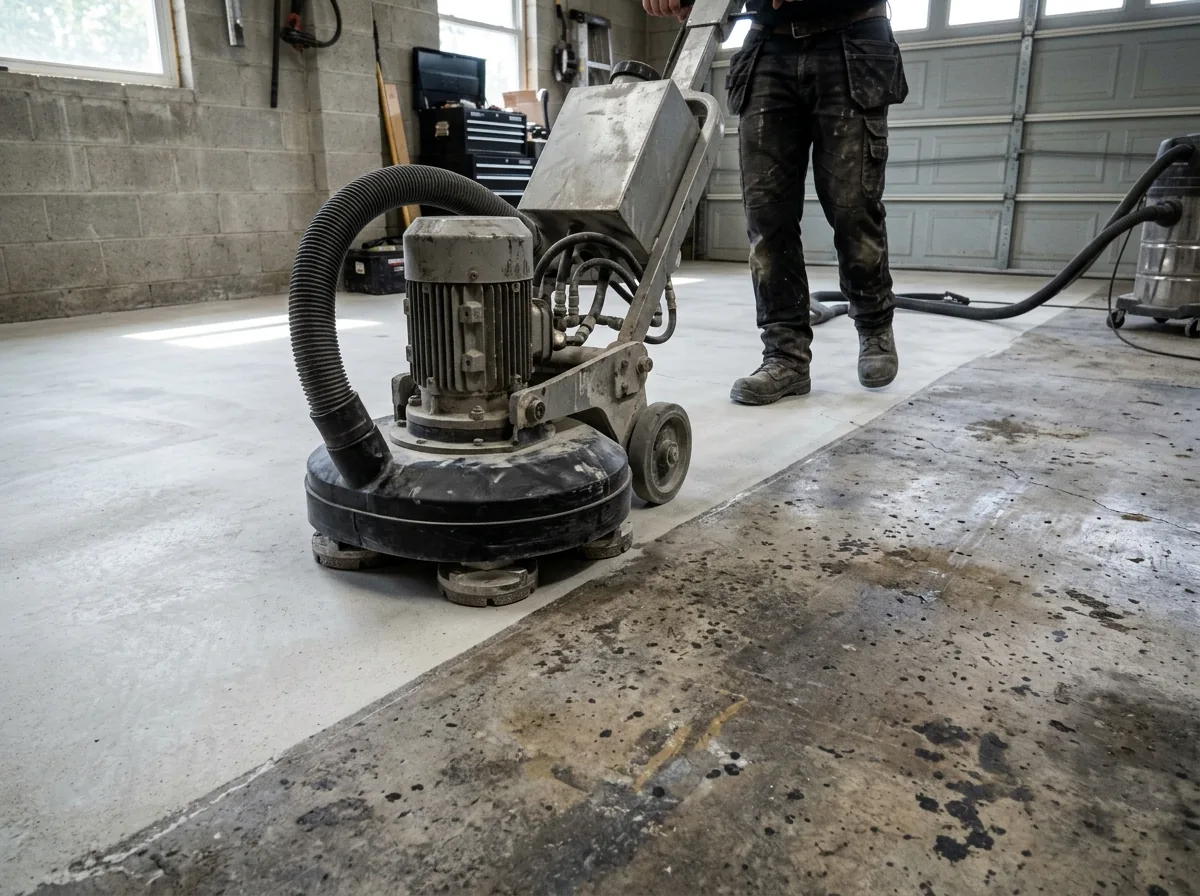
- Ask that the moisture test and grinding appear in the quote
- No charge to you for the referral
How Slip Resistance Is Rated
ANSI A326.3 is the US standard for measuring the dynamic coefficient of friction (DCOF) of hard-surface floors, in the lab or in the field, wet or dry. Its 2021 revision sorts floors into five use classes:
Interior, Dry
0.42 or higher dry DCOFInterior, Wet
0.42 or higher wet DCOF, or declared by the manufacturerInterior, Wet Plus; Exterior, Wet; Oils/Greases
declared by the manufacturer
A326.3 was written for tile and other hard-surface flooring, not coatings, so treat it as a yardstick. Even under the standard, the specifier decides what fits based on the traffic, contaminants and cleaning a floor will see.
Ask the installer for the topcoat maker's texture recommendation and load rate, and for a sample board you can stand on with wet shoes. Ask, too, how the floor gets re-textured if traffic wears it smooth. In a workplace, the floor has to meet OSHA's housekeeping rule as well, which the texture helps with but doesn't replace.